
Mon Sep 09 14:18:08 UTC 2024: ## Deep-Sea Comb Jellies Adapt to Pressure with Curvy Lipids
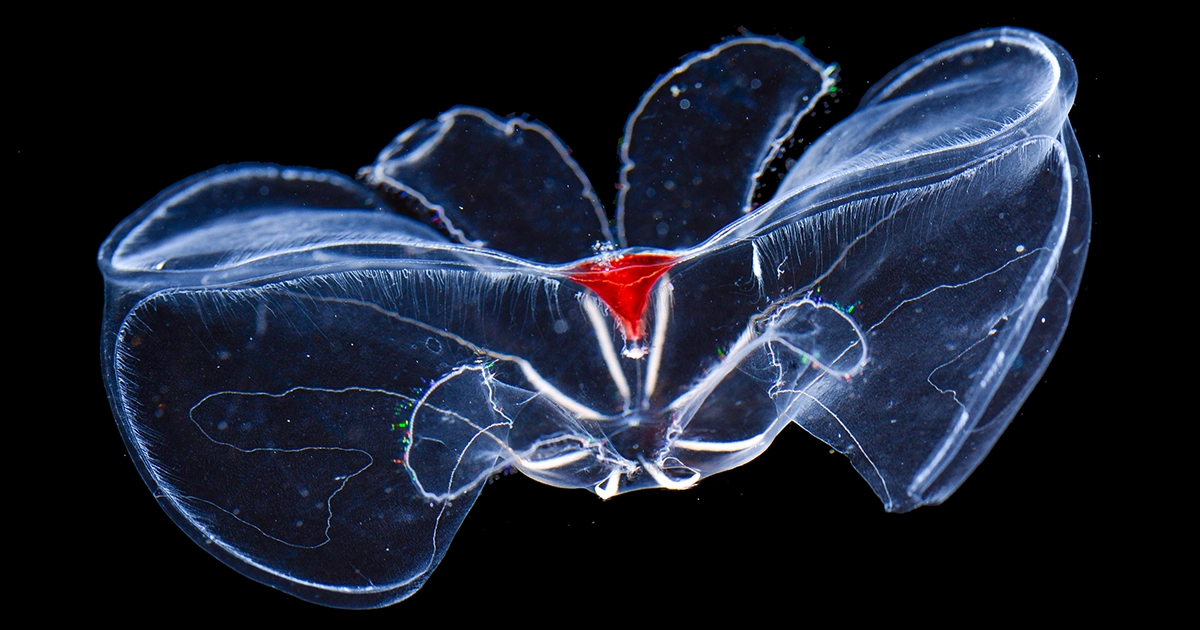
**Scientists have discovered a unique adaptation in the cell membranes of deep-sea comb jellies that allows them to thrive under extreme pressure.** The research, published in Science, reveals that these creatures possess an abundance of plasmalogen lipids, which have a curved shape that helps maintain membrane stability at high depths.
**Comb jellies, or ctenophores, are known to disintegrate when brought to the surface.** This dramatic effect has long puzzled scientists, but the new research provides a molecular explanation. Unlike their shallow-water counterparts, deep-sea comb jellies have cell membranes enriched with plasmalogen lipids, which are rare in surface animals.
**These lipids, with their distinctive curved shape, are crucial for membrane function under high pressure.** The research team, led by Itay Budin and Jacob Winnikoff, used powerful X-rays to study the membranes, revealing the structural differences between deep-sea and shallow-water comb jellies.
**The research suggests that the shape of these lipids is crucial for maintaining membrane fluidity and stability at depth.** This adaptation, termed “homeocurvature adaptation,” allows the membranes to remain functional even under extreme pressure.
**The findings have implications beyond deep-sea biology.** Plasmalogens are also found in humans, particularly in the brain, and their role in maintaining membrane function could be relevant for understanding neurodegenerative diseases. The research also highlights the diversity of life’s adaptations to extreme environments.
**Future research will investigate the universality of this lipid adaptation mechanism across different organisms.** Scientists are eager to explore whether similar adaptations occur in other deep-sea creatures, such as those found at hydrothermal vents, and even in archaea, the third branch of life. This research opens new avenues for understanding the fascinating ways life adapts to extreme conditions and the importance of lipid structure in cellular function.
 First Piper