
Tue Mar 10 02:20:38 UTC 2026: ### Supreme Court Intervenes in West Bengal Electoral Roll Revision Amidst Controversy
The Story:
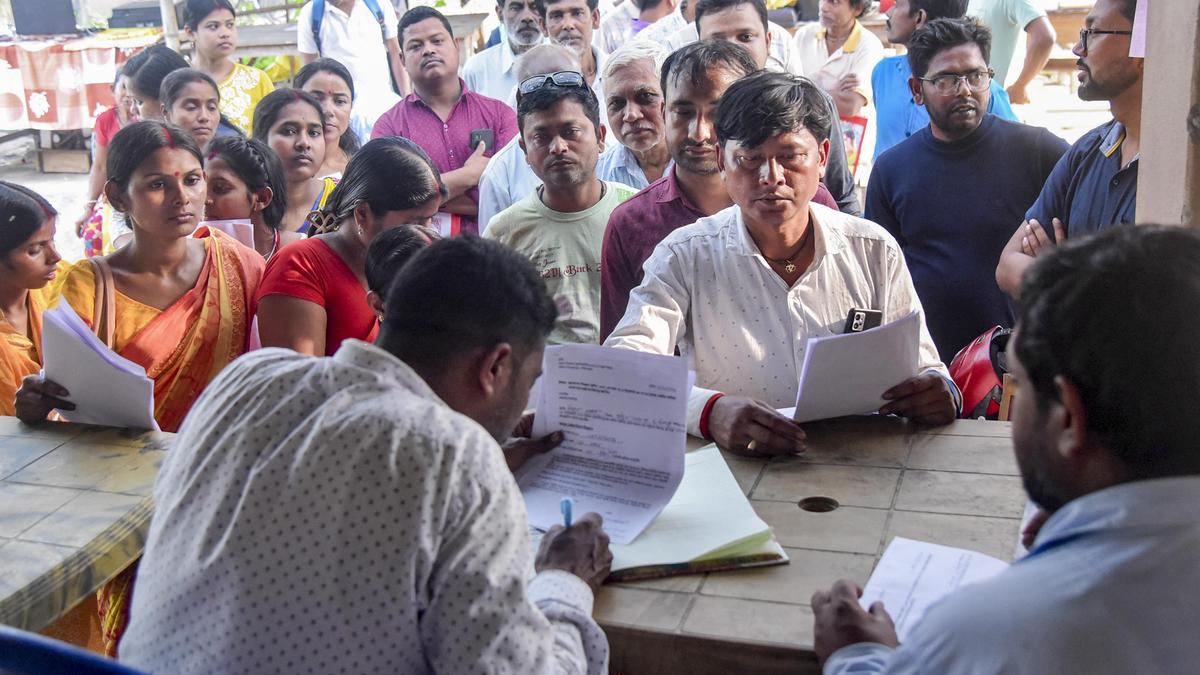
The Supreme Court of India has intervened in the Special Intensive Revision (SIR) of electoral rolls in West Bengal, deploying judicial officers from West Bengal, Odisha, and Jharkhand to adjudicate disputed cases. This intervention followed the Election Commission of India’s (ECI) assertion that the West Bengal state government failed to provide adequate Group ‘A’ officers to oversee the quasi-judicial functions of Electoral Registration Officers (EROs). The ECI claimed that personnel from Group ‘B’ and ‘C’ cadres were deployed instead, which raised concerns about their ability to scrutinize documents and resolve discrepancies in the electoral roll. The court’s action occurred as the second phase of the SIR neared completion across 12 States/Union Territories.
The controversy centers on the State’s challenge to the ECI’s deployment of Micro-Observers and concerns about notices issued under the ‘logical discrepancies’ category. Despite extensions, nearly 60 lakh cases remained pending adjudication in West Bengal, contrasting sharply with the timely completion of the SIR in other states like Tamil Nadu and Kerala. The final electoral roll, published on February 28, 2026, reflects a net reduction of approximately 61 lakh electors (around 8.3%) compared to the pre-SIR roll, with pending adjudications expected to result in supplementary lists.
Key Points:
- The Supreme Court invoked Article 142 to deploy judicial officers in West Bengal to adjudicate SIR cases.
- The Election Commission of India (ECI) cited the State’s failure to provide adequate Group ‘A’ officers as the reason for intervention.
- The State of West Bengal challenged the ECI’s deployment of Micro-Observers and raised concerns about the issuance of notices.
- Nearly 60 lakh cases remained pending adjudication in West Bengal, even after extensions.
- The final electoral roll, published on February 28, 2026, shows a reduction of approximately 61 lakh electors.
- The Chief Minister of West Bengal appeared in person before the Supreme Court on February 4, 2026 regarding the matter.
Critical Analysis:
The intervention of the Supreme Court highlights a significant breakdown in cooperation between the ECI and the West Bengal state government. The ECI’s reliance on personnel requisitioned from Central and State governments, as opposed to having a permanent staff, raises questions about the independence and efficiency of the electoral process, echoing concerns raised during the Constituent Assembly debates. The contrasting completion rates of the SIR in West Bengal versus other states, like Tamil Nadu and Kerala, suggest potential administrative or political factors at play.
Key Takeaways:
- The incident underscores the importance of a pure and accurate electoral roll for free and fair elections.
- The controversy revives the debate regarding the ECI’s need for a permanent machinery for electoral roll preparation and updation.
- The Supreme Court’s intervention aims to balance the timely completion of the SIR with the need for thorough adjudication of disputed cases.
- The significant reduction in the electoral roll raises questions about previous inaccuracies and the effectiveness of the SIR process.
- The episode exposes underlying tensions between the ECI and the state government, potentially impacting future electoral processes.
Impact Analysis:
The Supreme Court’s intervention could set a precedent for similar situations in other states where disputes arise between the ECI and state governments regarding electoral roll revisions. The long-term impact may include increased scrutiny of the ECI’s operational structure and renewed calls for a permanent, independent staff to ensure the integrity of the electoral process. The resolution of the pending 60 lakh cases will be crucial in determining the final composition of the electoral
 First Piper