
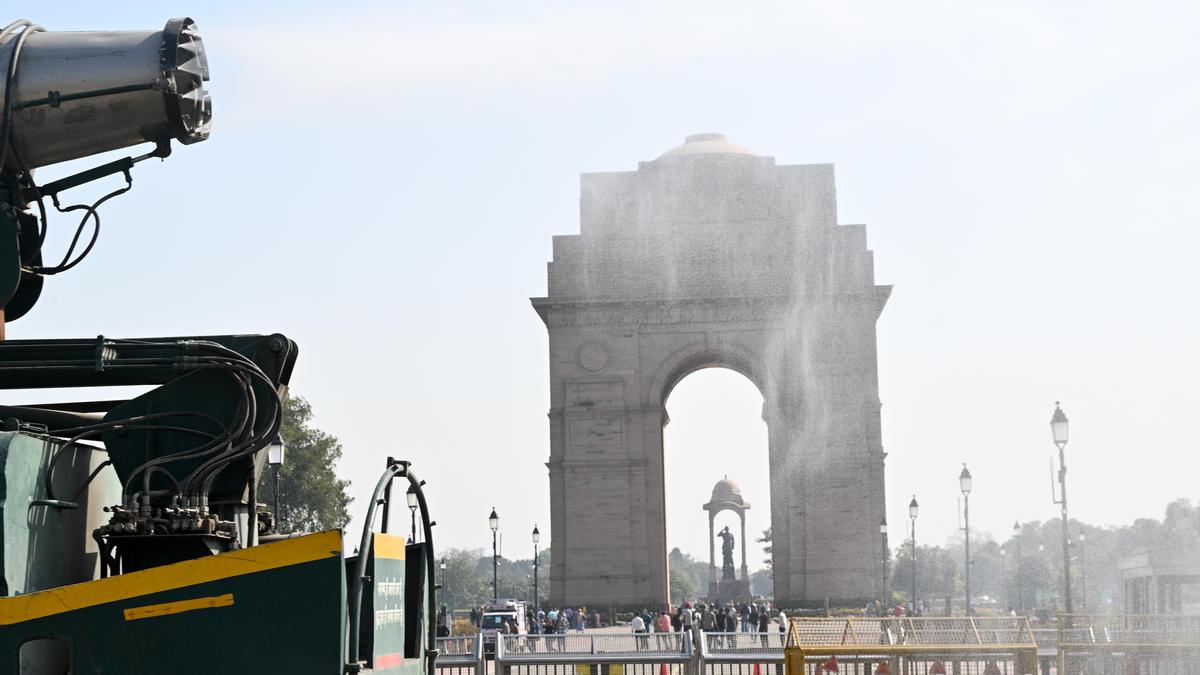
Mon Feb 23 11:33:46 UTC 2026: # Supreme Court Urges Action on Delhi-NCR Air Pollution, Sets March 12 Hearing
The Story:
On February 23, 2026, the Supreme Court of India addressed the persistent air quality crisis in the National Capital Region (NCR) by seeking responses from various Union Ministries and state governments regarding proposals to mitigate pollution from coal-based industries, construction, and vehicular emissions. The court, headed by Chief Justice Surya Kant, is focusing on recommendations from the Commission for Air Quality Management (CAQM) and has set a hearing for March 12, 2026, to further examine the issue of vehicular pollution. The court has mandated that stakeholders submit status reports and action plans outlining steps to address the crisis.
Key Points:
- The Supreme Court is examining proposals to shift coal-based industries out of Delhi-NCR.
- Responses are sought from the Ministry of Environment, Forest and Climate Change (MoEFCC), Ministry of Petroleum and Natural Gas (MoPNG), and the Ministry of Power.
- The court wants a joint proposal for phasing out coal-based industries and identifying alternative fuel sources.
- Uttar Pradesh, Haryana, and Rajasthan are directed to issue public notices and solicit feedback from stakeholders.
- The Delhi government (GNCTD) is required to submit a specific action plan to implement CAQM-recommended long-term solutions.
Critical Analysis:
The Supreme Court’s active involvement underscores the severity of the air pollution crisis in Delhi-NCR. The court’s direct engagement, including seeking responses from multiple ministries and state governments, suggests a lack of sufficient progress through existing regulatory mechanisms. The call for specific action plans and timelines highlights the urgency and the court’s intention to hold stakeholders accountable.
Key Takeaways:
- The Supreme Court is taking a proactive role in addressing the Delhi-NCR air pollution crisis.
- The focus is shifting towards phasing out coal-based industries and finding alternative fuel sources.
- Accountability is being emphasized, with specific action plans and deadlines.
- Collaboration between multiple ministries and state governments is deemed essential for effective solutions.
Impact Analysis:
The Supreme Court’s intervention has potentially far-reaching impacts. If the proposed measures are implemented effectively, they could significantly improve air quality in the Delhi-NCR region, leading to better public health outcomes. The shift away from coal-based industries could also accelerate the transition to cleaner energy sources. However, the success of these initiatives hinges on the timely and coordinated action of all stakeholders, including the Union Ministries, state governments, and the industries themselves. Failure to comply could lead to further legal action and continued environmental degradation. The outcome will likely set a precedent for addressing similar environmental challenges in other heavily polluted regions of India.
 First Piper