
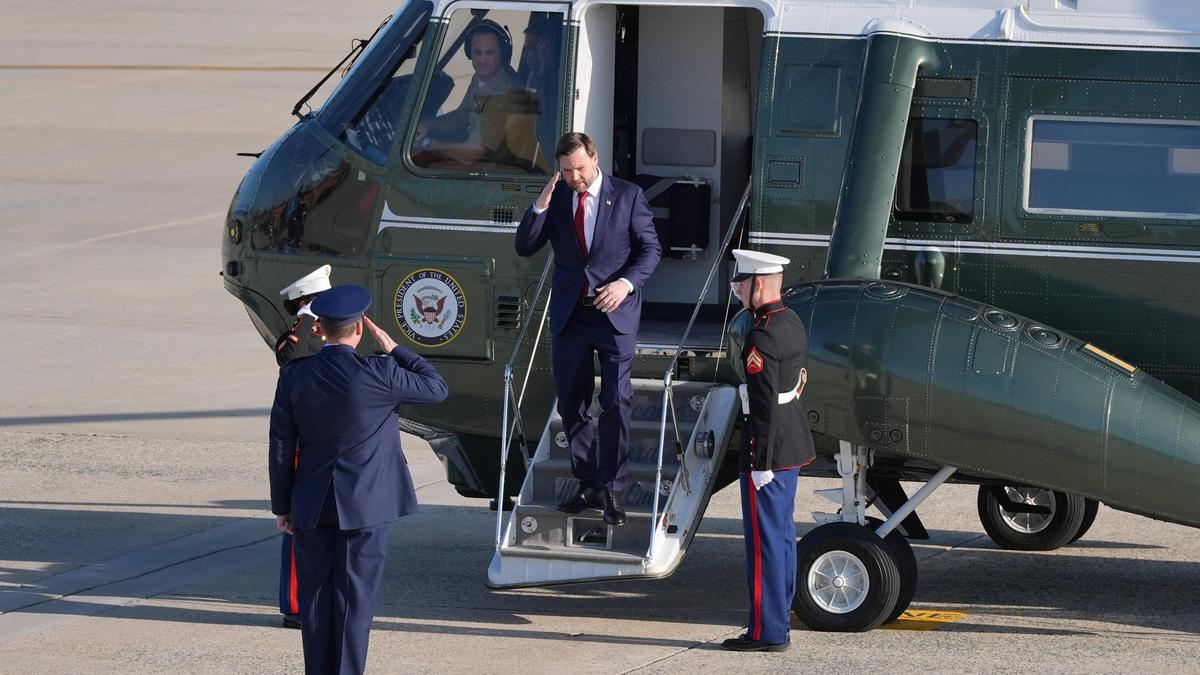
Fri Apr 10 13:33:05 UTC 2026: ### U.S. Vice-President J.D. Vance Heads to Pakistan for Iran War Talks Amidst Tensions
The Story:
U.S. Vice-President J.D. Vance departed for Islamabad, Pakistan on April 10, 2026, to engage in negotiations aimed at ending the ongoing war with Iran. President Donald Trump has tasked Vance, a figure perceived as a reluctant supporter of the conflict, to find a resolution following Trump’s threat to potentially “wipe out” Iranian civilization. Vance issued a warning to Tehran, urging them not to “play” the U.S. as he embarked on this diplomatic mission.
Key Points:
* U.S. Vice-President J.D. Vance is traveling to Pakistan for talks to end the six-week-old war with Iran.
* President Donald Trump assigned Vance to this task, despite Vance’s apparent reservations about the conflict.
* Vance warned Iran against trying to “play” the U.S. during negotiations.
* Trump previously threatened to “wipe out” Iranian civilization.
* The departure occurred on April 10, 2026, from Joint Base Andrews, Maryland.
Critical Analysis:
The selection of J.D. Vance, perceived as a reluctant defender of the conflict, suggests a calculated move by the Trump administration. Appointing someone with reservations about the war could signal a desire for a more measured and potentially conciliatory approach to negotiations. This might be an attempt to de-escalate tensions after Trump’s aggressive rhetoric. The fact that the talks are being held in Pakistan indicates the importance of regional diplomacy in resolving the conflict.
Key Takeaways:
* The U.S. is actively seeking a resolution to the war with Iran through diplomatic channels.
* The Trump administration’s approach to the conflict may be shifting towards de-escalation.
* Pakistan is playing a key role as a mediator in the Iran-U.S. conflict.
* Trump’s earlier threat significantly raises the stakes and complicates the negotiation process.
Impact Analysis:
The success or failure of these negotiations will have significant long-term implications for regional stability in the Middle East and U.S. foreign policy. A successful resolution could lead to a period of reduced tensions and renewed diplomatic engagement. Conversely, failure could escalate the conflict, potentially drawing in other regional powers and further destabilizing the region. The outcome will also influence President Trump’s standing on the international stage and his administration’s approach to future foreign policy challenges.
 First Piper