
Thu Apr 09 13:45:15 UTC 2026: ### Headline: Mumbai-Ahmedabad Bullet Train Project Achieves Milestone as Tunnel Boring Machine Assembly Begins
The Story:
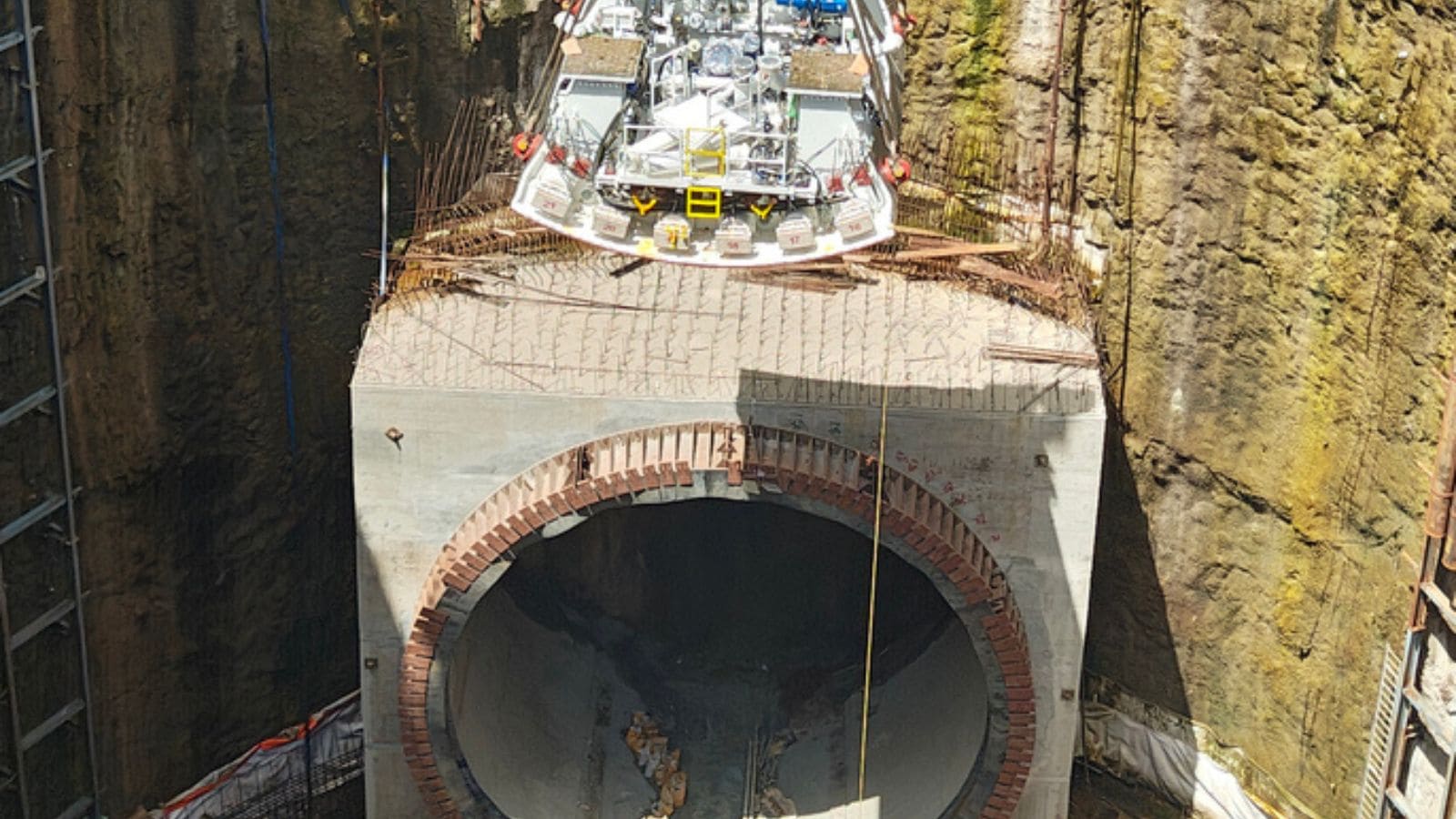
In a significant step forward for the Mumbai-Ahmedabad High Speed Rail (MAHSR) project, the assembly of one of two Tunnel Boring Machines (TBMs) has commenced for the construction of a 21-km underground tunnel in Mumbai. This tunnel, connecting Bandra Kurla Complex (BKC) and Shilphata, represents one of the most challenging sections of the 508-km project, which includes India’s first 7-km undersea tunnel beneath Thane Creek. The assembly process is expected to take at least 97 days, preparing the machine for excavation. Currently, 5 km of the tunnel has already been excavated using the New Austrian Tunneling Method (NATM).
Key Points:
- Assembly of the first TBM has started for the 21-km underground tunnel between BKC and Shilphata.
- The tunnel will be a single tube of 13.1 meters in diameter, accommodating twin tracks.
- The tunnel depth will range from 25 to 57 meters, with the deepest point at 114 meters below Parsik hill.
- The two TBMs, supplied by German company Herrenknecht, weigh 3080 tons (TBM-1) and 3184 tons (TBM-2).
- These are advanced Mix Shield/Slurry technology TBMs designed for complex geological conditions.
- The TBMs can operate at a maximum cutterhead speed of 4 RPM and excavate up to 49 mm per minute.
- The tunnel passes under approximately 600 residential buildings.
- This is the first time a semi-automatic TBM will be used in India, allowing simultaneous drilling and segment deployment.
Key Takeaways:
- The commencement of TBM assembly signifies tangible progress in a complex and critical phase of the Mumbai-Ahmedabad Bullet Train project.
- The use of advanced TBM technology highlights the project’s commitment to precision and safety, especially given the tunnel’s proximity to residential areas and the undersea component.
- Successful completion of this tunnel is crucial for the overall success and timeline of the MAHSR project.
Impact Analysis:
The successful deployment and operation of these TBMs will have a significant impact on future infrastructure projects in India. The use of semi-automatic TBMs, capable of simultaneous drilling and segment deployment, could set a new standard for tunneling efficiency. This could lead to faster project completion times and reduced disruption in urban areas. Furthermore, the experience gained in navigating complex geological conditions and residential areas will be invaluable for similar projects in the future. The success of the Mumbai-Ahmedabad Bullet Train project, particularly this challenging tunnel section, is likely to encourage further investment in high-speed rail infrastructure across India.
 First Piper