
Fri Apr 10 13:58:30 UTC 2026: # Goyal Demands Assurance on Stalin’s Successor Amid Tamil Nadu Election Campaign
The Story:
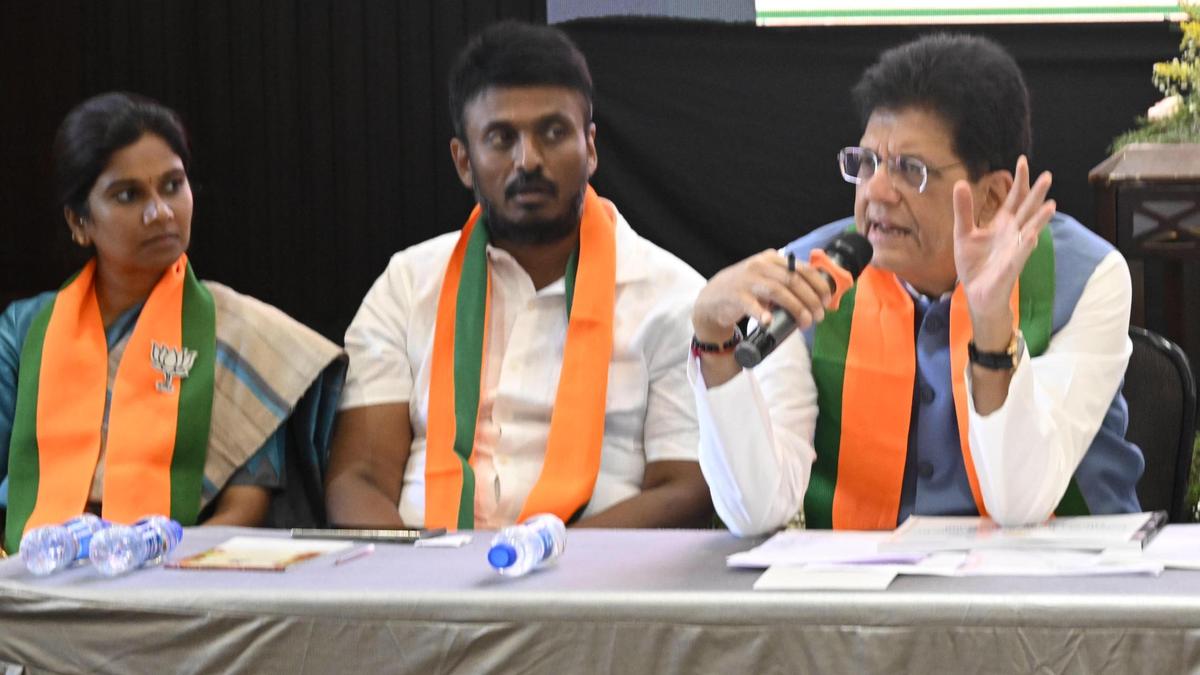
Union Minister for Commerce and Industry, Piyush Goyal, serving as the BJP’s election in-charge for Tamil Nadu, has publicly called on Chief Minister M.K. Stalin to guarantee that his son, Udhayanidhi Stalin, will not be appointed as the next Chief Minister. Goyal made the statement on April 10, 2026, in Erode, emphasizing the importance of respecting Tamil language and culture, referencing Periyar’s legacy in the region. He further accused the Congress party and former Prime Minister Jawaharlal Nehru of disrespecting the Sengol, contrasting it with Prime Minister Narendra Modi’s actions of restoring its dignity.
Key Points:
- Piyush Goyal urged Chief Minister M.K. Stalin to assure the public that Udhayanidhi Stalin would not become Chief Minister.
- Goyal highlighted the significance of Tamil language and culture.
- He criticized the Congress party and Jawaharlal Nehru for their alleged treatment of the Sengol.
- The statement was made in Erode, during the Tamil Nadu Assembly Elections 2026 campaign.
Critical Analysis:
The BJP’s focus on cultural issues and dynastic politics is a recurring strategy in Tamil Nadu elections. Goyal’s remarks are aimed at undermining the DMK’s credibility by playing on perceived cultural sensitivities and concerns about nepotism. The Sengol reference serves as a symbolic attempt to align the BJP with Tamil pride, contrasting it with historical grievances.
Key Takeaways:
- The BJP is actively employing cultural narratives and anti-dynasty rhetoric in its Tamil Nadu election campaign.
- The Sengol continues to be used as a symbolic tool by the BJP to project a connection with Tamil culture.
- The BJP aims to exploit potential public apprehension regarding the succession plans within the DMK.
- The focus on Udhayanidhi Stalin suggests he is perceived as a key figure and a potential vulnerability for the DMK.
Impact Analysis:
This event could potentially influence voter perception by highlighting concerns about dynastic succession and cultural respect. Whether this strategy will resonate with the Tamil electorate remains to be seen, but it signals a clear attempt by the BJP to challenge the DMK’s dominance in the state by leveraging cultural and political sensitivities. The long-term impact will depend on how effectively the DMK counters these narratives and addresses public concerns.
 First Piper