
Fri Apr 10 05:12:59 UTC 2026: ### Artemis II Set to Splashdown After Historic Lunar Flyby, Igniting Space Race with China
The Story:
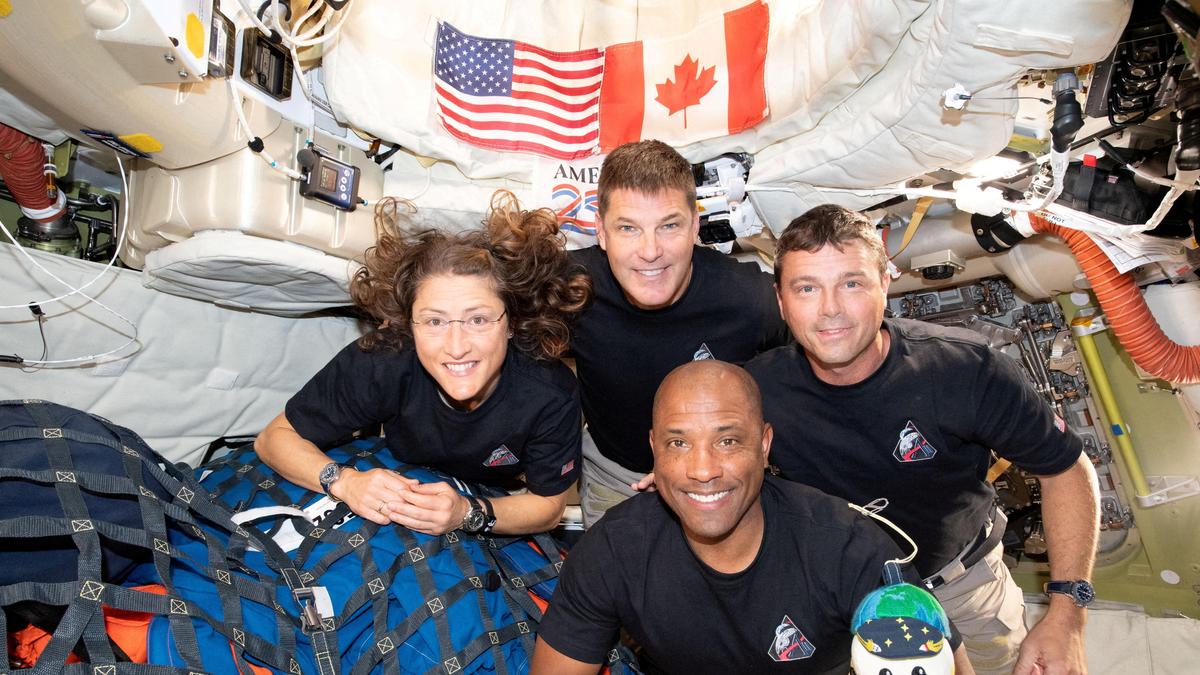
The NASA Artemis II mission, comprised of astronauts Reid Wiseman, Victor Glover, Christina Koch, and Jeremy Hansen, is preparing for its splashdown on Friday, April 10, 2026, concluding a landmark 10-day lunar flyby. The mission achieved a historic milestone, sending humans further from Earth than ever before, gathering critical data, and capturing unprecedented views of the Moon. The Artemis II mission is considered a crucial stepping stone toward future crewed lunar landings and further space exploration.
Key Points:
- The Artemis II mission is scheduled to splashdown on April 10, 2026.
- The crew consists of Reid Wiseman (Commander), Victor Glover (Pilot), Christina Koch (Mission Specialist), and Jeremy Hansen (Mission Specialist**.
- The mission achieved a record for the furthest distance humans have traveled from Earth.
- The mission’s data is considered vital for future crewed lunar landings.
Critical Analysis:
The rapid succession of news items surrounding the Artemis II mission highlights a concerted effort to maintain public interest and emphasize its successes. The Las Vegas Sphere’s transformation into the Moon underscores the mission’s cultural impact and NASA’s public outreach strategy. The focus on capturing images, even leading to internet jokes, further demonstrates the importance of visual media in engaging the public. However, the item regarding “space junk” subtly acknowledges potential challenges and risks associated with space travel. Most significantly, the article “NASA Artemis-II Success Sharpens Focus On China’s 2030 Crewed Landing Goal” reveals the underlying strategic context: a renewed space race.
Key Takeaways:
- The Artemis II mission is a significant achievement for NASA and international collaboration in space exploration.
- The mission serves as a crucial step towards returning humans to the Moon.
- The success of Artemis II intensifies the competition with China’s space program.
- Public engagement and media coverage are integral to sustaining support for space exploration initiatives.
Impact Analysis:
The success of the Artemis II mission has far-reaching implications. It not only advances scientific knowledge and technological capabilities but also fuels a renewed global space race. This competition is likely to drive further innovation and investment in space exploration, potentially leading to accelerated timelines for lunar landings, resource utilization, and even eventual colonization. Furthermore, the international collaboration aspect, exemplified by the inclusion of a Canadian astronaut, sets a precedent for future joint missions, fostering cooperation and knowledge sharing among nations. The long-term impact includes a potential paradigm shift in our understanding of the universe and humanity’s place within it.
 First Piper