
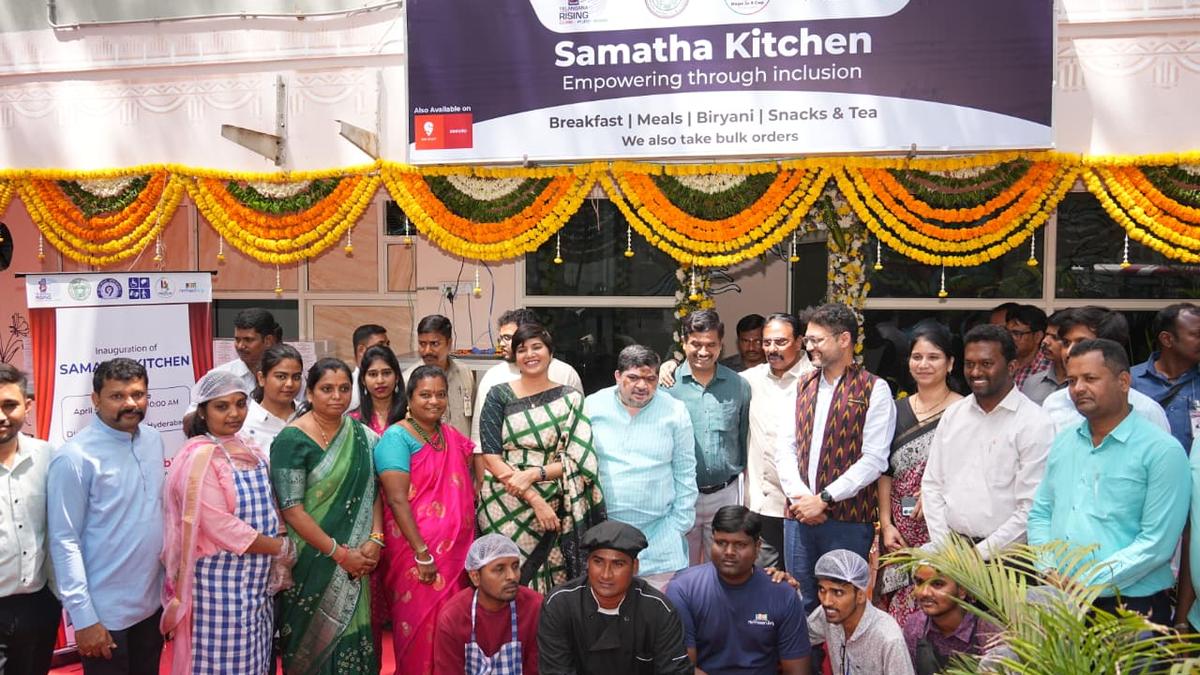
Fri Apr 10 07:34:21 UTC 2026: Headline: Hyderabad Opens “Samatha Kitchen,” Pioneering Repurposed Materials and Marginalized Community Livelihoods
The Story:
On April 9, 2026, Hyderabad inaugurated “Samatha Kitchen,” a cafe built entirely from repurposed materials. Located at the Hyderabad District Collectorate in Lakdi-ka-pul, the cafe embodies the “Hope In a Cup (HIC)” model. The initiative aims to transform discarded waste into functional infrastructure, providing livelihood opportunities for individuals from marginalized communities. Minister Ponnam Prabhakar and Hyderabad District Collector Hari Chandana Dasari officially opened the cafe.
Key Points:
* “Samatha Kitchen” is a cafe constructed from repurposed materials, including discarded tires and recycled plastic.
* The cafe operates under the “Hope In a Cup (HIC)” model.
* The initiative aims to create livelihoods for marginalized communities.
* The inauguration took place at the Hyderabad District Collectorate in Lakdi-ka-pul.
* Minister Ponnam Prabhakar and Hyderabad District Collector Hari Chandana Dasari attended the opening.
Critical Analysis:
The opening of Samatha Kitchen occurs amidst a backdrop of seemingly disparate global and local events. The news of Israeli strikes in Tyre, Lebanon, underscores ongoing international conflicts, while reports of pet cafes in Pune and new cafes in Chennai highlight evolving social trends and consumer preferences within India. The expansion of UDAN Yatri Cafe suggests a focus on affordable dining options at airports. Samatha Kitchen, however, represents a more profound shift towards sustainable practices and social inclusion, contrasting sharply with the destructive nature of international conflict and moving beyond mere consumerism. This initiative is a proactive step toward addressing waste management and uplifting marginalized communities, indicating a growing awareness and action towards sustainable development within India.
Key Takeaways:
* “Samatha Kitchen” showcases a commitment to environmental sustainability through repurposing waste.
* The project prioritizes social inclusion by providing livelihood opportunities for marginalized communities.
* The initiative highlights a growing trend of innovative solutions to address waste management and social inequality.
* Government support, as evidenced by Minister Prabhakar’s presence, is crucial for such initiatives.
* The “Hope In a Cup” model could serve as a blueprint for similar projects in other regions.
Impact Analysis:
The “Samatha Kitchen” model has the potential for significant long-term impact. Firstly, it promotes a circular economy by repurposing waste materials, reducing landfill burden and environmental pollution. Secondly, by creating employment opportunities for marginalized communities, it contributes to social equity and reduces poverty. If scaled effectively, this model could lead to the establishment of numerous similar enterprises across India, fostering a culture of sustainability and social responsibility. Furthermore, the success of “Samatha Kitchen” could inspire other businesses and organizations to adopt eco-friendly practices and prioritize social impact in their operations, leading to a more sustainable and equitable future.
 First Piper