
Fri Apr 10 10:44:04 UTC 2026: # Major Maoist Surrender in Telangana Signals Potential Shift in Regional Insurgency
The Story:
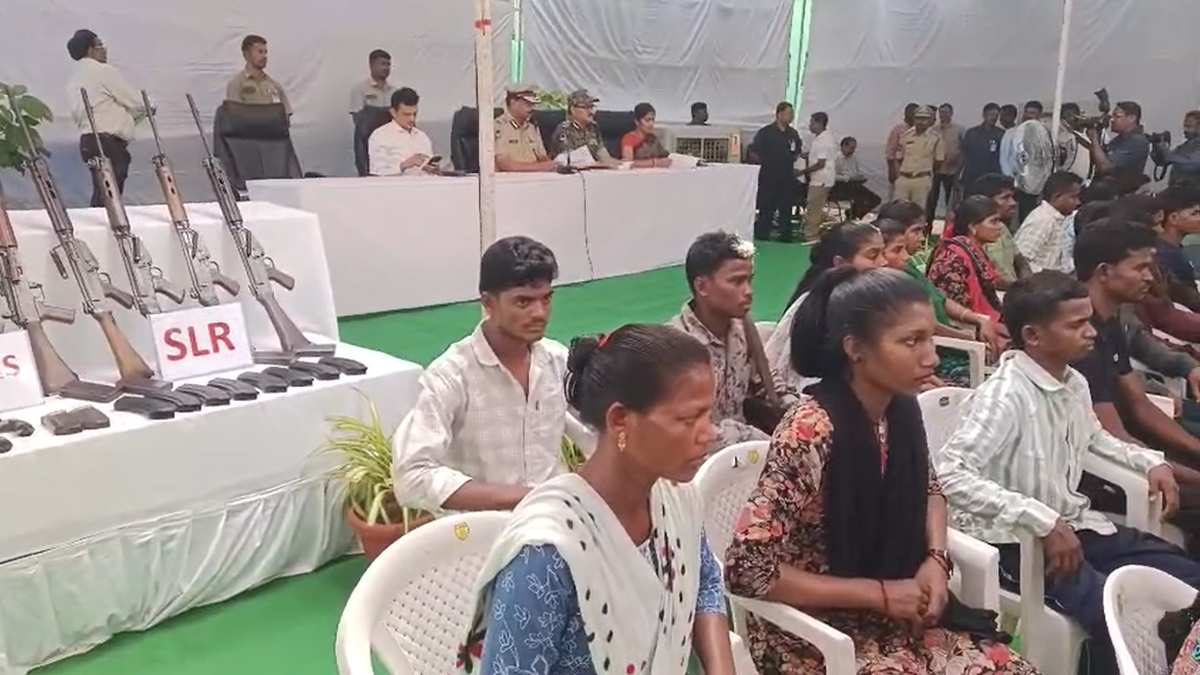
On Friday, April 10, 2026, a significant group of 42 CPI (Maoist) cadres, including high-ranking members of the People’s Liberation Guerrilla Army (PLGA) and the Telangana State Committee, surrendered to Telangana police in Hyderabad. This surrender included the handover of a substantial cache of weapons, ammunition, and gold, marking a notable blow to the Maoist insurgency in the region.
The surrendered individuals include key figures such as 47-year-old Sodi Malla, a battalion commander and member of the Dandakaranya Special Zonal Committee, 40-year-old Chapa Narayana, a State Committee member and military chief of the Telangana State Committee, and 40-year-old Kadthi Sannu, a divisional committee member.
Key Points:
- 42 CPI (Maoist) cadres surrendered to Telangana police on April 10, 2026.
- The surrendered included senior members of the People’s Liberation Guerrilla Army (PLGA) and the Telangana State Committee.
- 36 firearms, 1,007 rounds of ammunition, two country-made grenades, and 800 grams of gold were handed over.
- Key leaders who surrendered include Sodi Malla, Chapa Narayana, and Kadthi Sannu.
Critical Analysis:
The surrender follows a series of related events indicating a possible weakening of Maoist influence in the region. The surrender of five PLGA members in Andhra Pradesh just a day prior, on April 9, 2026, suggests a potential trend. Furthermore, the opinion piece published on April 6, 2026, discussing the Dantewada Massacre and strategies to remain Maoist-free, indicates ongoing governmental and societal focus on combating the insurgency. This concentrated pressure, combined with potential internal issues within the Maoist organizations, may be contributing to the increased surrenders.
Key Takeaways:
- The large-scale surrender represents a significant setback for the CPI (Maoist) in Telangana.
- The surrender of key leaders will likely disrupt the operational capabilities and organizational structure of the Maoist groups in the region.
- Increased surrenders may reflect a broader trend of weakening Maoist influence due to sustained governmental pressure and internal struggles.
- The event highlights the ongoing efforts by Indian authorities to combat Maoist insurgency.
Impact Analysis:
The surrender of these Maoist cadres has the potential for long-term implications on the security landscape of Telangana and surrounding regions. The loss of experienced leaders and a significant amount of weaponry could severely hamper the Maoist’s ability to conduct operations in the short term. Furthermore, it could encourage other disillusioned cadres to consider surrendering, potentially leading to a cascade effect. This event could also embolden security forces and provide them with valuable intelligence, further weakening the Maoist presence and strengthening governmental control in previously contested areas. The success of rehabilitation programs for surrendered Maoists will be crucial in ensuring long-term stability and preventing future resurgence of the insurgency.
 First Piper