
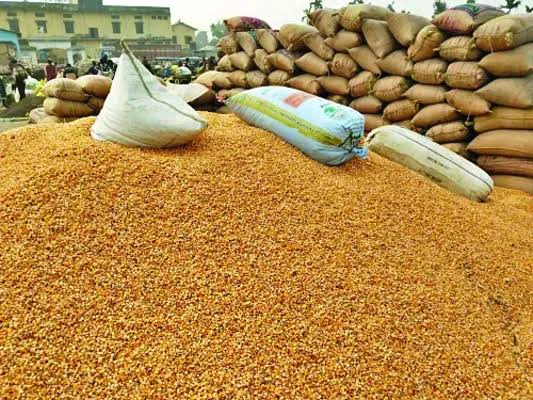
Thu Apr 09 13:10:00 UTC 2026: ### Headline: Andhra Pradesh Maize Farmers Face Losses as Government Procurement Lags
The Story:
Maize farmers in the district are facing significant financial distress due to the lack of government procurement centers and inadequate support prices for their crops. Despite promises from the state Finance Minister Payyavula Keshav at the end of the previous Kharif season, no action has been taken to establish procurement centers or provide the promised support price of ₹2400 per quintal. Farmers are drawing a comparison to neighboring Telangana, where the government provides support prices and procurement centers for maize. Without government intervention, farmers are forced to sell their produce to private intermediaries at drastically reduced rates, sometimes as low as ₹1600-₹1750 per quintal, which doesn’t even cover their production costs.
Key Points:
- Maize farmers in the district are suffering losses due to the absence of government procurement centers.
- The promised support price of ₹2400 per quintal has not been implemented.
- Farmers are incurring production costs of up to ₹40,000 per acre.
- Private intermediaries are exploiting the situation by offering significantly lower prices (₹1600-₹1750 per quintal).
- Farmers are appealing to the District Collector to intervene and establish procurement centers through Markfed.
- Telangana is cited as a contrasting example where maize farmers receive support through government procurement.
Key Takeaways:
- Government inaction is exacerbating the financial difficulties of maize farmers in the district.
- The lack of procurement centers allows private intermediaries to exploit farmers, leading to significant losses.
- The situation highlights a disparity in agricultural support between Andhra Pradesh and neighboring Telangana.
- Farmers are heavily reliant on government intervention to ensure fair prices and prevent financial ruin.
- Timely action is needed to alleviate the immediate financial distress and prevent future losses.
 First Piper