
Sun Apr 05 10:16:24 UTC 2026: # Octopus Mating Secrets Revealed: Specialized Arm Acts as Sensory Organ
The Story:
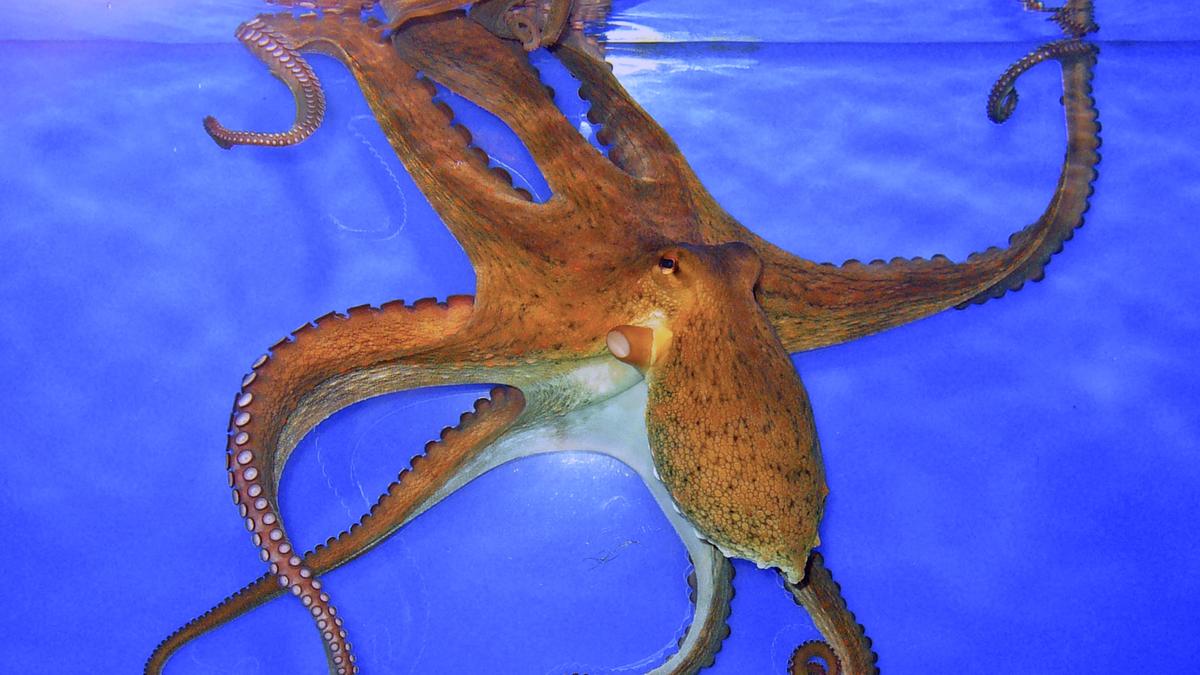
Researchers have discovered that male octopuses utilize a specialized arm, the hectocotylus, not just for sperm delivery as previously thought, but as a sophisticated sensory organ to identify females. The hectocotylus “tastes” for progesterone, a hormone present in the female’s reproductive tract and skin, enabling the male to locate the oviduct for insemination, even in complete darkness. This evolutionary adaptation allows for efficient reproduction during the octopus’s brief encounters.
Key Points:
* Male octopuses use the hectocotylus to detect progesterone, a female hormone.
* The hectocotylus allows males to identify and inseminate females even in darkness.
* Researchers identified a receptor called CRT1 that triggers mating behavior, evolved from ancient neurotransmitter receptors.
* The evolutionary innovation of the hectocotylus is widespread across octopuses and squids.
* The findings highlight how small changes in protein structures can lead to complex new behaviors.
* Published on April 05, 2026.
Key Takeaways:
* Octopus reproductive strategies are more complex than previously understood.
* Evolutionary adaptations can lead to highly specialized sensory organs.
* The discovery highlights the biodiversity of the oceans and the potential for further biological discoveries.
* Research suggests a merging of sensory assessment and gamete delivery into a single appendage for efficient reproduction.
 First Piper