
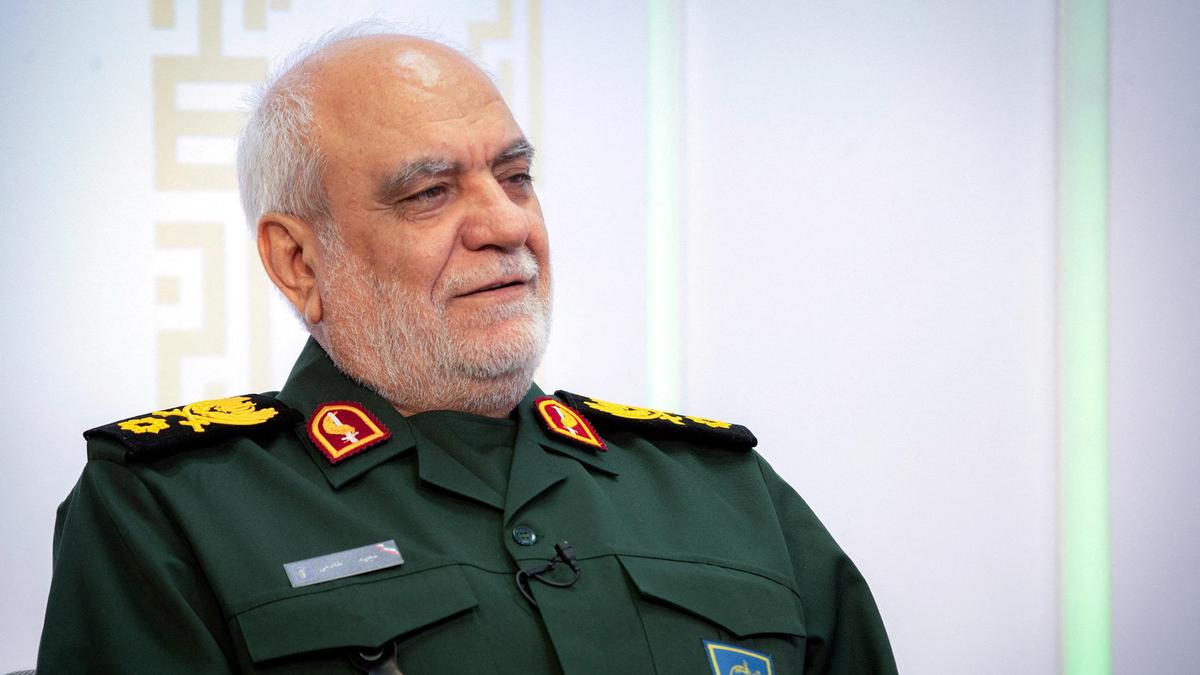
Mon Apr 06 21:56:31 UTC 2026: ### Headline: U.S.-Israeli Airstrike Kills Iranian Intelligence Chief Amid Escalating Conflict
The Story:
A U.S.-Israeli airstrike on April 6, 2026, resulted in the death of Major General Majid Khademi, the head of Iran’s Revolutionary Guards’ intelligence organization. Khademi had been sanctioned by the United States earlier this year for his role in suppressing anti-government protests. This strike is part of a broader campaign that has targeted senior Iranian political and military figures since the start of the Iran-Israel war on February 28, 2026.
The Revolutionary Guards paid tribute to Khademi’s contributions to Iranian intelligence and security, emphasizing his role in confronting foreign threats. His death follows a series of targeted killings of high-ranking Guards officials, including their commander-in-chief, Mohammad Pakpour, highlighting the intensity of the ongoing conflict.
Key Points:
- Major General Majid Khademi, head of Iran’s Revolutionary Guards’ intelligence, was killed in a U.S.-Israeli airstrike on April 6, 2026.
- Khademi was sanctioned by the U.S. Treasury for his role in suppressing protests in January 2026.
- The airstrike is part of a series of targeted killings of Iranian leaders since the start of the Iran-Israel war on February 28, 2026.
- Other high-ranking Guards officials, including commander-in-chief Mohammad Pakpour, have also been killed.
- Iran has shown resilience in replacing killed leaders and continuing the war.
Critical Analysis:
The recent events highlight a clear escalation in the ongoing conflict between Iran, the U.S., and Israel. The targeted killings of key Iranian military figures, including intelligence chiefs and commanders, suggest a deliberate strategy by the U.S. and Israel to weaken Iran’s military and intelligence capabilities. The timing of these strikes, amidst broader discussions of the Strait of Hormuz and U.S. involvement, indicates a calculated effort to exert maximum pressure on the Iranian regime.
Key Takeaways:
- The U.S. and Israel are actively targeting high-ranking Iranian military and intelligence officials.
- The conflict is escalating with significant implications for regional stability.
- Iran is demonstrating resilience in the face of targeted killings.
- The Strait of Hormuz remains a critical point of contention.
- The U.S. continues to assert its influence in the region, with potential economic dimensions (charging for Strait passage).
Impact Analysis:
The targeted killings of Iranian leaders are likely to have significant long-term implications. Firstly, it will likely fuel further retaliation from Iran and its proxies, potentially leading to a wider regional conflict. Secondly, the loss of experienced intelligence officials could temporarily weaken Iran’s ability to counter threats, but also drive them to adopt more aggressive and unpredictable strategies. The ongoing conflict will undoubtedly reshape the geopolitical landscape of the Middle East, with lasting consequences for regional alliances and power dynamics.
 First Piper