
Tue Apr 07 05:31:15 UTC 2026: ### Supreme Court Begins Final Hearing on Religious Discrimination Against Women, Including Sabarimala Case
The Story:
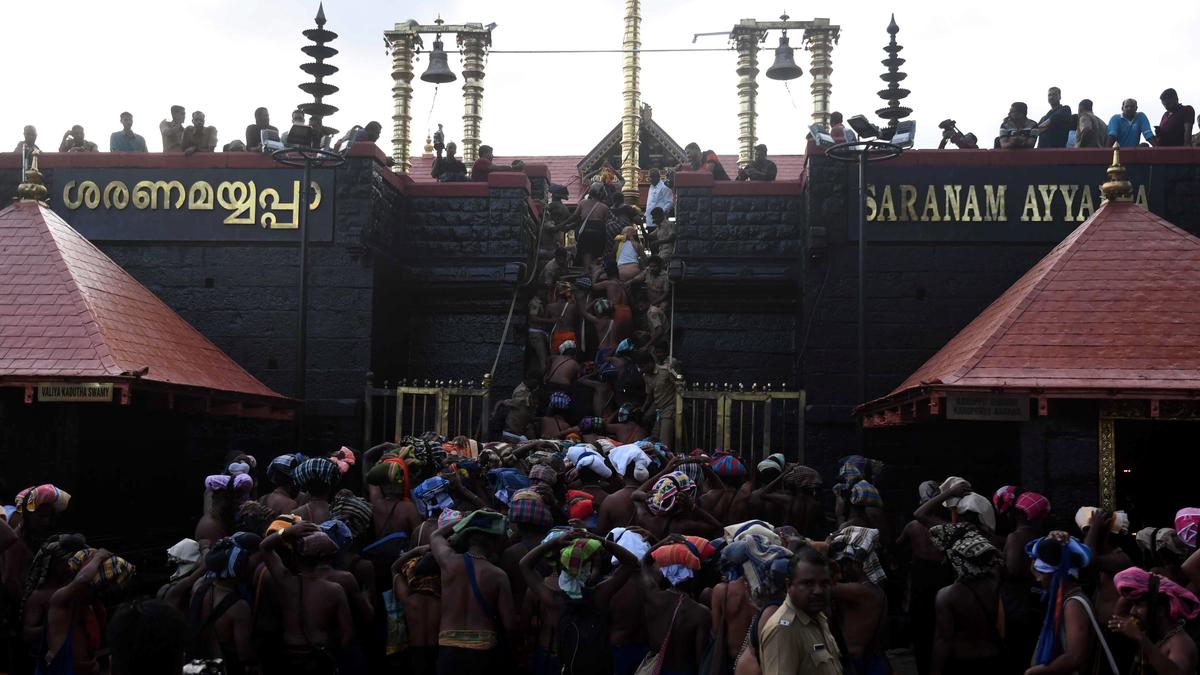
A nine-judge bench of the Supreme Court commenced its final hearing on April 7, 2026, on petitions concerning religious discrimination against women at places of worship, including the Sabarimala Temple in Kerala. This hearing revisits a 2018 verdict that lifted the ban on women aged 10 to 50 entering the Ayyappa shrine. The court is also examining the broader scope of religious freedom and the extent of judicial intervention in religious matters. The Union government has cautioned against rigid definitions of religious denominations and essential practices, emphasizing the plural nature of Hinduism.
Key Points:
- The Supreme Court is hearing pleas on religious discrimination against women, focusing on the Sabarimala Temple entry issue.
- A 2018 verdict lifted the ban on women of menstruating age entering Sabarimala, but a subsequent referral sent the matter to a larger bench in 2019.
- The Union government argues against a “straight-jacket definition” of religious denomination and essential religious practices.
- The nine-judge bench, headed by Chief Justice Surya Kant, will hear arguments throughout April, aiming to conclude the case by the end of the month.
- The case has been broadened to include similar petitions related to Muslim women entering mosques, Parsi women marrying outside their faith entering their religious place of worship, and female genital mutilation in the Dawoodi Bohra community.
Critical Analysis:
The Supreme Court’s decision to revisit the Sabarimala case and related issues reflects a complex negotiation between individual rights, religious freedom, and constitutional principles. The Union government’s stance underscores the challenges of defining religious identity and practices in a diverse country like India, hinting at a preference for a broader, more inclusive interpretation of religious freedom, likely to avoid alienating various religious groups. The inclusion of cases from multiple faiths suggests an attempt to establish a consistent legal framework applicable across different religious communities.
Key Takeaways:
- The Supreme Court is tackling a sensitive and complex issue with significant implications for religious freedom in India.
- The Union government is advocating for a flexible approach to defining religious practices, potentially to safeguard the pluralistic nature of Hinduism.
- The outcome of this case will likely set a precedent for judicial intervention in religious matters and the interpretation of religious freedom under the Constitution.
- The court is under pressure to balance individual rights with the protection of religious practices.
- The inclusion of cases from different faiths indicates a desire for a comprehensive legal solution.
Impact Analysis:
The ruling in this case will have long-term implications for the relationship between the judiciary, the state, and religious communities in India. A narrow definition of essential religious practices could lead to increased judicial scrutiny of religious customs, potentially infringing on religious freedom. Conversely, a broad definition could make it difficult to address discriminatory practices within religious communities. The Supreme Court’s decision will likely influence future legal challenges to religious practices and shape the discourse on religious freedom and gender equality in India. The case also reflects a growing trend of judicial activism in matters of personal law and religious practices, which could lead to further debates and legal challenges in the future.
 First Piper