
Tue Apr 07 07:18:13 UTC 2026: # Supreme Court Commences Final Hearing on Religious Discrimination Against Women in Sabarimala Case
The Story:
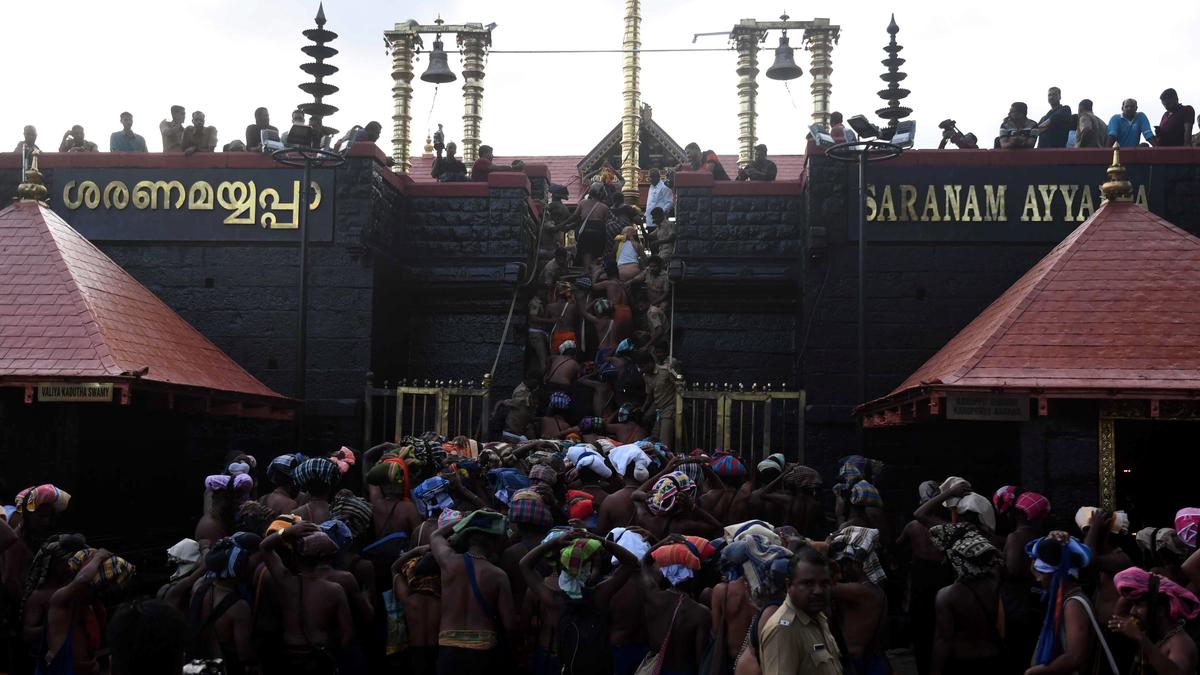
A nine-judge bench of the Supreme Court has begun its final hearing on petitions concerning religious discrimination against women, specifically focusing on the Sabarimala Temple entry issue and the broader scope of religious freedom. This follows the September 2018 Supreme Court verdict that lifted the ban on women of menstruating age entering the Sabarimala Ayyappa shrine in Kerala. In 2019, another bench referred the issue of discrimination against women at various places of worship to a larger bench. The Union government argues against a rigid definition of ‘religious denomination’ or ‘essential religious practices,’ emphasizing Hinduism’s pluralistic nature.
Key Points:
* The Supreme Court is hearing pleas on religious discrimination against women, particularly regarding the Sabarimala Temple.
* In September 2018, a 4:1 majority verdict lifted the ban on women aged 10-50 from entering Sabarimala.
* In 2019, the Supreme Court referred the issue to a larger bench.
* The Union government opposes strict definitions of ‘religious denomination’ and ‘essential religious practices.’
* Solicitor General Tushar Mehta argues against narrowly defining religious denominations, citing examples like Ajmer Dargah and Shirdi Saibaba temple.
* Justice B.V. Nagarathna highlighted the distinction between propagating religion and forcible conversion.
* The court aims to conclude the case by the end of April.
* Chief Justice Surya Kant is heading the nine-judge bench.
Key Takeaways:
* The Supreme Court is revisiting the sensitive issue of gender discrimination in religious practices.
* The Union government is advocating for a broader interpretation of religious freedom, reflecting India’s diverse religious landscape.
* The outcome of this hearing could significantly impact the definition and scope of religious freedom in India, particularly concerning Hinduism.
* The court is addressing not only the Sabarimala case but also broader questions about judicial intervention in religious matters.
* The final decision has the potential to reshape the relationship between religious practices, constitutional rights, and gender equality in India.
Impact Analysis:
This case has profound long-term implications for religious freedom, gender equality, and the judiciary’s role in interpreting religious practices in India. The Supreme Court’s decision will likely set a precedent for future cases involving religious customs and women’s rights. A ruling that favors a broader interpretation of religious freedom could empower religious groups to maintain traditional practices, while a ruling emphasizing gender equality could lead to reforms in religious institutions. The impact will be felt across various religious communities and influence the ongoing debate about the balance between religious freedom and social justice.
 First Piper