
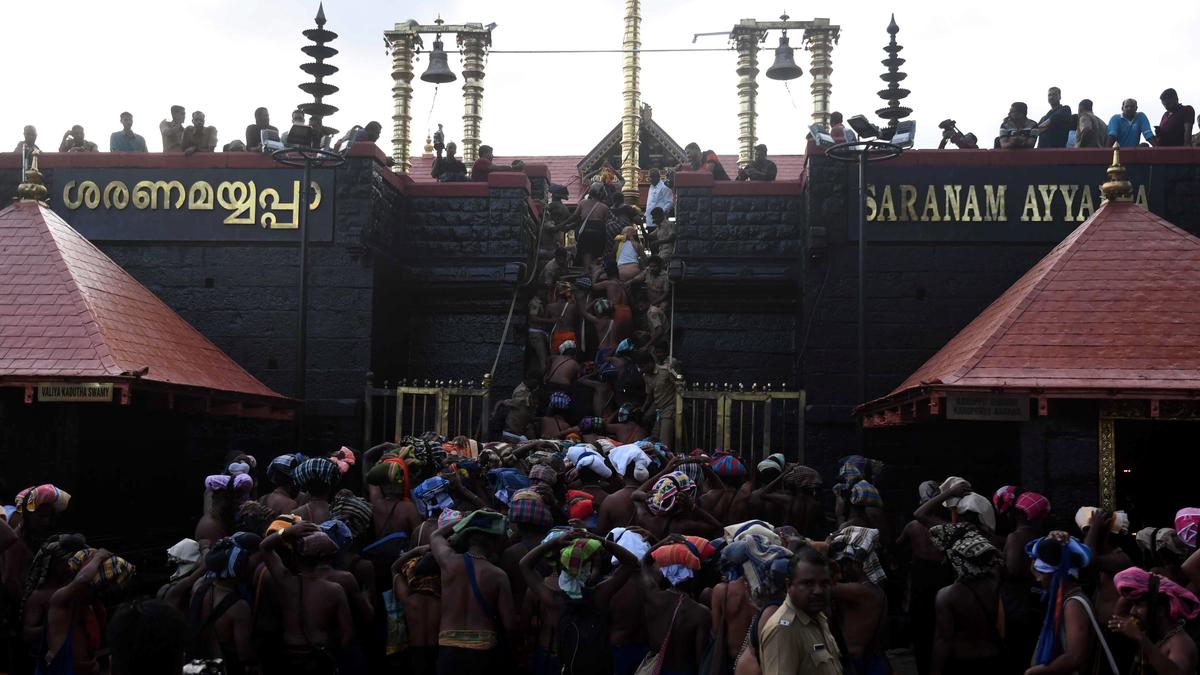
Tue Apr 07 07:44:35 UTC 2026: # Supreme Court Hears Final Arguments on Religious Discrimination Against Women, Including Sabarimala Temple Entry
The Story:
A nine-judge bench of the Supreme Court has commenced final hearings on petitions concerning religious discrimination against women at religious sites, most notably the Sabarimala Temple in Kerala. The hearings aim to address the scope of religious freedom and the extent to which courts can intervene in religious practices. This follows a 2018 ruling that lifted the ban on women of menstruating age entering the Sabarimala temple, and a subsequent 2019 referral to a larger bench to consider broader questions of law related to religious freedom.
Key Points:
- The Supreme Court is hearing pleas relating to discrimination against women at religious places, including Sabarimala Temple.
- In September 2018, a five-judge bench lifted the ban on women aged 10-50 from entering Sabarimala, deeming the practice illegal.
- In 2019, another five-judge bench referred the issue to a larger bench.
- The Union government argues against a strict definition of ‘religious denomination’ or ‘essential’ religious practices.
- Solicitor General Tushar Mehta argues that courts cannot narrowly define ‘religious denominations’ and ‘essential religious practices’.
- The court intends to wrap up the case by the end of April.
- The bench will also look into the extent to which constitutional courts could engage in core matters of faith.
Key Takeaways:
- The Supreme Court is revisiting the complex intersection of religious freedom, gender equality, and judicial review in India.
- The Union government is advocating for a broader interpretation of religious freedom, emphasizing the diversity within Hinduism and other faiths.
- The outcome of this case could significantly impact the future of religious practices and the role of the judiciary in religious matters in India.
- The court is grappling with defining the boundaries of judicial intervention in religious practices, particularly concerning essential religious practices and constitutional morality.
- The Solicitor General is using examples of inter-faith pilgrimage sites to argue against rigid definitions of “religious denomination,” highlighting the unique religious landscape of India.
 First Piper