
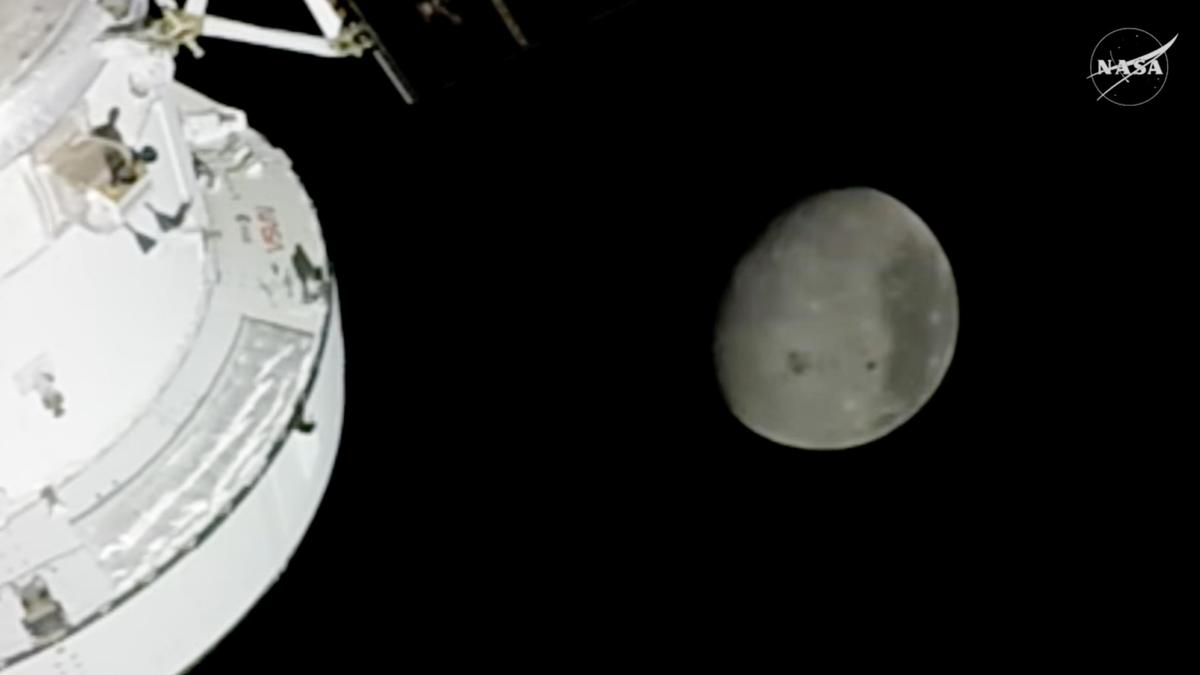
Mon Apr 06 18:40:58 UTC 2026: ### Headline: Artemis II Astronauts Surpass Apollo 13 Record, Journey Further From Earth Than Any Human Before
The Story:
On April 6, 2026, the Artemis II mission made history as its crew of four astronauts surpassed the record for the furthest distance traveled from Earth by humans. This milestone was previously held by the Apollo 13 mission in 1970. The Artemis II team is undertaking a lunar flyby, spending over six hours analyzing and documenting lunar surface features. The Orion capsule is employing a “free-return trajectory,” allowing for a return trip to Earth in approximately four days. The mission aims to gather crucial data for future lunar landings, including Artemis III in 2027 and Artemis IV in 2028.
Key Points:
- Artemis II surpassed the Apollo 13 record by approximately 4,105 miles (6,606 km), reaching a distance of 252,760 miles (406,778 km) from Earth.
- The mission includes several firsts: Victor Glover is the first person of color to fly around the Moon, Christina Koch is the first woman, and Jeremy Hansen is the first non-American.
- A 40-minute communication blackout occurred as the spacecraft passed behind the Moon.
- Astronauts witnessed previously unseen lunar territory, including the Orientale basin.
- The mission is crucial for preparing for future crewed lunar surface missions (Artemis III and IV).
- The late Jim Lovell of Apollo 8 and 13 missions provided a pre-recorded message to the Artemis II crew.
Key Takeaways:
- The Artemis II mission represents a significant step forward in human space exploration, building upon the legacy of the Apollo program.
- The mission prioritizes both technological advancement and the unique observational capabilities of the human eye.
- Artemis II’s success is vital for the planned Artemis III and Artemis IV missions, which aim to return humans to the lunar surface.
- The mission highlights the international collaboration in space exploration, with a Canadian astronaut included in the crew.
- The mission demonstrates NASA’s continued commitment to pushing the boundaries of human spaceflight and scientific discovery.
Impact Analysis:
The Artemis II mission’s success carries profound long-term implications:
- Technological Advancement: The data collected during the flyby will inform the design and operation of future lunar missions, potentially leading to more efficient and safer spacecraft.
- Scientific Discovery: The first-hand observations of the lunar surface will enhance our understanding of the Moon’s geology and history.
- Inspiration and Education: The mission serves as a powerful source of inspiration for future generations of scientists, engineers, and explorers.
- International Collaboration: The inclusion of astronauts from diverse backgrounds strengthens international partnerships in space exploration.
- Economic Opportunities: The Artemis program is expected to stimulate economic growth in the space sector, creating new jobs and opportunities for innovation.
 First Piper