
Tue Apr 07 02:01:33 UTC 2026: # Artemis II Mission Completes Lunar Flyby, Paving Way for Future Lunar Landings
The Story:
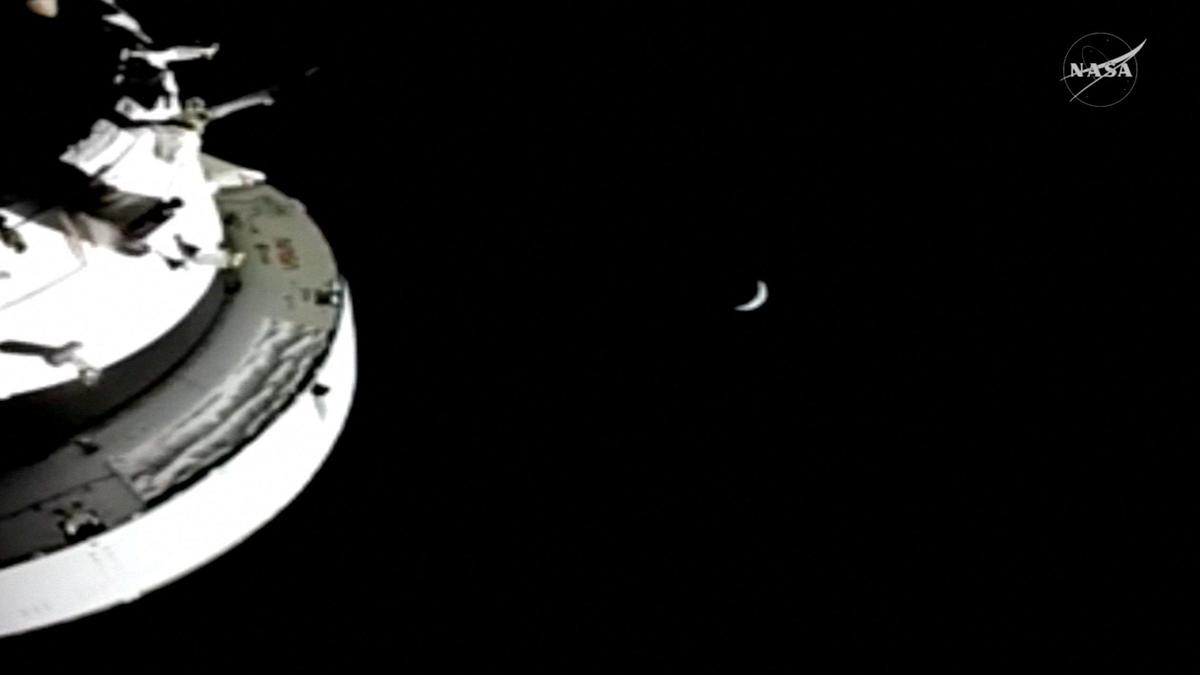
The Artemis II mission, NASA’s first crewed lunar flyby in over half a century, successfully executed its mission on April 6, 2026, sending back detailed observations of the Moon. The four astronauts aboard the Orion capsule traveled further from Earth than any human before, reaching a maximum distance of 407,773 km. During the flyby, the crew came within an estimated 6,545 km of the lunar surface, analyzed lunar features, and even named a crater in honor of mission commander Reid Wiseman’s late wife. The mission paves the way for future lunar landings under the Artemis program.
Key Points:
- The Artemis II mission completed a lunar flyby on April 6, 2026.
- The Orion capsule reached a maximum distance of 407,773 km from Earth.
- The crew came within 6,545 km of the Moon’s surface.
- The astronauts named a crater “Carroll” in honor of Reid Wiseman’s late wife.
- The crew includes Victor Glover, the first person of color to fly around the Moon, Christina Koch, the first woman, and Canadian Jeremy Hansen, the first non-American.
- Communication with the crew was temporarily lost for approximately 40 minutes when the spacecraft passed behind the Moon.
- The mission gathered visual data of the Moon’s surface, including the Orientale basin.
- The mission is designed to prepare for the Artemis III mission in 2027 and Artemis IV in 2028, which will involve lunar landings.
Key Takeaways:
- The Artemis II mission marks a significant step forward in NASA’s renewed focus on lunar exploration.
- The mission serves as a crucial test for the Orion spacecraft and its systems in preparation for future crewed landings.
- The inclusion of a diverse crew highlights NASA’s commitment to inclusivity in space exploration.
- The mission’s success reinforces the importance of human observation in scientific discovery, even with technological advancements.
- The Artemis program aims to establish a sustainable presence on the Moon, with long-term implications for space resource utilization and scientific research.
Impact Analysis:
The Artemis II mission has significant implications for the future of space exploration. Its success validates the technological infrastructure developed for the Artemis program and provides invaluable data for subsequent missions.
- Scientific Advancement: The detailed observations of the Moon will contribute to a better understanding of its geology and history.
- Technological Development: The mission will drive further innovation in spacecraft design, life support systems, and communication technologies.
- International Collaboration: The inclusion of a Canadian astronaut underscores the importance of international partnerships in space exploration.
- Economic Opportunity: The Artemis program will stimulate economic growth in the space sector, creating new jobs and opportunities in related industries.
- Inspirational Impact: The mission will inspire future generations of scientists, engineers, and explorers, fostering a renewed interest in space exploration and discovery.
 First Piper