
Tue Apr 07 02:32:34 UTC 2026: # Artemis II Completes Lunar Flyby, Breaking Apollo 13’s Distance Record
The Story:
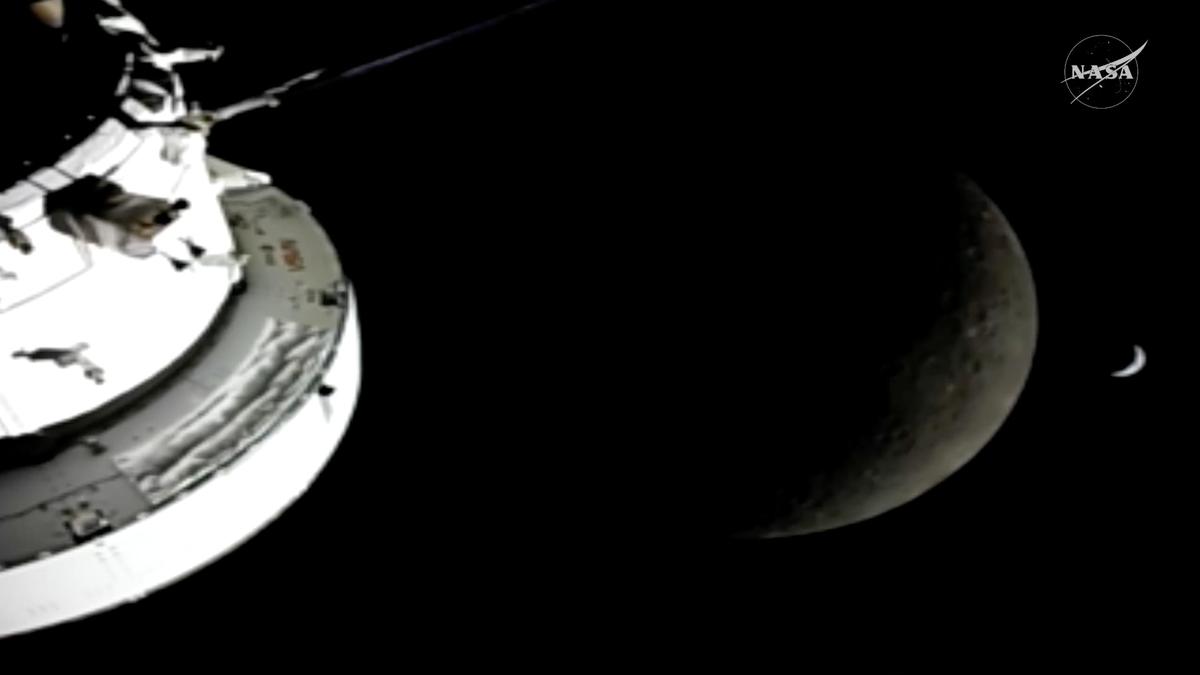
The Artemis II mission successfully completed its lunar flyby on April 6, 2026, venturing farther into space than any previous human mission. The crew of three Americans and one Canadian astronaut aboard the Orion spacecraft achieved a maximum distance of 252,756 miles (406,771 kilometers) from Earth, surpassing the record set by Apollo 13 in 1970. This mission marks a significant step towards NASA’s goal of landing astronauts near the moon’s south pole by 2028 with Artemis IV.
The flyby included scientific observations, celestial sightseeing, and a poignant connection to past missions, with the crew carrying the Apollo 8 silk patch and receiving a message from the late Apollo 13 commander Jim Lovell. The mission utilized a free-return lunar trajectory, mirroring the path taken by Apollo 13, to slingshot around the moon and head back towards Earth for a splashdown in the Pacific on Friday.
Key Points:
- Artemis II astronauts flew farther into space than any other humans, reaching 252,756 miles (406,771 kilometers) from Earth.
- The mission included a lunar flyby, with the spacecraft venturing as close as 4,067 miles (6,545 kilometers) to the Moon’s surface.
- The crew consisted of three Americans and one Canadian astronaut: Reid Wiseman, Victor Glover, Christina Koch, and Jeremy Hansen.
- The mission honored past Apollo missions, carrying the Apollo 8 silk patch and receiving a message from Jim Lovell.
- The crew used Nikon cameras and iPhones to capture images of the lunar surface, focusing on targets like the Orientale Basin.
- The mission is a precursor to Artemis III (docking practice in Earth orbit next year) and Artemis IV (lunar landing in 2028).
- Astronauts experienced a total solar eclipse and observed Mercury, Venus, Mars, and Saturn during their journey.
Key Takeaways:
- Artemis II represents a major milestone in NASA’s return to the Moon, demonstrating the capabilities of the Orion spacecraft and setting the stage for future lunar missions.
- The mission successfully combined scientific objectives with human experience, capturing both data and emotional moments that resonated with audiences back on Earth.
- The Artemis program is built upon the legacy of the Apollo program, learning from past successes and challenges to forge a new era of lunar exploration.
Impact Analysis:
- Technological Advancement: The Artemis II mission validates the technology and operational procedures necessary for future lunar landings, contributing to the advancement of space exploration capabilities.
- Scientific Discovery: The data and images collected during the flyby will provide valuable insights into the Moon’s geology and environment, aiding in the selection of landing sites for future missions.
- Inspiration and Education: The Artemis program inspires a new generation of scientists, engineers, and explorers, fostering interest in STEM fields and promoting international collaboration in space exploration.
- Economic Opportunities: The Artemis program is expected to create new economic opportunities in the space industry, including the development of lunar landers, resource utilization technologies, and commercial space services.
- International Collaboration: The inclusion of a Canadian astronaut highlights the importance of international partnerships in achieving ambitious space exploration goals, fostering goodwill and cooperation among nations.
 First Piper