
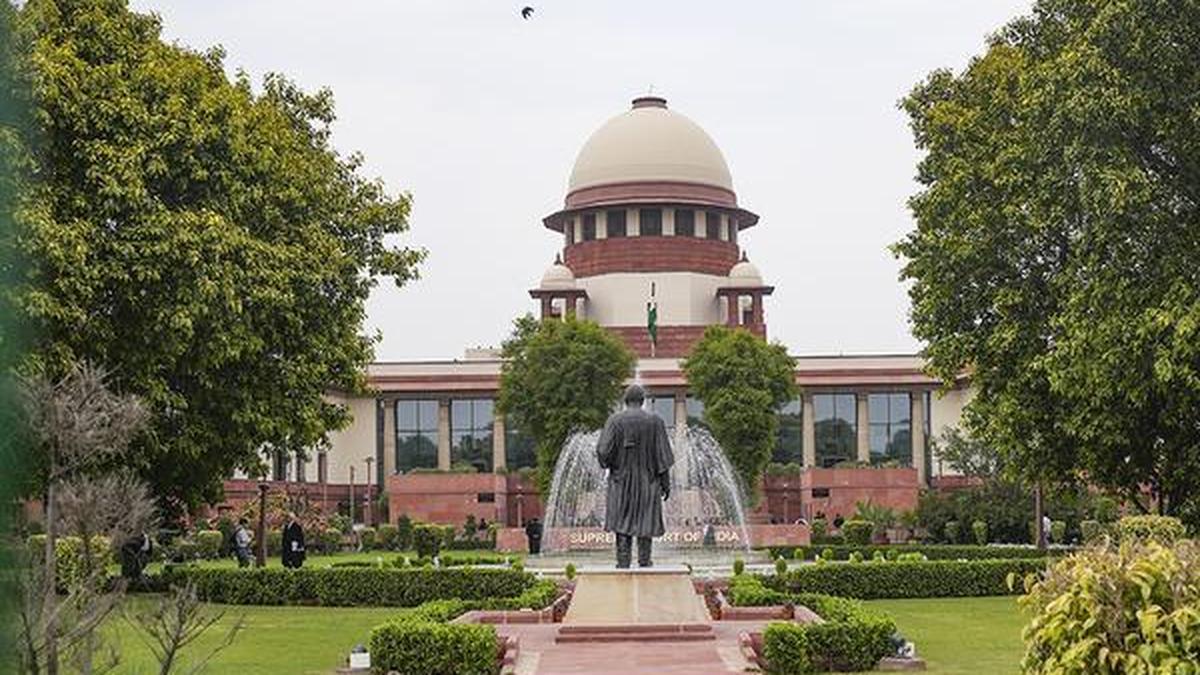
Mon Apr 06 17:49:04 UTC 2026: ### Headline: Supreme Court Intervenes in West Bengal Electoral Roll Dispute, Orders NIA Investigation
The Story:
The Supreme Court on April 6, 2026, strongly intervened in the West Bengal electoral roll revision process, disagreeing with the West Bengal government’s request to delay freezing the voter list. The court cited concerns over “logical discrepancies” affecting over 20 lakh voters. Citing the gheraoing of judicial officers in Malda on April 1, 2026, the court invoked Article 142 of the Constitution, deeming the incident a “well-planned, calculated and deeply instigated” move and directed the National Investigation Agency (NIA) to take over the investigation. The court also addressed communication failures between state officials and the Chief Justice of the Calcutta High Court.
Key Points:
- The Supreme Court refused to delay the freezing of West Bengal’s electoral roll, despite pleas from the state government.
- The court ordered the NIA to investigate the gheraoing of judicial officers in Malda, citing a “well-planned” instigation.
- The Chief Justice of India criticized the West Bengal Chief Secretary and DGP for communication failures, including the inability of the Calcutta High Court Chief Justice to reach the Chief Secretary.
- The NIA was directed to investigate even though the initial FIRs did not list offenses typically under the NIA’s purview.
- The Supreme Court instructed that the names of verified voters be added to a supplementary list immediately and scheduled a further hearing for April 13, 2026.
Critical Analysis:
The series of events leading to the Supreme Court’s intervention reveals a deep-seated distrust between the central government and the West Bengal state government regarding the electoral process. The deployment of additional armed personnel by the ECI and Modi’s remarks about BJP workers facing “hostile environments” in Bengal suggest a heightened level of concern about the fairness and security of the elections. The Supreme Court’s decision to involve the NIA, even when the listed offences don’t typically fall under NIA jurisdiction, signals a severe lack of confidence in the state police’s ability to conduct an impartial investigation.
Key Takeaways:
- The Supreme Court is taking a proactive role in ensuring the integrity of the electoral process in West Bengal.
- The NIA investigation underscores the severity of the concerns regarding the gheraoing incident and potential manipulation of the electoral process.
- Communication breakdowns between state officials and the judiciary have further eroded trust.
- The focus on “logical discrepancies” in voter details suggests a targeted effort to address potential irregularities.
- The Election Commission is under pressure to ensure a fair and transparent election.
Impact Analysis:
The Supreme Court’s intervention and the NIA investigation have significant implications for the upcoming West Bengal Assembly elections. The increased scrutiny and potential for uncovering widespread irregularities could lead to:
* A delay in the election timeline, if the NIA investigation reveals substantial issues.
* Increased tension between the central and state governments.
* Erosion of public trust in the electoral process if irregularities are confirmed.
* Potential legal challenges to the election results, depending on the outcome of the investigations and appeals.
* Strengthened oversight by central agencies in future state elections, setting a precedent for intervention in cases of perceived electoral misconduct.
 First Piper