
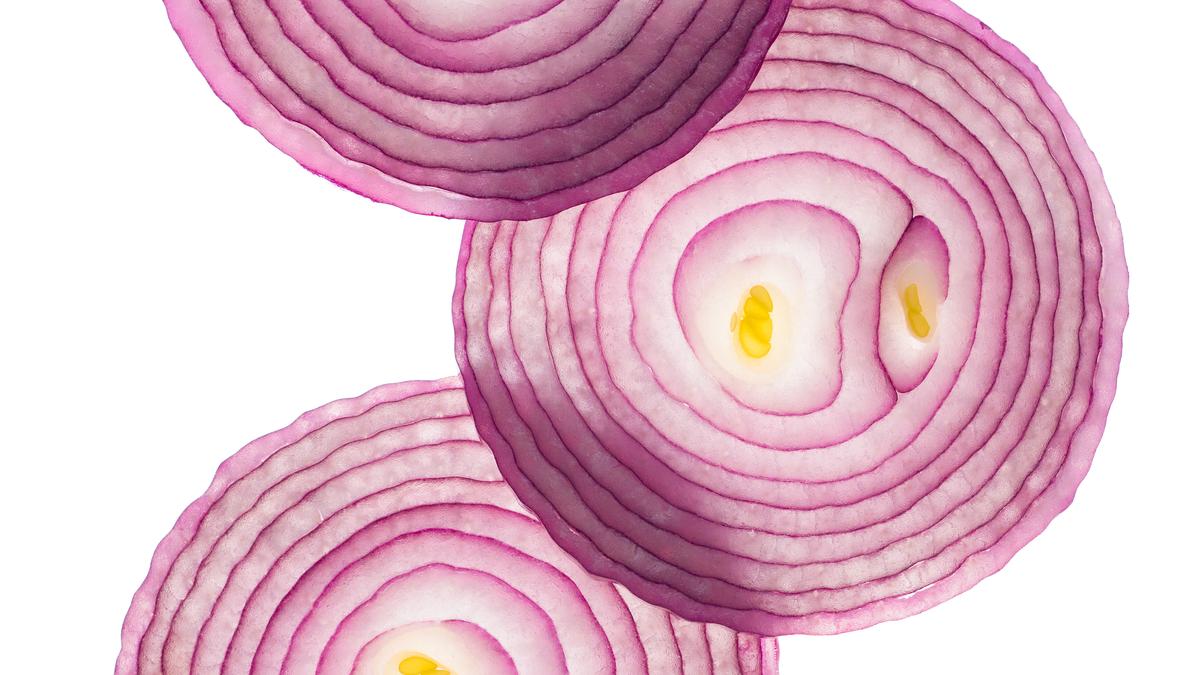
Fri Apr 03 11:01:51 UTC 2026: # The Science Behind Onion Tears: A Deep Dive into Allium Cepa’s Chemical Warfare
The Story:
An article published in The Hindu on April 6, 2026, delves into the science behind why onions make us cry. The piece explains that the common onion (Allium cepa) possesses a sophisticated defense mechanism involving enzymes and sulfur compounds. When an onion is cut, these components react, releasing syn-propanethial-S-oxide, also known as the lacrymatory factor (LF). This volatile chemical irritates the nerves in the cornea, leading to the familiar stinging and tear production.
The article further explores potential strategies to mitigate the tear-inducing effects of onions, debunking common myths and highlighting the role of volatile chemicals. It also touches on the historical significance of onions as one of the world’s oldest cultivated plants, emphasizing their ubiquitous presence in human experience.
Key Points:
- The common onion (Allium cepa) uses a chemical defense mechanism to protect itself from microorganisms in the soil.
- Cutting an onion releases enzymes called allinase, which react with sulfur-rich amino acids.
- This reaction produces syn-propanethial-S-oxide, also known as the lacrymatory factor (LF).
- LF irritates the nerves in the cornea, causing tears.
- The article suggests shielding oneself from LF molecules as a strategy to prevent crying.
- The article debunks the myth that chilling onions helps to prevent tears.
Key Takeaways:
- The “cry to an onion” experience is a result of a complex chemical reaction, not just emotional distress.
- Onions have evolved a sophisticated defense mechanism that inadvertently affects humans.
- Understanding the science behind onion tears can inform strategies to reduce their impact.
 First Piper