
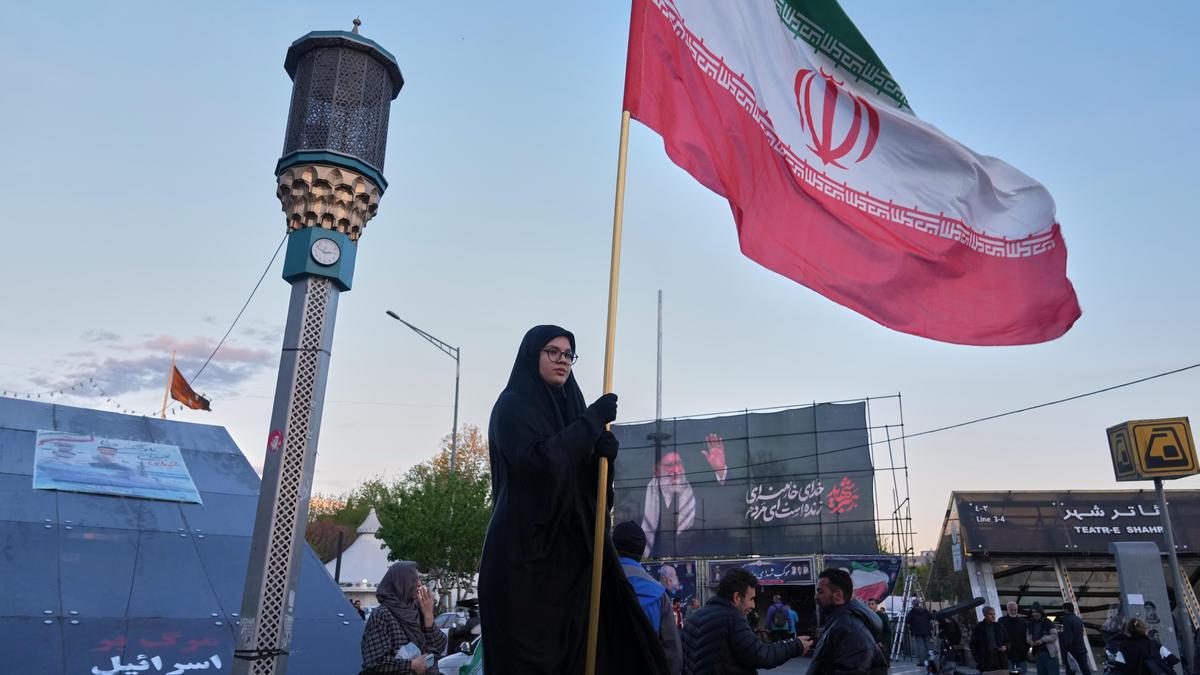
Mon Apr 06 16:18:59 UTC 2026: ### Iran Rejects Ceasefire, Demands Permanent End to War as Trump’s Deadline Looms
The Story:
On April 6, 2026, Iran rejected the latest ceasefire proposal in its ongoing conflict, demanding a permanent end to the war with guarantees against future attacks. This rejection comes as U.S. President Donald Trump‘s ultimatum regarding the opening of the Strait of Hormuz approaches. The situation is further complicated by recent Israeli strikes on a key petrochemical plant in Iran’s South Pars natural gas field and the killing of two Revolutionary Guard commanders. The escalating tensions have caused significant disruption to global oil markets and raised concerns about the potential for a wider conflict.
Key Points:
- Iran rejected a ceasefire proposal, seeking a permanent end to the war with guarantees of no future attacks.
- Mojtaba Ferdousi Pour, head of the Iranian diplomatic mission in Cairo, conveyed Iran’s stance to The Associated Press.
- Iran communicated its response through Pakistan, a key mediator.
- President Trump has set a deadline for Iran to open the Strait of Hormuz, threatening severe consequences if the demand is not met.
- Israel struck a key petrochemical plant in the South Pars gas field, a major source of Iranian revenue.
- President Trump referred to Iran as a “strong” enemy but “not so strong like they were about a month ago.”
- The deadline set by Trump is Tuesday, April 7, 2026, at 8 p.m. Washington time.
Critical Analysis:
The events unfolding suggest a deliberate strategy by multiple actors. Israel’s strike on the South Pars gas field appears aimed at crippling Iran’s economic capabilities, independent of Trump’s ultimatum, indicating a separate, parallel agenda. Iran’s rejection of the ceasefire, coupled with demands for guarantees, suggests a hardening of its position, possibly influenced by the perceived vulnerability exposed by the Israeli strike and a calculation of Trump’s resolve. The involvement of Pakistan as a mediator highlights the regional complexities and the potential for wider involvement in the conflict.
Key Takeaways:
- The conflict is escalating beyond a simple dispute over the Strait of Hormuz, involving deeper strategic and economic considerations.
- Israel’s actions are adding a layer of complexity, potentially undermining or overriding U.S. diplomatic efforts.
- Iran is adopting a defiant stance, potentially miscalculating the resolve of its adversaries.
- Global oil prices are likely to remain volatile as the crisis continues.
- The role of mediators like Pakistan is crucial in preventing further escalation, but their effectiveness is uncertain.
Impact Analysis:
The ongoing conflict between Iran, Israel, and the U.S. has far-reaching implications:
- Geopolitical Realignment: The conflict could lead to a significant realignment of power in the Middle East, potentially strengthening or weakening various regional actors.
- Economic Instability: Continued disruption to oil supplies could trigger a global economic downturn, impacting trade, investment, and consumer confidence.
- Proliferation Risks: The escalating tensions could incentivize Iran to accelerate its nuclear program, further destabilizing the region and increasing the risk of nuclear proliferation.
- Humanitarian Crisis: A full-scale war could result in a significant humanitarian crisis, displacing populations and causing widespread suffering.
- Shift in Global Alliances: The crisis could force countries to reconsider their alliances and partnerships, leading to a reshuffling of global power dynamics.
 First Piper