
Mon Apr 06 15:52:55 UTC 2026: ### Headline: Political Poster Tweak Reveals Shifting Alliances and Voter Concerns in Assam’s BTR
The Story:
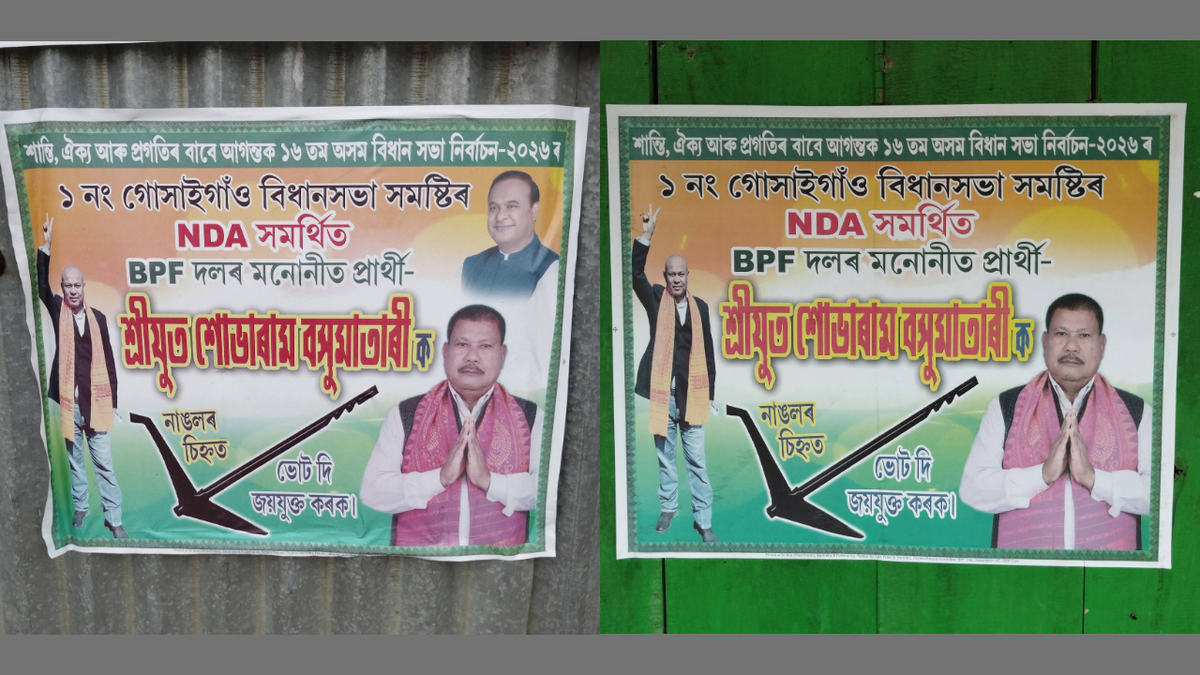
In Assam, ahead of upcoming elections, a seemingly minor alteration to political posters has exposed underlying tensions within the Bodoland Territorial Region (BTR). The Bodoland People’s Front (BPF), in a seat-sharing arrangement with the Bharatiya Janata Party (BJP), initially displayed posters featuring Chief Minister Himanta Biswa Sarma, BTC chief Hagrama Mohilary, and local candidates. However, the BPF allegedly replaced these posters in Muslim-dominated areas, omitting the Chief Minister’s image, signaling a potential shift in strategy to retain Muslim voters who feel alienated by the BPF’s alliance with the BJP.
The BPF’s move highlights the complex political dynamics within the BTR, where religious and ethnic demographics significantly influence election outcomes. Analysts suggest that the United People’s Party Liberal (UPPL) and other parties might capitalize on the perceived betrayal of Muslim voters by the BPF. The BPF is also believed to have upset the Christian population by aligning with the BJP.
Key Points:
- The BPF initially put up posters featuring Himanta Biswa Sarma (BJP), Hagrama Mohilary (BPF), and local candidates across 11 constituencies in the BTR.
- The BPF allegedly replaced these posters in Muslim-dominated areas, removing Himanta Biswa Sarma‘s image.
- The BPF won the BTC elections in September 2025 with significant support from Muslim voters.
- The UPPL, previously in alliance with the BJP, is contesting from four seats beyond the BTR and hopes to improve upon the six constituencies it won in the 2021 election.
- The BPF won four seats in 2021, a decrease from the eight seats it secured in 2016.
- Pramod Boro, UPPL president, is contesting from the Tamulpur Assembly constituency.
Critical Analysis:
The removal of Himanta Biswa Sarma’s image from BPF posters reflects a calculated effort to mitigate potential losses among Muslim voters. The historical context shows a pattern of “erasure” being used in different contexts, including political ones. In this case, the “erasure” isn’t literal elimination, but rather a strategic removal of association to appeal to a specific demographic. This is happening because the BPF recognizes that its alliance with the BJP, a party often perceived negatively by Muslim voters, could jeopardize their support. The BPF is attempting to manage its image and voter base by strategically distancing itself from the BJP in areas where Muslim support is critical.
Key Takeaways:
- Political alliances can have unintended consequences on voter demographics and support.
- Parties may employ strategic image management to appeal to diverse voter bases.
- Religious and ethnic demographics play a significant role in shaping political outcomes in the BTR.
- The UPPL and other parties have an opportunity to capitalize on voter dissatisfaction with the BPF-BJP alliance.
- The BPF’s performance in the upcoming elections will indicate the success of their strategy and the strength of voter sentiment in the BTR.
Impact Analysis:
The BPF’s poster tweak underscores the fragility of political alliances and the importance of understanding local demographics. The long-term impact of this event series could include:
- Realignment of political forces in the BTR: The election results could lead to a realignment of political alliances, with parties potentially seeking new partnerships to secure power.
- Shift in voter behavior: The perceived betrayal by the BPF could lead to a long-term
 First Piper