
Mon Apr 06 07:59:10 UTC 2026: ### Artemis II Enters Lunar Sphere of Influence, Setting Stage for Historic Flyby
The Story:
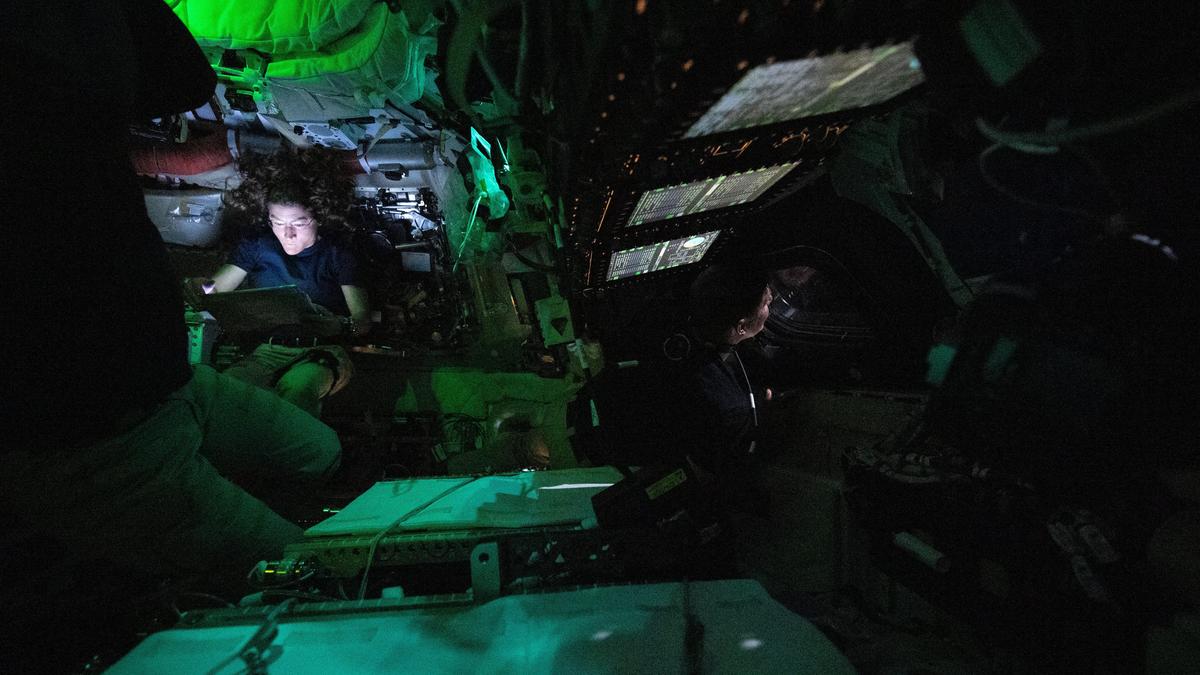
On April 6, 2026, the Artemis II mission achieved a significant milestone as the Orion spacecraft entered the Moon’s sphere of influence. This means the Moon’s gravitational pull now has a stronger effect on the spacecraft than Earth’s. The Orion capsule is poised to conduct a lunar flyby, pushing the crew further from Earth than any human has ever ventured before. The mission carries a crew of four: three Americans (Reid Wiseman, Christina Koch, and Victor Glover) and one Canadian (Jeremy Hansen), each set to achieve historic firsts during the flight.
The crew is scheduled to document the lunar surface extensively, observe features never before seen with the naked eye, and test the functionality of their Orion crew survival system (OCSS) spacesuits. The data collected is critical for planning future Artemis missions, including the Artemis 3 lunar landing slated for 2027 and Artemis 4 in 2028.
Key Points:
- The Artemis II mission entered the Moon’s sphere of influence at approximately 10:12 a.m. IST on April 6, 2026.
- Victor Glover will be the first person of color to fly around the Moon, and Christina Koch will be the first woman. Jeremy Hansen is the first non-American to do so.
- The crew will observe and document the Orientale basin, a massive lunar crater, marking the first time it has been viewed by human eyes.
- The astronauts will test their Orion crew survival system (OCSS) spacesuits in space for the first time.
- The mission aims to break the record for the farthest distance from Earth traveled by humans during the lunar pass.
- The data gathered is crucial for the planning and execution of subsequent Artemis missions, including lunar landings.
Key Takeaways:
- Artemis II is progressing as planned, reaching a critical phase in its mission to orbit the Moon.
- The mission represents a significant step forward in NASA’s efforts to return humans to the Moon and establish a long-term presence there.
- The mission is not only about scientific advancement but also about promoting diversity and international collaboration in space exploration.
- The data collected during the flyby will be crucial for refining future lunar landing missions and ensuring astronaut safety.
Impact Analysis:
The success of Artemis II has profound implications for the future of space exploration. The mission validates the design and functionality of the Orion spacecraft and its life support systems, paving the way for more ambitious lunar missions. The data gathered will also inform the development of new technologies and strategies for long-duration space travel, potentially enabling future missions to Mars and beyond. Furthermore, the historic firsts achieved by the crew underscore the importance of inclusivity and international cooperation in advancing humanity’s reach into the cosmos. The successful completion of Artemis II will likely galvanize public support for space exploration and inspire a new generation of scientists, engineers, and astronauts.
 First Piper