
Sun Apr 05 01:41:18 UTC 2026: ### Artemis II Launch Reveals Underlying Tensions in Space Race with China
The Story:
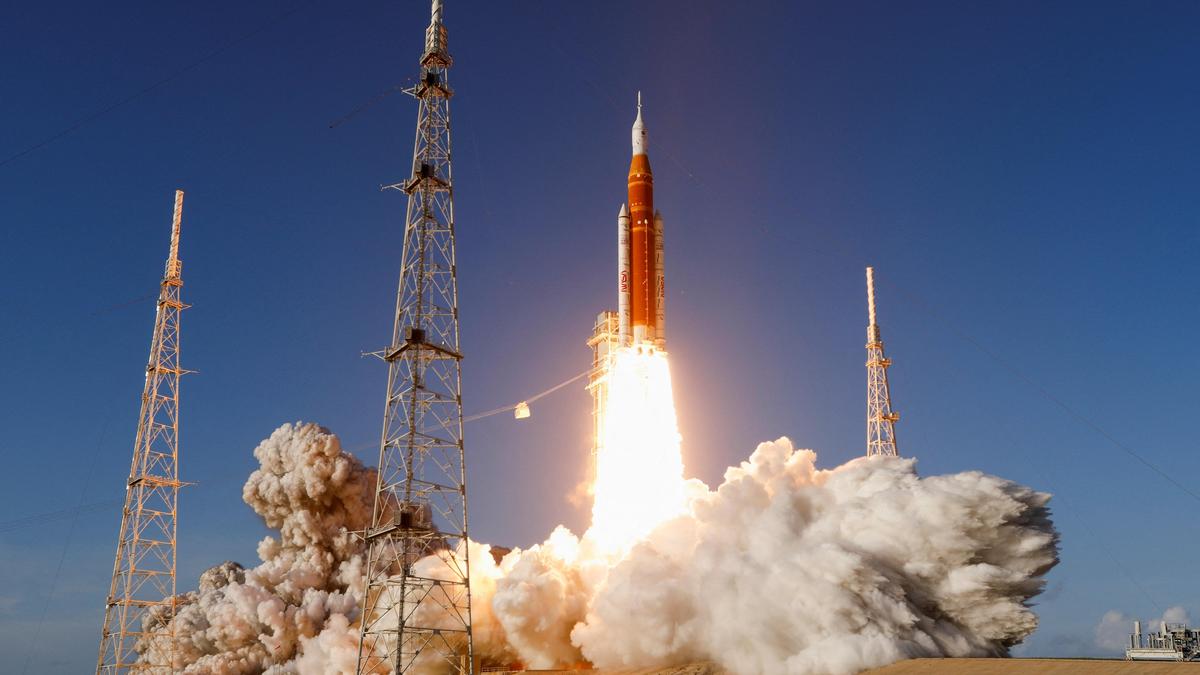
The launch of NASA’s Artemis II mission on April 2, 2026, intended to send American astronauts on a flyby of the moon, highlights an underlying tension in the space race between the U.S. and China. While NASA publicly frames the Artemis program as a competition with the China National Space Administration (CNSA), China itself doesn’t perceive it as a race. The article suggests the U.S.’s urgency is driven by a desire to project technological supremacy in the face of challenges in other domains like semiconductors and clean energy, while China’s program is portrayed as a long-term, science-driven national development initiative.
Key Points:
* NASA’s Artemis II mission launched on April 2, 2026, using the Space Launch System (SLS) rocket with the Orion crew capsule.
* The U.S. views the Artemis program as a race against China, but China doesn’t share this perspective.
* China’s space program is part of a national initiative with ties to local industries and developmental goals.
* NASA’s public messaging emphasizes competition with China, influenced by vacillating state support.
* The Orion capsule is larger and more advanced than previous spacecraft, featuring modern avionics and a large heat shield.
Critical Analysis:
The article suggests a fundamental difference in the motivations and approaches of the U.S. and China in space exploration. The U.S. appears to be driven by a need to demonstrate technological dominance in response to perceived threats to its global standing, fueled by internal political pressures and funding uncertainties. China, on the other hand, seems to be pursuing a more consistent, long-term strategy aligned with its national development goals, potentially giving it a strategic advantage. The related news articles regarding the Iran-Israel war and the rescue of US airmen in Iran does not seem to have a direct correlation with the Artemis mission, but the success of the rescue mission is a testament to US technological prowess.
Key Takeaways:
* The U.S. and China have different motivations for space exploration.
* The “space race” narrative may be more prominent in the U.S. than in China.
* China’s consistent funding and long-term strategy could give it an advantage.
* The Artemis program is as much about geopolitical competition as it is about scientific exploration.
* Public awe of space missions can overshadow critical scrutiny of their underlying motivations.
Impact Analysis:
The contrasting approaches to space exploration could have significant long-term implications. If China’s consistent, science-driven approach proves more sustainable, it could establish itself as a leader in space technology and exploration. The U.S., with its fluctuating political support and focus on short-term competitive gains, risks falling behind despite its technological capabilities. The Artemis II mission, therefore, represents a crucial moment in the ongoing shift of global power dynamics, where space exploration is becoming an increasingly important arena of competition. The success of the Artemis mission could revitalize the US space program, garnering support and funding for future missions.
 First Piper