
Thu Apr 02 12:50:16 UTC 2026: # Climate Change Intensifies Flooding in Northwest India, Research Reveals
The Story
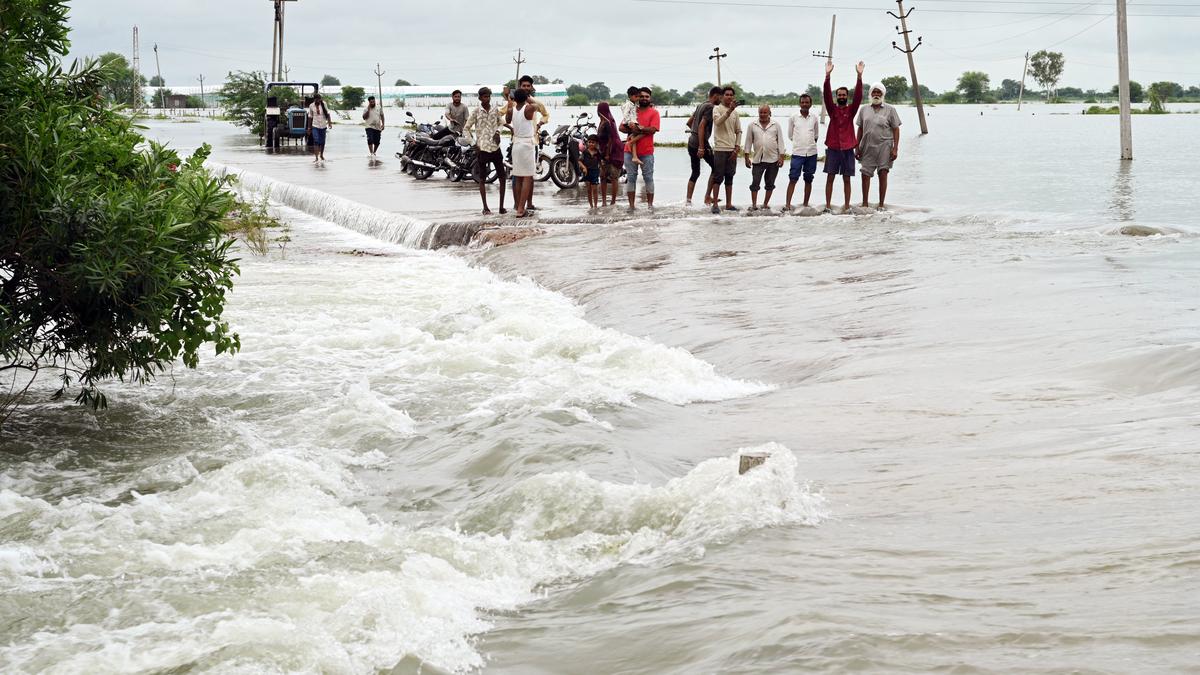
A new scientific report published on April 5, 2026, reveals that changing subseasonal weather patterns are transforming northwest India from a semiarid region into a flood-prone one. Researchers have identified two key factors: a strengthened tropical monsoon intra-seasonal oscillation that penetrates deeper inland, and a slowed mid-latitude oscillation that keeps rain-producing systems stationary over the region for extended periods. These oscillations account for 44% of the observed increase in flood frequency. The article also touches on other scientific matters, including the explanation of black hole “forbidden masses” and the high rate of research retractions from Chinese academics.
Key Points
- Northwest India is experiencing increased flooding due to changing weather patterns.
- A strengthened tropical monsoon intra-seasonal oscillation and a slowed mid-latitude oscillation are identified as key factors.
- These oscillations account for 44% of the observed increase in flood frequency.
- The article also mentions findings regarding black hole mergers and research retractions from Chinese academics.
Critical Analysis
None applicable given the context.
Key Takeaways
- Climate change is demonstrably altering weather patterns in specific regions, leading to increased natural disasters.
- Scientific research is crucial for understanding and potentially mitigating the impacts of these changes.
- The study highlights the complexity of weather systems and the need for comprehensive analysis.
Impact Analysis
The increased flood frequency in northwest India has significant long-term implications:
- Economic Impact: Increased damage to infrastructure, agriculture, and property will likely lead to significant economic losses. This will require increased investment in disaster relief and infrastructure improvements.
- Social Impact: Displacement of communities, increased health risks (waterborne diseases), and potential food shortages could lead to social unrest and instability.
- Environmental Impact: Changes in land use patterns, increased soil erosion, and potential contamination of water resources could have long-lasting environmental consequences.
- Policy Implications: The findings necessitate the development and implementation of comprehensive climate adaptation strategies, including improved flood management systems, early warning systems, and land-use planning. International cooperation and resource allocation will be crucial to support these efforts.
 First Piper