
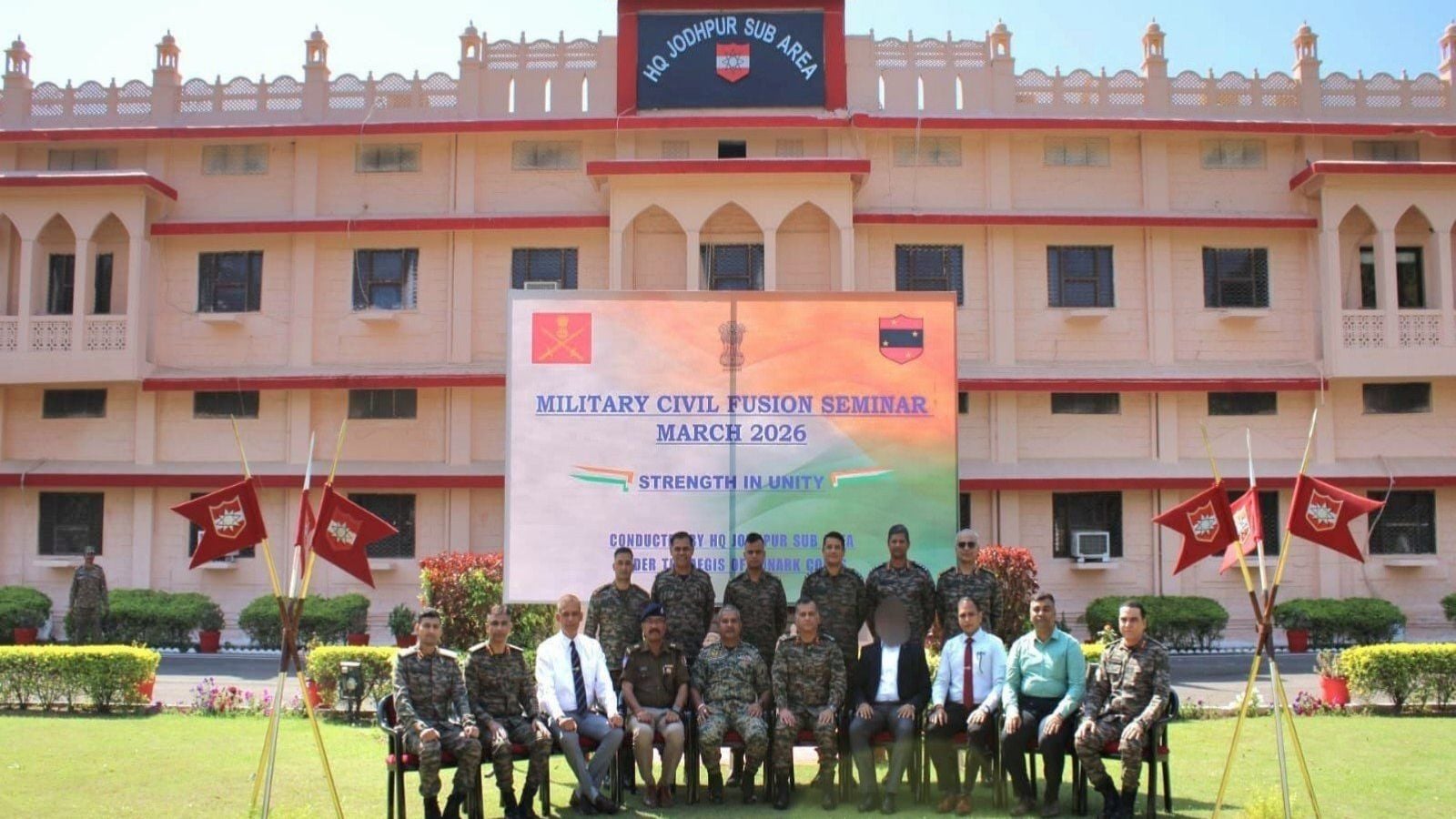
Thu Apr 02 16:55:37 UTC 2026: ### Southern Command Conducts Military-Civil Fusion Abhiyan Across Multiple States
The Story:
The Southern Command of the Indian Army conducted a comprehensive Military Civil Fusion Abhiyan throughout March 2026, encompassing a wide range of activities aimed at enhancing coordination and interoperability between military and civilian agencies. The campaign included joint exercises, seminars, and patrolling initiatives across several states, focusing on areas such as internal security, disaster management, airspace awareness, and protection of critical zones. The exercises saw participation from Central Armed Police Forces, state law enforcement, civil administration, disaster response agencies, airports and civil aviation agencies, forest and mining authorities, National Cadet Corps (NCC), academic institutions and industry partners.
The exercises were designed to foster mutual understanding of emerging threats, establish common procedures, and validate the importance of integrated planning. Focused engagements were tailored to address specific regional requirements, enhancing overall preparedness and responsiveness.
Key Points:
- The Southern Command conducted the Military Civil Fusion Abhiyan throughout March 2026.
- The campaign involved diverse stakeholders including Central Armed Police Forces, state law enforcement, civil administration, disaster response agencies, airports and civil aviation agencies, forest and mining authorities, National Cadet Corps (NCC), academic institutions and industry partners.
- Exercises were held in Pune (anti-terror drill), Bhopal (Counter Unmanned Aerial Systems seminar), Babina (joint patrolling with Forest and Mining departments), Chennai (security conference), Belagavi, Hyderabad, Jodhpur, and Jaisalmer.
- The activities focused on internal security, airspace awareness, crisis response, disaster management, and technology-enabled monitoring.
- A 64-member team conducted intensive patrolling across the Babina Field Firing Range and 11 adjoining villages.
Key Takeaways:
- The Indian Army is actively pursuing a strategy of military-civil fusion to enhance national security and disaster response capabilities.
- The exercises highlight the importance of inter-agency coordination and information sharing in addressing complex security challenges.
- The geographical spread of the Abhiyan demonstrates a comprehensive approach to civil-military integration across the Southern Command’s area of responsibility.
- The inclusion of academic institutions and industry partners suggests a focus on leveraging knowledge and technology for improved security outcomes.
- Joint patrolling with forest and mining departments indicates a concern for securing natural resources and preventing illegal activities in sensitive areas.
Impact Analysis:
The Military Civil Fusion Abhiyan signifies a strategic shift towards greater integration of military and civilian resources in India. This approach has long-term implications for:
- Enhanced National Security: By fostering closer collaboration between various agencies, India can improve its ability to detect, prevent, and respond to a wide range of threats, including terrorism, natural disasters, and cyber attacks.
- Improved Disaster Management: Integrated planning and coordinated response mechanisms will enable more effective disaster relief efforts, minimizing the impact of natural disasters on communities.
- Strengthened Border Security: Joint patrolling and surveillance activities will help to secure borders and prevent illegal activities such as smuggling and illegal mining.
- Greater Civil-Military Understanding: Regular interaction and collaboration will foster mutual trust and understanding between military and civilian personnel, improving overall coordination and effectiveness.
- Technological Advancement: The focus on technology-enabled monitoring and information sharing will drive innovation and the adoption of advanced technologies in security and disaster management.
 First Piper