
Thu Apr 02 18:59:05 UTC 2026: ### Government Takes Stock of Economic Impact Amidst Global Conflict
The Story:
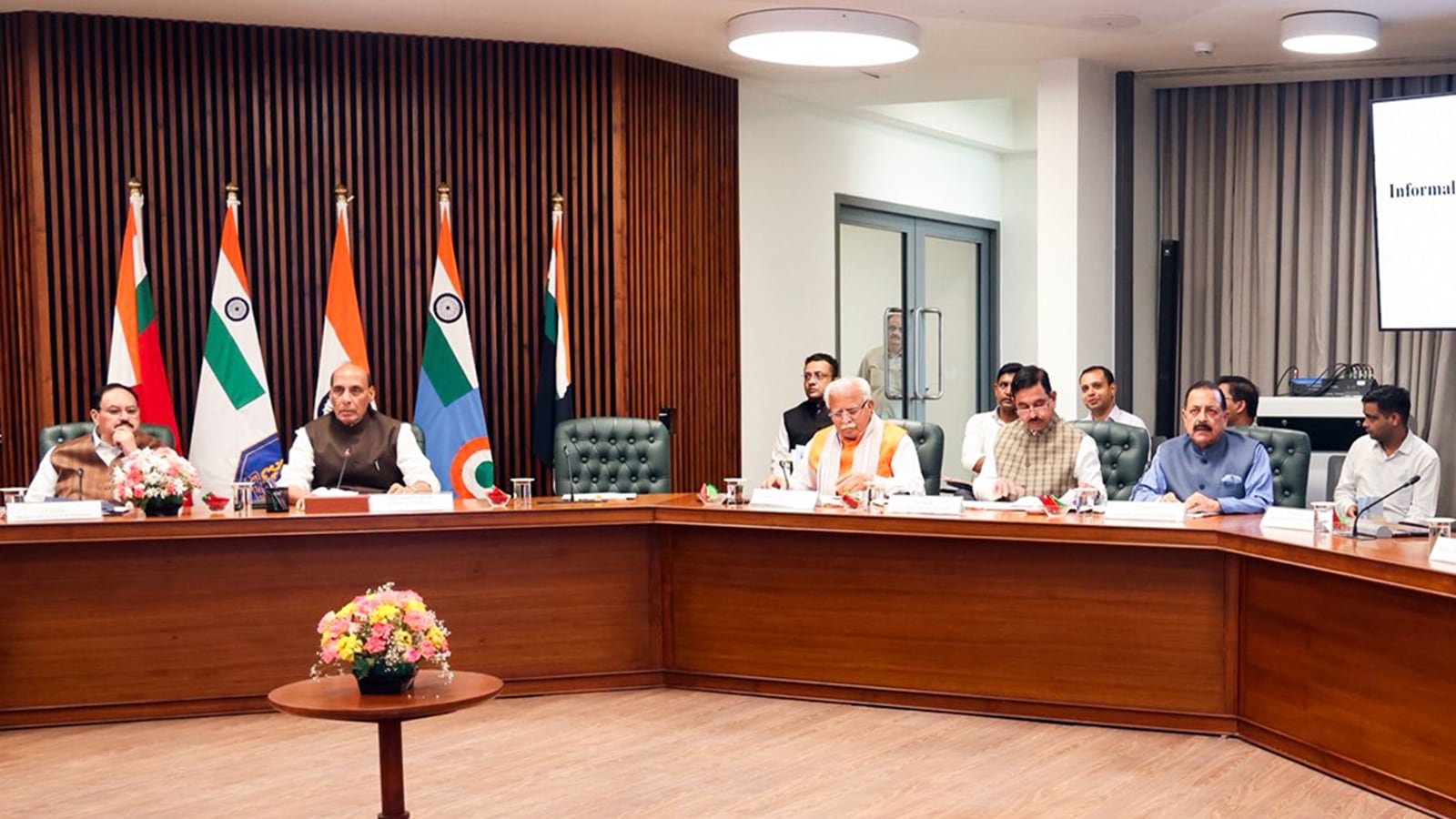
Defence Minister Rajnath Singh chaired the second meeting of the Informal Group of Ministers (IGoM) on Thursday, April 4, 2026, to assess and mitigate the impact of ongoing global conflicts on the Indian economy. The meeting addressed critical issues such as LPG supplies, aviation turbine fuel (ATF) price hikes, and customs duty exemptions on petrochemical products. Key cabinet ministers, including Nirmala Sitharaman (Finance) and Hardeep Singh Puri (Petroleum), were present, reflecting the government’s coordinated response to potential economic disruptions.
The IGoM reviewed measures taken by various ministries and Empowered Groups of Secretaries. Emphasis was placed on ensuring minimal impact on the public, maintaining essential supplies, and supporting industries facing challenges due to global trade disruptions. The government is also actively combating misinformation and hoarding to prevent panic among citizens.
Key Points:
- Full customs duty exemption on 40 critical petrochemical products extended until June 2026.
- A 25% cap imposed on the monthly increase in Aviation Turbine Fuel (ATF) prices for domestic operations, effective April 1, 2026.
- Over 4.3 lakh 5 kg free trade LPG cylinders sold since March 23, 2026, to support migrant labor and low-consumption households.
- Strict enforcement action being taken against hoarding and black marketing of LPG.
- Government is actively combating misinformation regarding essential supplies on social media.
Critical Analysis:
The flurry of meetings and policy decisions suggests a proactive attempt to insulate the Indian economy from external shocks. The mention of “unimpeded transit” in the April 2, 2026 report regarding the Strait of Hormuz is highly relevant. The IGoM’s focus on LPG and ATF prices directly links to potential disruptions in energy supply routes, likely due to geopolitical tensions and trade route security concerns in the region. The meeting with Russia’s First Dy PM on April 2, 2026 to boost trade ties could be interpreted as an effort to diversify supply chains and reduce dependence on potentially unreliable sources.
Key Takeaways:
- The Indian government is taking a proactive approach to mitigate the economic impacts of global conflicts, particularly concerning energy supplies and trade disruptions.
- Efforts are being made to stabilize prices for essential commodities like LPG and ATF, aiming to protect consumers from sudden price increases.
- The government is actively combating misinformation and addressing supply chain vulnerabilities to prevent panic and ensure the availability of essential goods.
- India is actively seeking to diversify its trade relationships to buffer against global economic instability.
- The focus on supporting industries and bolstering investor confidence suggests a broader strategy to maintain economic stability during uncertain times.
Impact Analysis:
The government’s measures, such as customs duty exemptions and price caps, are likely to provide short-term relief to industries and consumers. However, the long-term effectiveness will depend on the duration and intensity of the global conflicts and the government’s ability to adapt its policies accordingly. The emphasis on combating misinformation is crucial to maintaining public trust and preventing panic-driven behaviors that could exacerbate supply chain issues. The success of diversifying trade relationships will also play a significant role in India’s long-term economic resilience.
 First Piper