
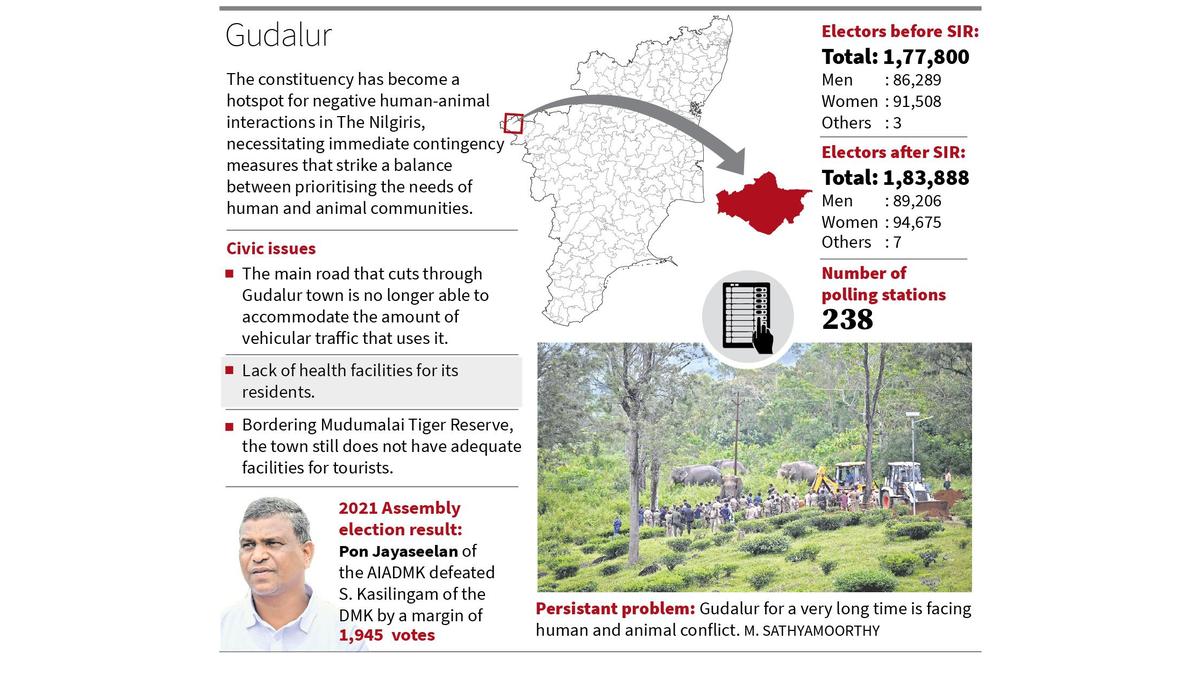
Thu Apr 02 20:48:49 UTC 2026: ### Headline: Political Neglect and Human-Animal Conflict Plague Gudalur Ahead of Tamil Nadu Elections
The Story:
A confluence of factors, including flawed government policies, encroachment on unsettled lands, and shrinking wildlife habitats, has transformed Gudalur, Tamil Nadu, into a hotspot for human-animal conflict. The region’s issues stem largely from unresolved land disputes concerning ‘Section 17’ lands under the Gudalur Janmam Estates (Abolition and Conversion into Ryotwari) Act, 1969. These 35,000 acres of unsettled land are contested between the government and settlers, leaving many residents without basic amenities and facing potential eviction. With the Tamil Nadu Assembly Elections 2026 approaching, politicians are accused of exploiting the human-animal conflict for votes, while neglecting the underlying issues.
Key Points:
- Two plantation workers were recently killed in an accidental encounter with a wild elephant in Devarshola, Gudalur.
- N. Sadiq Ali of the Wildlife and Nature Conservation Trust accuses politicians of politicizing human-animal interactions for electoral gain.
- The government’s delay in resolving the status of ‘Section 17’ lands is a major contributing factor to the region’s problems.
- R. Ranjith of the O’Valley Makkal Iyakkam highlights the denial of basic amenities to residents on Section 17 lands.
- The government has filed an affidavit in the Supreme Court classifying residents other than Adivasis and Sri Lankan repatriates in Section 17 lands as encroachers.
- S. Sivasubramaniam of the Gudalur Consumer Protection Association points out the lack of essential amenities like adequate hospital facilities.
- Land titles for Particularly Vulnerable Tribal Groups are still pending, leading to displacement and lack of livelihood opportunities.
- The election will be a three-way contest between the incumbent AIADMK MLA, Pon Jayaseelan, DMK’s M. Thiravidamani, and the Naam Tamilar Katchi.
Critical Analysis:
The historical context provided doesn’t offer direct insights into the Gudalur situation. The news snippets regarding PM Modi’s tea garden visits in Assam and the Hassan DC’s interaction with locals are geographically and thematically distinct. Similarly, the Hanuman Jayanti and stock market updates are unrelated. Therefore, a deeper strategic analysis based solely on the provided context is not possible.
Key Takeaways:
- Unresolved land disputes are a major catalyst for human-animal conflict and socio-economic problems in Gudalur.
- Political opportunism exacerbates the situation by focusing on short-term gains rather than addressing the root causes.
- The lack of basic amenities and pending land titles disproportionately affects vulnerable communities, including tribal groups and long-term settlers.
- The upcoming election is likely to be influenced by the human-animal conflict and the status of Section 17 lands.
- Government inaction and policy failures are significantly contributing to the escalating crisis in Gudalur.
Impact Analysis:
The ongoing crisis in Gudalur has significant long-term implications. The unresolved land disputes and human-animal conflict can lead to further displacement, economic hardship, and social unrest. The politicization of these issues risks deepening divisions within the community and hindering sustainable solutions. The failure to provide basic amenities and address the needs of vulnerable groups could further marginalize these populations and exacerbate existing inequalities. If the government does not act decisively to resolve these issues, Gudalur could continue to be a region plagued by conflict and instability.
 First Piper