
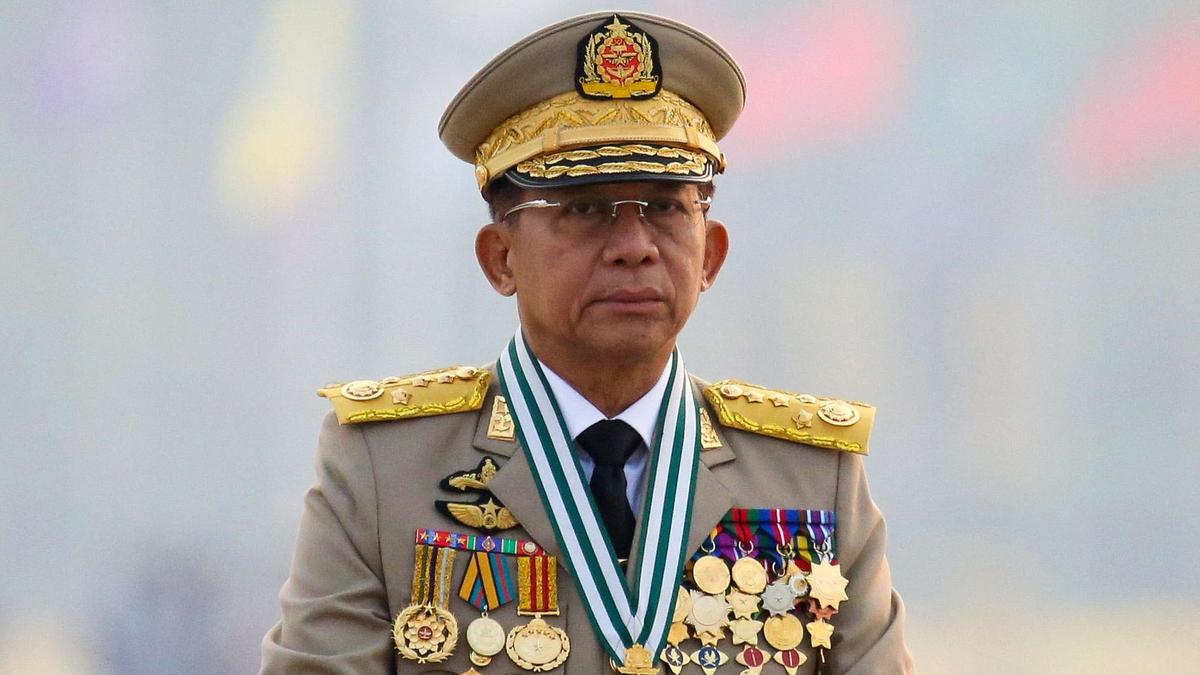
Fri Apr 03 06:36:37 UTC 2026: ### Myanmar Junta Chief Min Aung Hlaing Formalizes Rule as President
The Story:
In April 3, 2026, Myanmar’s junta chief Min Aung Hlaing was elected President by a parliament dominated by the military and its allies, five years after he led a coup against the elected government of Aung San Suu Kyi in 2021. The move is seen as a strategic consolidation of power, transitioning from commander-in-chief to a nominally civilian leader in an attempt to gain international legitimacy. The election, however, has been widely criticized as a sham by Western governments and critics.
Key Points:
- Min Aung Hlaing, 69, orchestrated the 2021 coup against Aung San Suu Kyi.
- The election was won in a landslide by the army-backed Union Solidarity and Development Party.
- On Monday, prior to the presidential vote, Min Aung Hlaing appointed Ye Win Oo as his successor to lead the military.
- Anti-junta groups have formed a new combined front to resist the military.
Critical Analysis:
The election of Min Aung Hlaing as president represents the culmination of a long-held ambition to solidify his control over Myanmar. By transitioning to a nominally civilian role, he seeks to legitimize his rule both domestically and internationally, while ensuring the continued dominance of the military. The reshuffle within the armed forces, placing a loyalist in charge, further cements his position.
Key Takeaways:
- The election is a formalization of military rule under a civilian veneer.
- Resistance to the junta continues, with various groups forming a united front.
- The move may face challenges due to ongoing civil war and potential economic instability.
- International legitimacy remains a key goal for the new administration.
Impact Analysis:
The formalization of Min Aung Hlaing’s presidency is likely to prolong the civil conflict in Myanmar. The resistance groups, now united, will likely intensify their efforts, while the junta will seek to suppress dissent. The international community’s response will be crucial, as recognition or increased engagement with the new administration could further entrench military rule. The long-term impact includes continued instability, humanitarian crisis, and potential regional implications depending on how neighboring countries respond.
 First Piper