
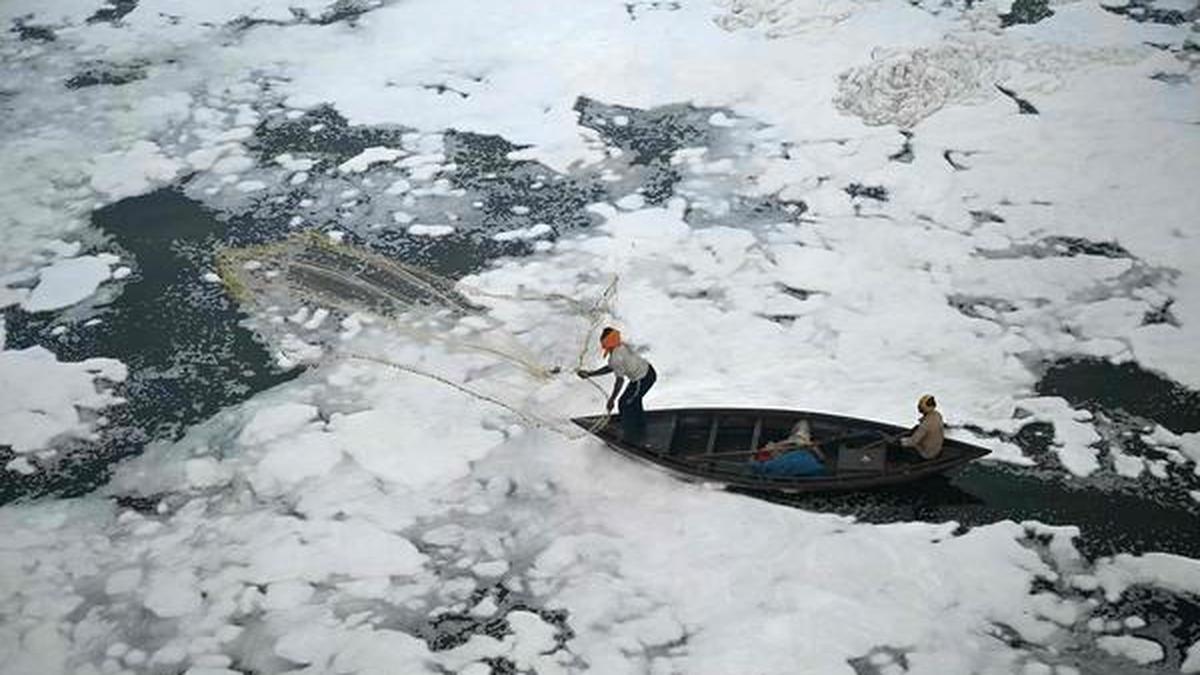
Fri Apr 03 02:36:43 UTC 2026: ### Headline: Toxic Foam Chokes Yamuna River, Fuels Political Blame Game Ahead of Chhath Puja
The Story:
Ahead of the 2026 Chhath Puja festival, the Yamuna River in Delhi is once again plagued by severe pollution, marked by the presence of toxic foam. This annual occurrence sparks a predictable cycle of public outcry and political maneuvering, with the Bharatiya Janata Party (BJP) and Aam Aadmi Party (AAP) trading accusations over the river’s deteriorating condition. The pollution is primarily attributed to high levels of ammonia and phosphates from industrial and wastewater discharges.
Key Points:
- The Yamuna River’s pollution spikes annually during Chhath Puja preparations.
- Toxic foam is a visible indicator of high pollutant levels, specifically ammonia and phosphates.
- The 22-kilometer stretch of the Yamuna between Wazirabad and Okhla contributes to approximately 76% of the river’s total pollution load.
- The pollution is largely due to multiple drains merging into the river along this stretch.
- The river’s water quality visibly degrades from transparent at Palla to severely discolored with foam at Okhla.
Key Takeaways:
- The persistent pollution of the Yamuna River highlights the failure of long-term solutions to address industrial and wastewater discharge.
- The annual cycle of pollution and political blame underscores the lack of accountability and effective action.
- Focusing on the 22-kilometer stretch between Wazirabad and Okhla is crucial for targeted pollution control efforts.
- Real-time water quality monitoring set to launch in May 2026 (as per related historical context) could provide valuable data for more effective intervention.
- The visuals of toxic foam during a religious festival like Chhath Puja amplifies the issue’s social and cultural impact.
Impact Analysis:
The recurring pollution of the Yamuna River has significant long-term implications:
- Public Health: Exposure to the polluted water poses serious health risks to those who use the river for religious practices or daily needs.
- Environmental Degradation: The high levels of pollutants disrupt the river’s ecosystem, impacting aquatic life and overall biodiversity.
- Political Instability: The ongoing blame game between political parties erodes public trust and hinders collaborative efforts to address the issue.
- Economic Costs: The cost of cleaning the river and treating water for consumption increases significantly due to the high pollution levels.
- Social Unrest: Continued neglect of the river can lead to social unrest and protests, especially among communities that rely on the river for their livelihoods and cultural practices.
 First Piper