
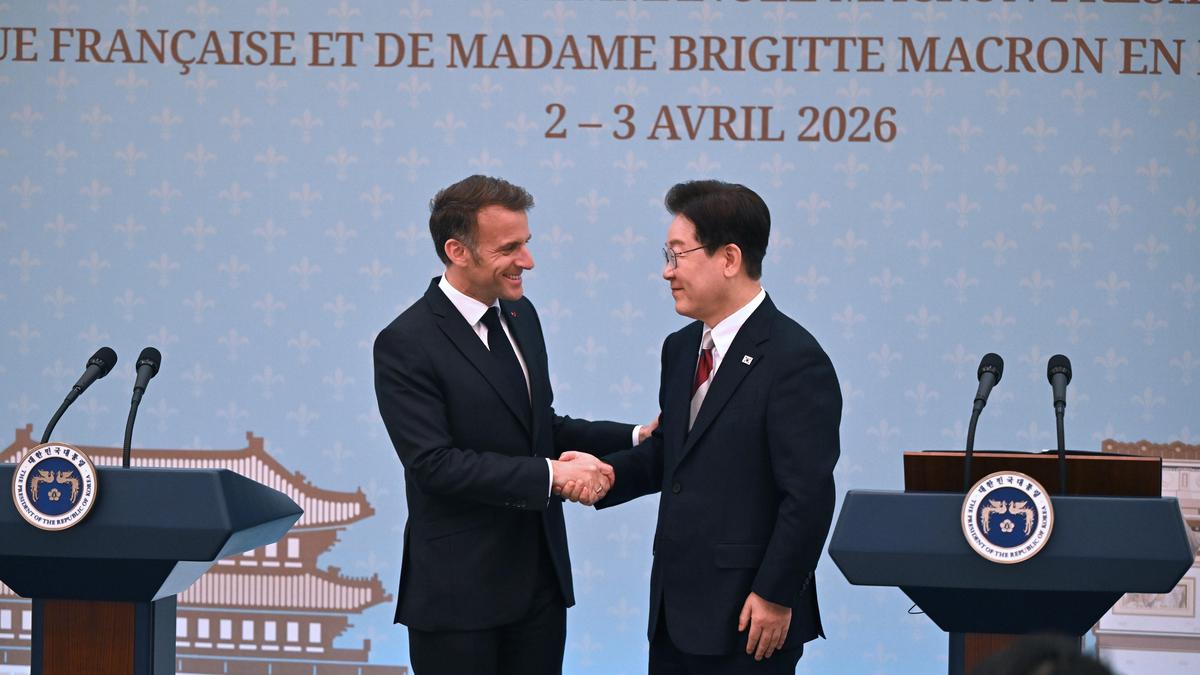
Fri Apr 03 09:41:24 UTC 2026: ### Macron and South Korean President Lee Unite to Address Strait of Hormuz Crisis Amid Rising US-Iran Tensions
The Story:
French President Emmanuel Macron and South Korean President Lee Jae Myung have pledged to collaborate in efforts to reopen the Strait of Hormuz and mitigate global economic instability resulting from the ongoing conflict in West Asia. Their meeting in Seoul on April 3, 2026, occurred against a backdrop of escalating tensions, with U.S. President Donald Trump criticizing allies for insufficient support in the U.S. and Israeli war against Iran. The two leaders emphasized the importance of securing safe shipping routes and de-escalating animosities in the region.
Key Points:
- April 3, 2026: Macron and Lee meet in Seoul, South Korea, agreeing to cooperate on reopening the Strait of Hormuz.
- The summit takes place amidst rising tensions between the U.S., Israel, and Iran.
- President Trump criticizes allies, including South Korea, for not doing enough to support the U.S. position. He suggested South Korea, Japan, and China should take responsibility for securing the Strait of Hormuz, where they get most of their oil.
- Macron believes a military operation to reopen the Strait of Hormuz is unrealistic.
- South Korea and France will expand cooperation in technology, energy, and critical minerals, signing agreements related to nuclear fuel supply chains and offshore wind projects.
- Iran claims to have downed an advanced warplane south of Qeshm Island earlier the same day.
- The U.S. stations approximately 28,000 troops in South Korea, contrary to Trump’s statement of 45,000.
Critical Analysis:
The timing of Macron’s visit and the agreement with South Korea highlights a growing divergence between the U.S. and its traditional allies regarding the approach to the Iran conflict. While Trump advocates for a more confrontational stance and expects greater burden-sharing, Macron seeks a diplomatic solution and broader international cooperation. The downing of a warplane by Iran earlier that day likely heightened the urgency of the discussions and underscored the volatile nature of the situation.
Key Takeaways:
- The U.S.-Iran conflict is creating a rift between the U.S. and its allies, particularly France and South Korea.
- France and South Korea are attempting to assert a more independent role in managing the crisis in the Strait of Hormuz.
- Securing the Strait of Hormuz is crucial for global economic stability due to its importance for oil transportation.
- The focus on technology, energy, and critical minerals cooperation between France and South Korea suggests a strategic shift towards diversifying supply chains and reducing reliance on potentially unstable regions.
- The incident of Iran shooting down a warplane adds another layer of complexity and risk to the already tense situation.
Impact Analysis:
The agreement between France and South Korea could lead to a more multilateral approach to resolving the Strait of Hormuz crisis, potentially involving other nations and international organizations. This could counterbalance the more unilateral approach favored by the U.S. The increased cooperation in technology and energy may also strengthen the economic ties between France and South Korea, providing them with greater resilience in the face of global economic uncertainties. The long-term impact will depend on the success of their efforts to de-escalate tensions and secure the Strait of Hormuz, as well as the evolving dynamics between the U.S., Iran, and other regional actors. The potential for further escalation remains high, given the conflicting interests and the volatile security environment.
 First Piper