
Fri Apr 03 05:39:57 UTC 2026: Headline: Karnataka Implements AI-Powered Monitoring in Dialysis Centers to Enhance Patient Safety and Clinical Oversight
The Story:
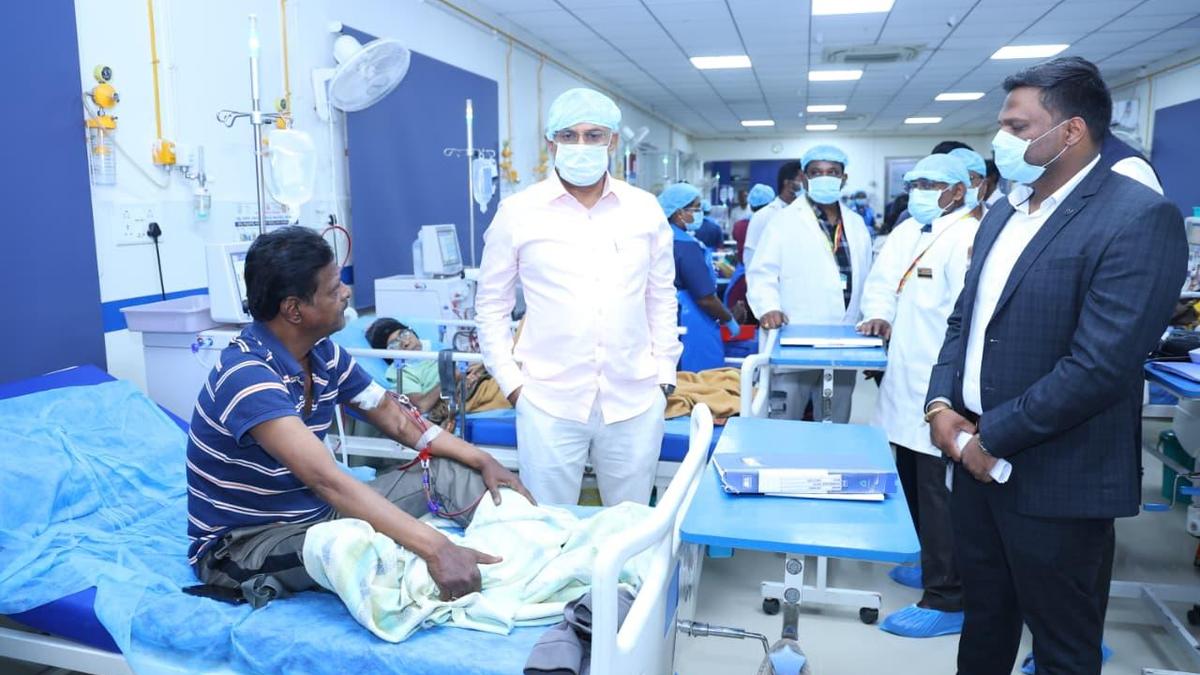
The Karnataka state government has launched an AI-based smart monitoring system across seven dialysis centers operating under a public-private partnership (PPP) model. Health Minister Dinesh Gundu Rao inaugurated the system at K.C. General Hospital in Bengaluru on Thursday, April 2, 2026. Developed by NephroPlus, the platform aims to improve the quality of care, strengthen patient safety, and standardize treatment protocols by providing real-time tracking of critical dialysis parameters and key performance indicators (KPIs).
The system replaces periodic audits with continuous, AI-driven monitoring, enhancing transparency and enabling data-driven clinical and operational decision-making. Officials expect the system to operate with 85% to 95% accuracy, with further refinements planned to improve its predictive capabilities.
Key Points:
- AI-based smart monitoring system introduced in seven dialysis centers in Karnataka under the PPP model.
- System launched by Health Minister Dinesh Gundu Rao at K.C. General Hospital on April 2, 2026.
- Developed by NephroPlus, the platform integrates advanced monitoring and surveillance technology.
- Enables real-time tracking of critical dialysis parameters like blood pressure, fluid removal, and electrolyte balance.
- Monitors 28 key indicators including adherence to dialysis protocols, patient safety, and operational efficiency.
- Replaces periodic audits with continuous, AI-driven monitoring for improved transparency.
- Operates at an accuracy level of 85% to 95%, with further enhancements planned.
Critical Analysis:
The preceding event on April 2, 2026, titled “AI-based monitoring system to boost safety and quality in government-run dialysis units under PPP,” directly foreshadows the launch described in the primary article. This indicates a planned and coordinated rollout of the AI monitoring system, suggesting a proactive approach by the Karnataka government to improve healthcare quality and efficiency through technological integration.
Key Takeaways:
- The Karnataka government is actively leveraging AI technology to enhance healthcare services.
- The public-private partnership model is being utilized to expand and improve dialysis care.
- Focus on data-driven decision-making and continuous monitoring signifies a shift towards more efficient and transparent healthcare management.
- Patient safety and quality of care are prioritized through the implementation of advanced monitoring systems.
Impact Analysis:
The implementation of this AI-powered monitoring system has significant long-term implications for healthcare in Karnataka and potentially beyond. The successful deployment and refinement of this system could lead to:
- Improved Patient Outcomes: Real-time monitoring and faster response times to critical parameters can reduce complications and improve the overall health of dialysis patients.
- Increased Efficiency: Automated KPI tracking and data-driven decision-making can streamline operations and reduce costs associated with dialysis care.
- Scalability and Replicability: If successful, this model can be scaled to other dialysis centers within Karnataka and replicated in other states or countries, improving healthcare access and quality on a broader scale.
- Enhanced Public-Private Partnerships: Demonstrating the effectiveness of PPPs in healthcare can encourage further collaboration between government and private entities, leading to innovation and improved service delivery.
- Increased Trust and Transparency: Continuous monitoring and data sharing can build trust among patients, healthcare providers, and the public, fostering a more transparent and accountable healthcare system.
 First Piper