
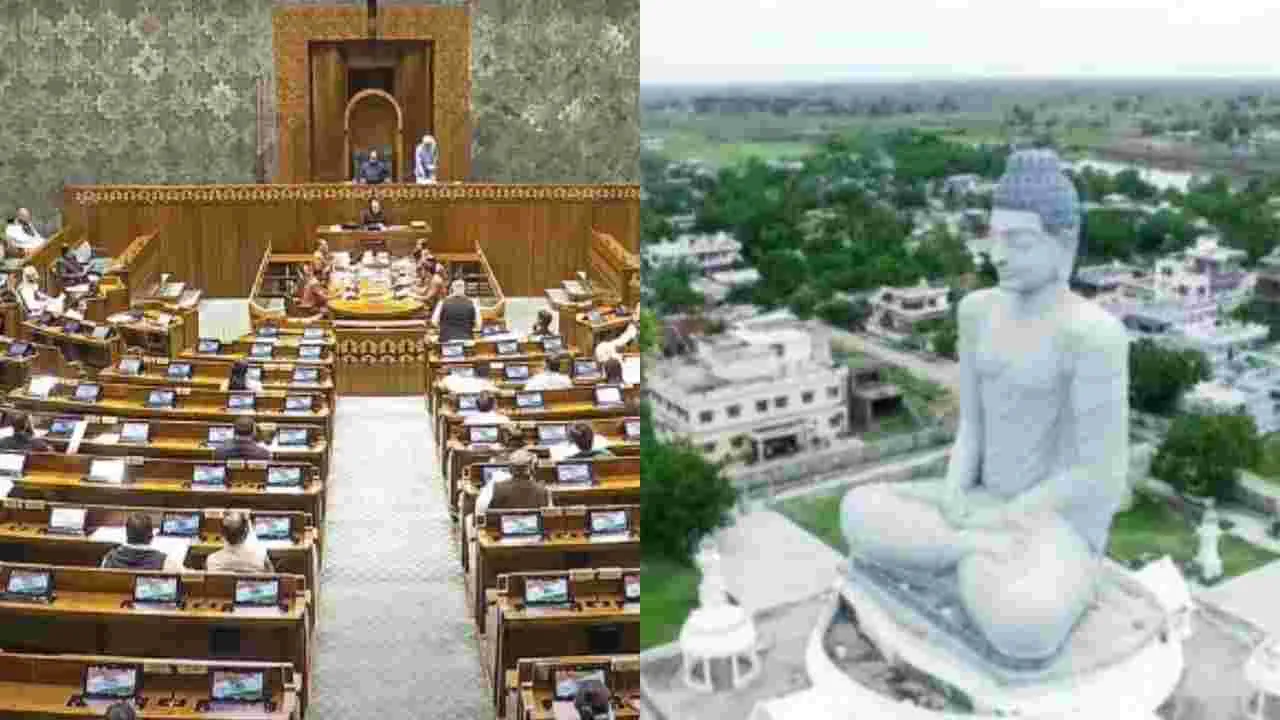
Fri Apr 03 02:00:00 UTC 2026: ### Headline: Amaravati Formally Recognized as Andhra Pradesh’s Capital After Years of Political Turmoil
The Story:
After a tumultuous journey marked by political shifts and legal battles, Amaravati has finally secured its status as the official capital of Andhra Pradesh. On April 2, 2026, the Rajya Sabha approved the State Reorganisation Amendment Bill, solidifying Amaravati’s legitimacy after the Lok Sabha’s approval on April 1, 2026. This marks the culmination of a long and controversial process that began with the state’s bifurcation in 2014 and faced significant setbacks under the previous government’s proposal for three capitals. The current coalition government has successfully revived the Amaravati project, culminating in parliamentary endorsement.
Key Points:
- June 2, 2014: Andhra Pradesh Reorganisation Act comes into effect, establishing Hyderabad as the joint capital for ten years.
- September 2014: Amaravati region between Guntur and Vijayawada is chosen as the capital area.
- December 2014: CRDA (Capital Region Development Authority) Act comes into effect, establishing legal framework for Amaravati’s development.
- October 22, 2015: Prime Minister Narendra Modi lays the foundation stone for Amaravati.
- December 17, 2019: The YSRCP government announces a plan for three capitals, jeopardizing Amaravati’s status.
- July 31, 2020: CRDA Act is repealed, and the three capitals bill is introduced, facing opposition in the Legislative Council.
- December 13, 2021: The three capitals law is withdrawn due to legal challenges; CRDA Act is reinstated.
- March 5, 2022: Andhra Pradesh High Court rules that Amaravati should be developed as the sole capital.
- March 28, 2026: The Andhra Pradesh State Assembly passes a resolution to keep Amaravati as the capital and sends it to the central government.
- April 1, 2026: Lok Sabha approves the State Reorganisation Amendment Bill, legally recognizing Amaravati as the capital.
- April 2, 2026: Rajya Sabha approves the same bill, completing the parliamentary process.
Key Takeaways:
- The recognition of Amaravati as the capital represents a significant political victory for the current coalition government, reversing the previous administration’s policies.
- The legislative process involved considerable delays and legal hurdles, highlighting the contentious nature of the capital city issue in Andhra Pradesh.
- The parliamentary approval provides a legal foundation for the development of Amaravati, potentially attracting investments and boosting infrastructure projects.
- The events underscore the importance of political stability in long-term urban development projects.
- The initial broad support for Amaravati’s development, followed by the three-capital proposal, demonstrates the volatile nature of political consensus and its impact on policy decisions.
Impact Analysis:
The formal recognition of Amaravati as the capital is poised to have several long-term impacts:
- Economic Boost: The legal certainty is expected to attract both domestic and foreign investments into the Amaravati region, stimulating economic growth and creating employment opportunities.
- Infrastructure Development: With a clear mandate, the government can now focus on developing the necessary infrastructure, including roads, utilities, and government buildings, transforming Amaravati into a functional capital city.
- Political Stability: The resolution of the capital issue is likely to reduce political uncertainty and create a more stable environment for governance and policymaking in Andhra Pradesh.
- Regional Development: The development of
 First Piper