
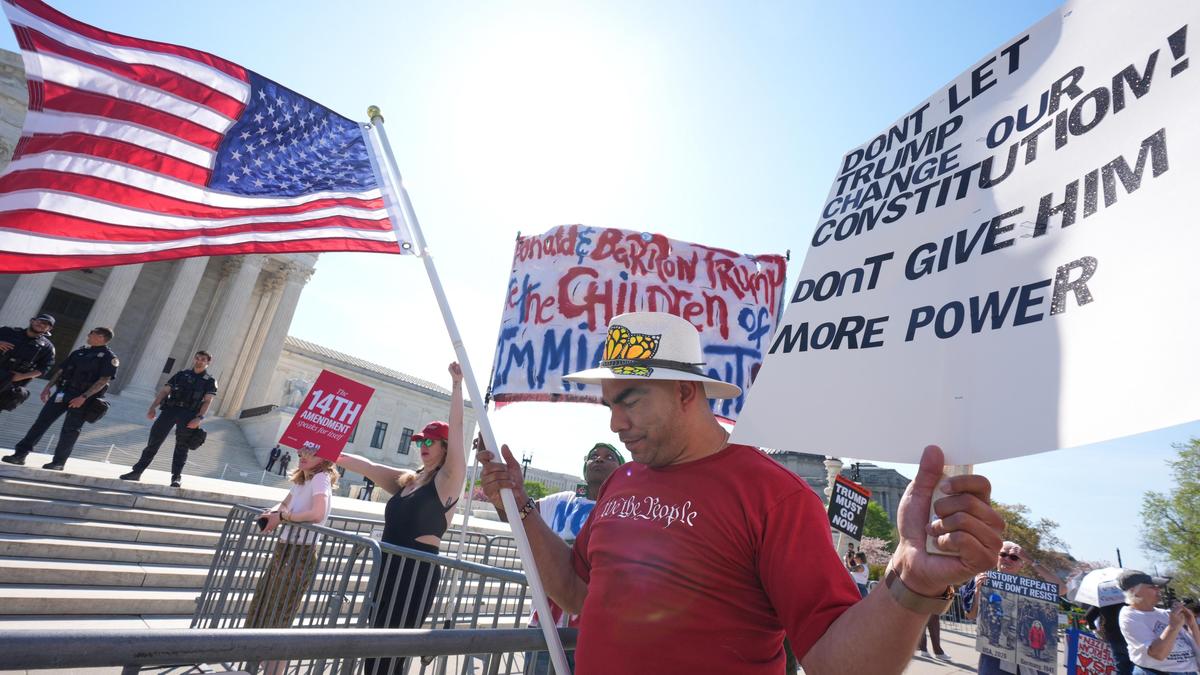
Wed Apr 01 22:11:24 UTC 2026: ### Birthright Citizenship Faces Supreme Court Challenge as Trump Breaks Precedent
The Story:
In an unprecedented move, former President Donald Trump attended Supreme Court oral arguments on April 1, 2026, regarding his administration’s challenge to birthright citizenship. The case centers on an executive order seeking to overturn constitutional and statutory protections for children born in the United States to undocumented or temporary residents. Trump’s presence, a departure from established norms, was met with silence from the justices, who proceeded to question the administration’s legal representatives. Following the arguments, Trump took to social media to criticize the court, particularly Justices Neil Gorsuch and Amy Coney Barrett, two of his own appointees, for their perceived lack of patriotism.
Key Points:
- Donald Trump attended Supreme Court oral arguments on birthright citizenship on April 1, 2026.
- Trump’s attendance is a break from presidential precedent.
- The Supreme Court is hearing arguments on the legality of Trump’s executive order seeking to overturn birthright citizenship.
- Trump criticized Justices Gorsuch and Barrett for questioning his administration’s position.
- Legal experts suggest Trump’s actions are unlikely to intimidate the justices.
- Actor Robert DeNiro, a vocal Trump critic, was also present in the courtroom.
Critical Analysis:
The historical context provided does not offer direct insight into the unfolding of the events, and it would be too speculative to draw conclusions about strategic depth.
Key Takeaways:
- Donald Trump continues to challenge established norms and institutions, even after leaving office.
- The Supreme Court’s independence is being tested by direct political pressure from a former president.
- The future of birthright citizenship in the United States is uncertain and subject to judicial interpretation.
- Trump’s criticism of justices he appointed highlights the complexities of judicial appointments and political alignment.
Impact Analysis:
The outcome of the Supreme Court case on birthright citizenship could have far-reaching implications for immigration policy, citizenship rights, and the interpretation of the 14th Amendment of the U.S. Constitution. A ruling against birthright citizenship would likely lead to significant legal challenges and potentially create a new class of individuals residing in the United States without full citizenship rights. This could lead to increased social and political tensions, impacting future elections and the overall social fabric of the nation.
 First Piper