
Wed Apr 01 13:33:43 UTC 2026: ### Trump Declares Imminent End to Iran War, Shifts Focus to Strait of Hormuz Security
The Story:
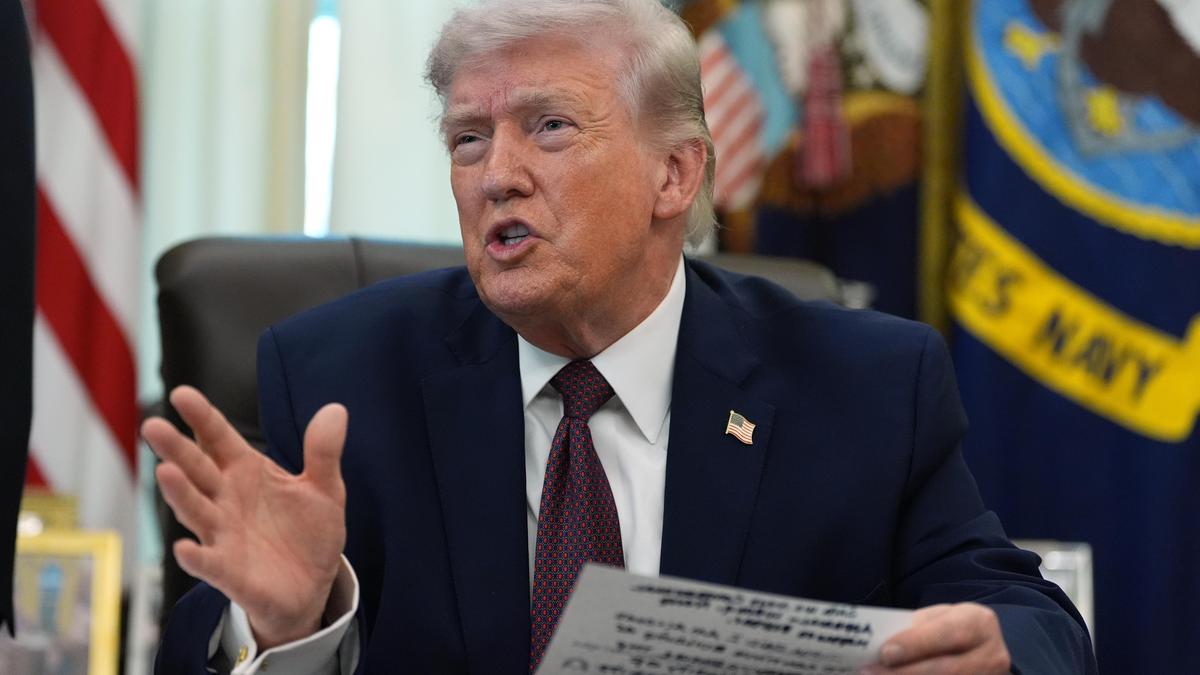
On April 1, 2026, U.S. President Donald Trump announced that the war with Iran may conclude within two to three weeks, signaling a potential shift in U.S. strategy. He stated that the responsibility for securing the Strait of Hormuz, a vital oil shipping channel, would fall to other nations. This announcement comes amid ongoing military actions, including Israeli strikes in Lebanon targeting Hezbollah, and reciprocal attacks impacting Iranian infrastructure. The White House has scheduled an address to the nation from President Trump for April 1, 2026, at 9:00 PM EST to provide further updates on the situation.
Key Points:
- President Trump claims the war with Iran may end in two to three weeks.
- The U.S. intends to withdraw from Iran and will not secure the Strait of Hormuz.
- Israeli Prime Minister Benjamin Netanyahu asserts the campaign against Iran has “changed the face of the Middle East.”
- Israeli strikes in Lebanon have resulted in over 1,200 deaths and over a million displaced.
- U.S. stocks surged, and Brent oil futures fell on hopes of a resolution.
- Trump threatened to “obliterate” Iranian oil wells and infrastructure if a deal is not reached.
- Iran’s Revolutionary Guards threatened retaliation against U.S. tech firms if further assassinations occur.
- Magnitude 7.8 earthquake strikes near Ternate, Indonesia.
Critical Analysis:
The related historical context reveals a growing sense of unease and potential cracks in the narrative surrounding the war. The fact that Laura Ingraham, a loyal Trump backer at Fox News, is questioning whether Trump even fully understood the military operation’s complexity suggests a level of internal doubt and potential mismanagement of the conflict. This is further supported by the fact that Fox News is pushing Trump’s Iran war agenda while support for the war plummets. The bombing of an oil tanker after Trump’s warning indicates a continued escalation despite the President’s claims of an imminent end to the war.
Key Takeaways:
- Trump’s pronouncements should be viewed with skepticism, considering his history of “zigzagging” on the war and the conflicting information emerging from other sources.
- The U.S. withdrawal from securing the Strait of Hormuz could create a power vacuum and potential for increased instability in the region.
- The war has already had a devastating impact on Lebanon, with significant casualties and displacement.
- Threats against U.S. tech companies highlight the potential for cyber warfare and broader economic consequences.
- The earthquake in Indonesia presents a secondary, potentially complicating, global crisis.
Impact Analysis:
The long-term implications of this event series are substantial. The U.S. withdrawal from the Strait of Hormuz could embolden Iran and other regional actors, leading to further conflicts. The threats against U.S. tech companies could escalate into a full-blown cyberwar, with significant economic and security consequences. The internal divisions within the U.S. regarding the war could erode public trust in the government and military. The earthquake in Indonesia, while seemingly unrelated, adds another layer of complexity to an already unstable global environment, potentially diverting resources and attention away from the Middle East. The combination of these factors could lead to a more volatile and unpredictable world order.
 First Piper