
Wed Apr 01 18:27:29 UTC 2026: # Trump’s Mixed Signals as Regional War Rages: Iran Denies Ceasefire Request Amid Escalating Attacks
The Story:
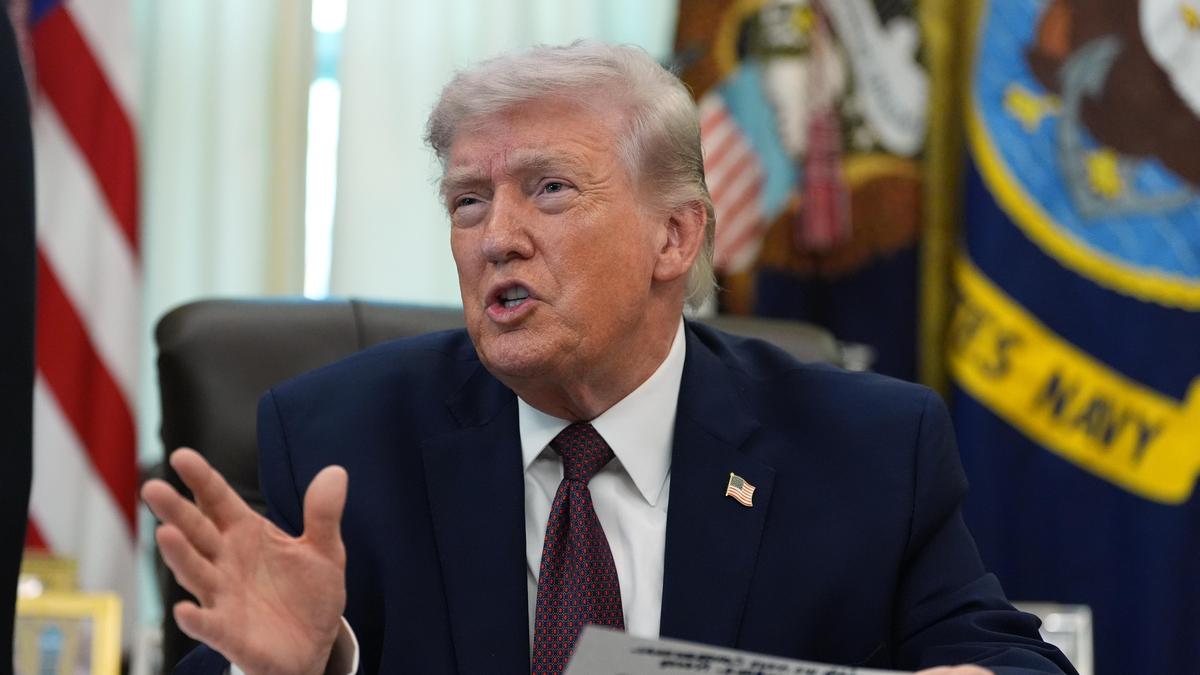
President Donald Trump stated on Wednesday, April 1, 2026, that Iranian President Masoud Pezeshkian requested a ceasefire, a claim vehemently denied by Iran. Trump conditioned any truce on the reopening of the Strait of Hormuz, threatening further military action against Iran. This announcement comes amidst ongoing US-Israeli strikes on Iran, which have ignited a regional war and triggered a global energy crisis, marked by escalating attacks between Iran, Israel, and their allies, with devastating consequences across the Middle East.
Key Points:
- President Trump claimed Iran requested a ceasefire, contingent on reopening the Strait of Hormuz.
- Iran’s Foreign Ministry refuted Trump’s claim as “false and baseless.”
- Iran launched fresh missile attacks on Israel and US-allied Gulf nations.
- The Strait of Hormuz remains closed to Iran’s “enemies,” according to the Revolutionary Guards.
- Attacks have damaged infrastructure in Iran, including an airport and steel complexes.
- Israel confirmed striking Tehran, while Iranian missile attacks wounded civilians in Israel.
- The conflict has expanded, involving attacks from Yemen’s Houthi rebels and strikes in Lebanon killing a Hezbollah commander.
- Gulf nations, including the UAE, Kuwait, Bahrain, and Saudi Arabia, have experienced drone strikes and fires.
- Global energy prices have soared, impacting gasoline prices and inflation worldwide.
- France has refused to participate in the war, while Britain is hosting a meeting to discuss reopening the Strait of Hormuz.
Critical Analysis:
The historical context provided reveals several key points:
1. South American countries brace for impact: This indicates the global reach and widespread concern over the conflict.
2. Stocks Recover Sharply Amid Hope for Iran War’s End: The market’s reaction to Trump’s comments highlights the economic sensitivity to any perceived progress towards de-escalation.
Key Takeaways:
- The situation in the Middle East is highly volatile, with conflicting narratives and escalating violence.
- The closure of the Strait of Hormuz is a critical factor driving the global energy crisis.
- International involvement is limited, with key allies hesitant to directly participate in the conflict.
- President Trump’s communication strategy is erratic, contributing to uncertainty and skepticism.
- The conflict is expanding beyond Iran and Israel, impacting neighboring countries and global markets.
Impact Analysis:
This event series has significant long-term implications:
- Geopolitical Instability: The regional war risks further destabilizing the Middle East, potentially leading to prolonged conflicts and humanitarian crises.
- Economic Disruptions: The energy crisis caused by the Strait of Hormuz closure will continue to impact global economies, driving inflation and potentially triggering recessions.
- Shifting Alliances: The conflict may lead to realignments of alliances in the region, with countries reassessing their relationships with the US, Iran, and Israel.
- Increased Militarization: The escalating attacks and counterattacks will likely result in increased militarization of the region, fueling an arms race and further exacerbating tensions.
- Humanitarian Crisis: The widespread destruction and displacement caused by the war will create a long-term humanitarian crisis, requiring significant international aid and support.
 First Piper