
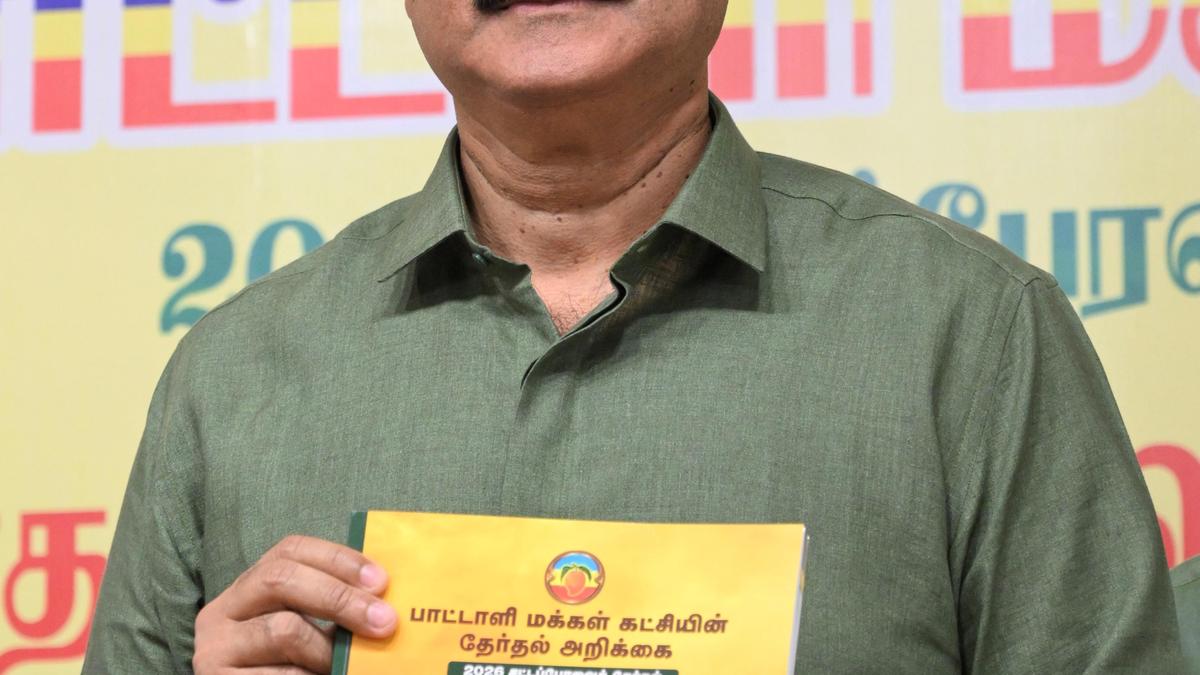
Wed Apr 01 19:27:34 UTC 2026: Headline: PMK Promises Social Justice Caste Census and Monthly Payments to Women in Election Manifesto
The Story:
PMK President Anbumani Ramadoss unveiled the party’s election manifesto on Wednesday, April 02, 2026, focusing on social justice initiatives and economic support for women in Tamil Nadu. Key promises include urging the state government to conduct a “social justice” caste census, providing ₹2,000 monthly payments to all women, improving law and order, and combating drug proliferation. Anbumani also criticized the DMK government’s alleged corruption and debt accumulation.
Key Points:
- PMK will push for a “social justice” caste census at the state level to justify internal reservations.
- The manifesto promises ₹2,000 monthly payments to all women.
- Anbumani accused the DMK government of accruing enormous debts without adequate capital expenditure, particularly in irrigation, education, and industry.
- He alleged corruption within the DMK government, specifically citing ₹1.82 lakh crore in alleged corruption within TASMAC (Tamil Nadu State Marketing Corporation).
- Anbumani justified the alliance with the AIADMK, stating the common goal of removing the DMK from power due to corruption, failure to protect women, and drug issues.
- He claimed that the Tamil Nadu government avoids establishing a strong Lokayukta to prevent investigations into corruption.
- He cited Enforcement Directorate evidence of ₹4,800 crore in corruption in sand mining.
Critical Analysis:
The events unfolding in Tamil Nadu suggest a highly competitive election environment. The PMK’s manifesto directly addresses key social and economic concerns, seeking to capitalize on perceived weaknesses in the DMK’s governance. The justification of the alliance with AIADMK, despite past opposition, highlights the strategic importance of unity among opposition parties to challenge the incumbent DMK. The timing of the manifesto release suggests a deliberate effort to influence public opinion early in the election cycle.
Key Takeaways:
- Caste-based politics and social justice remain central themes in Tamil Nadu elections.
- Economic promises, especially those targeting women, are crucial for attracting voter support.
- Allegations of corruption are a primary tool for opposition parties to discredit the ruling government.
- Political alliances are formed based on strategic necessity, even if they contradict past positions.
- The PMK is positioning itself as a champion of social justice and good governance in Tamil Nadu.
Impact Analysis:
The PMK’s focus on a caste census could have long-term implications for reservation policies and social equity in Tamil Nadu. The promise of monthly payments to women, if implemented, could significantly impact household income and women’s empowerment. The corruption allegations, if substantiated, could erode public trust in the DMK government and affect their electoral prospects. The success of the opposition alliance hinges on their ability to effectively coordinate their campaigns and present a united front against the DMK.
 First Piper