
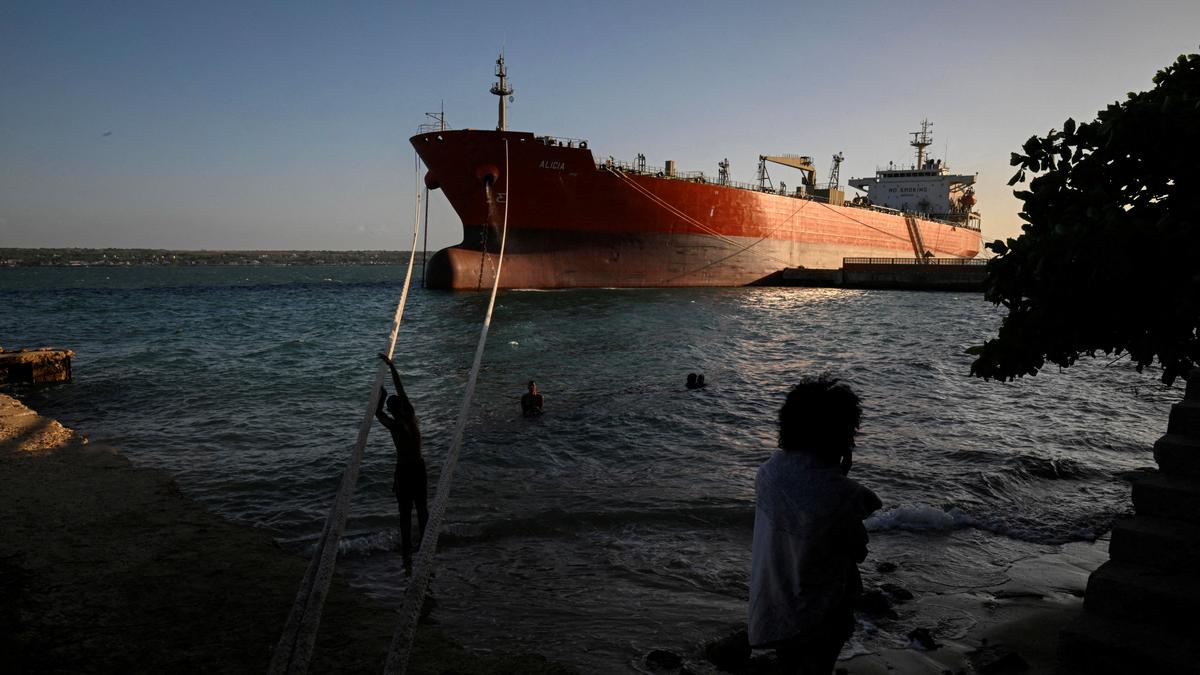
Thu Apr 02 17:00:13 UTC 2026: Headline: Russia Sends Second Oil Tanker to Cuba Amid U.S. Blockade Following Maduro Abduction
The Story:
Russia is defying a U.S. blockade to supply oil to Cuba, which has been facing a severe energy crisis since January 2026, when U.S. forces allegedly abducted Venezuelan President Nicolas Maduro, a key ally and oil supplier to Cuba. Energy Minister Sergei Tsivilev announced on April 2, 2026, that a second Russian tanker is being loaded with oil for Cuba, following the arrival of a first tanker on March 31, 2026, carrying 730,000 barrels of crude. The U.S. had threatened to tariff any country supplying oil to Cuba, but made an exception for Russia’s first shipment under “humanitarian reasons.”
Key Points:
- Cuba is experiencing an energy crisis due to the abduction of Venezuelan President Nicolas Maduro in January 2026.
- The U.S. has imposed a fuel blockade on Cuba, threatening tariffs on oil-supplying countries.
- Russia sent its first oil tanker to Cuba on March 31, 2026, with 730,000 barrels of crude.
- A second Russian oil tanker is being loaded for Cuba as of April 2, 2026.
- U.S. President Donald Trump stated on March 29, 2026, that Cuba is “finished” and that oil shipments will not change the situation.
Critical Analysis:
The abduction of Nicolas Maduro, a key ally of Cuba, created a power vacuum that the US used to their advantage. By cutting off Cuba’s primary oil supplier, they aimed to destabilize the regime. Russia’s willingness to defy the US blockade and provide oil to Cuba suggests a strategic effort to counter U.S. influence in the region and maintain its own geopolitical standing. The U.S.’s initial “humanitarian” allowance for Russia’s first shipment highlights a complex calculation, seemingly attempting to avoid direct confrontation while maintaining pressure.
Key Takeaways:
- The U.S. is actively working to destabilize the Cuban regime through economic pressure.
- Russia is positioning itself as a counter-balance to U.S. influence in Latin America.
- The situation highlights the ongoing geopolitical tensions between the U.S. and Russia.
- Cuba’s energy crisis is directly linked to the political turmoil in Venezuela and U.S. foreign policy.
Impact Analysis:
The ongoing oil shipments from Russia could provide temporary relief to Cuba’s energy crisis, but the long-term impact is uncertain. The U.S. blockade and the potential for further sanctions against countries supplying Cuba could exacerbate the situation. This could lead to increased political instability in Cuba, further straining relations between the U.S. and Russia, and potentially drawing other nations into the conflict. The event highlights a resurgence of Cold War-era tensions, with Cuba serving as a proxy in a larger geopolitical struggle. The global implications could include shifts in trade alliances and a reassessment of international norms regarding sanctions and intervention in sovereign nations.
 First Piper