
Thu Apr 02 08:25:50 UTC 2026: ### DMK’s Stalin Highlights Dravidian Model Success, Criticizes AIADMK and NDA in Election Campaign
The Story:
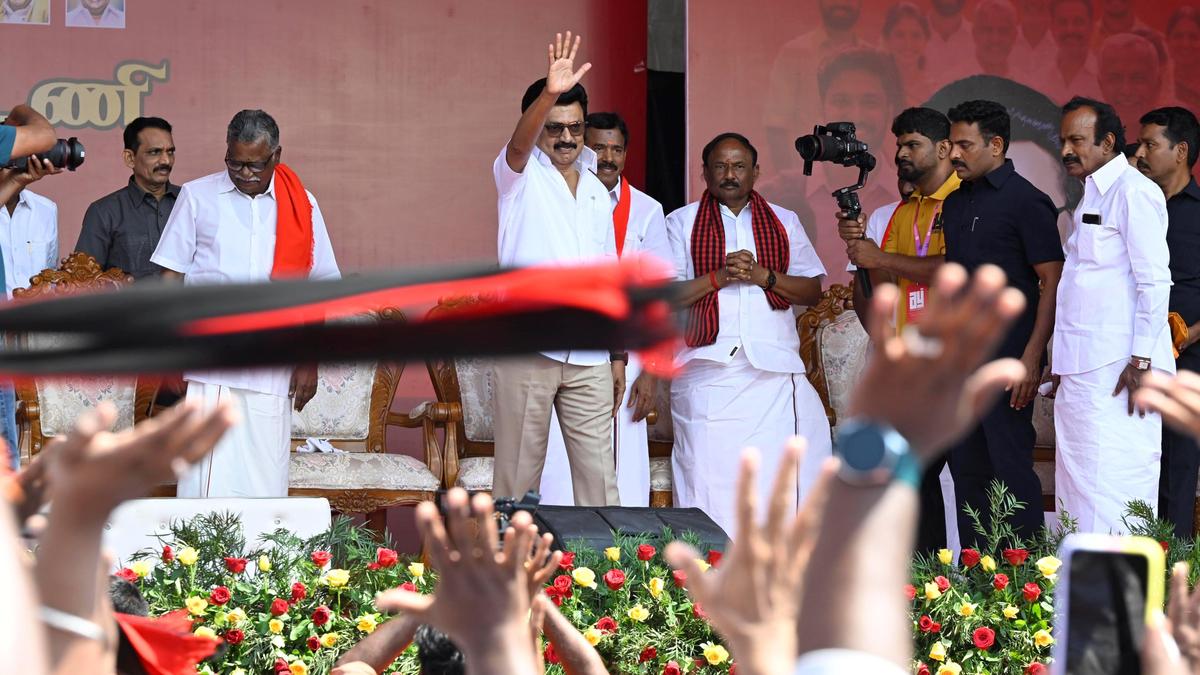
During an election campaign meeting in Erode on April 2, 2026, DMK president and Chief Minister M.K. Stalin asserted that the ‘Dravidian model’ of governance has led to comprehensive development across Tamil Nadu. He criticized the previous AIADMK government led by Edappadi K. Palaniswami, citing concerns over women’s safety, specifically referencing the Pollachi sexual assault case and the harassment of a woman Superintendent of Police. Stalin also targeted the NDA, raising issues such as NEET, rejected Metro Rail projects, anti-farmer laws, and perceived Hindi imposition.
Key Points:
- M.K. Stalin highlighted the ‘Dravidian model’ of governance as ensuring all-round development in Tamil Nadu.
- He accused the previous AIADMK regime, led by Edappadi K. Palaniswami, of compromising women’s safety.
- Stalin criticized the NDA on issues like NEET, rejection of Metro Rail projects, and anti-farmer laws.
- He stated that the present government filed chargesheets within 60 days in 86% of cases involving crimes against women and children.
- Stalin emphasized the struggle for state rights and continued development, urging voters to support the DMK-led front.
Critical Analysis:
The speech is carefully crafted to appeal to key voter demographics: women, farmers, and those concerned about state autonomy. The attacks on the AIADMK aim to remind voters of past controversies, while the criticism of the NDA is designed to resonate with concerns about central government policies infringing on state rights. The emphasis on the Dravidian model serves as a unifying ideology and a counter-narrative to national-level politics.
Key Takeaways:
- The DMK is framing the election as a battle for state rights and development against perceived threats from the central government and the opposition.
- Women’s safety remains a significant issue in Tamil Nadu politics.
- The Dravidian model continues to be a central theme in DMK’s political messaging.
- Stalin is directly addressing past failures of opposing parties to sway voters.
Impact Analysis:
The DMK’s strategy aims to consolidate its support base and potentially attract swing voters by highlighting its governance record and contrasting it with the perceived shortcomings of its political rivals. The focus on state rights and development could resonate particularly strongly if there is widespread dissatisfaction with central government policies. The outcome of the election will be a key indicator of the continued relevance of regional identity and Dravidian politics in Tamil Nadu.
 First Piper