
Wed Apr 01 18:41:52 UTC 2026: # India Responds to West Asia Conflict with Focus on Energy Security and Citizen Welfare
The Story:
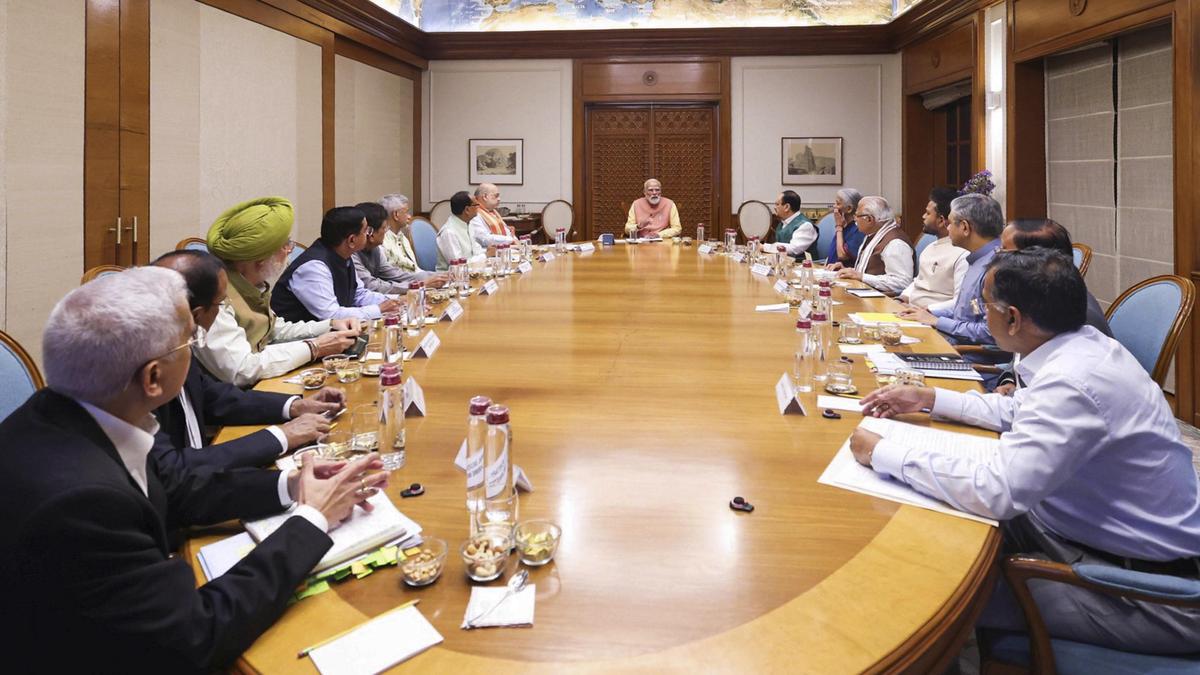
On April 1, 2026, Prime Minister Narendra Modi chaired a special meeting of the Cabinet Committee on Security (CCS) to address the ongoing conflict in West Asia. The meeting focused on assessing and mitigating the potential impact on India’s energy supply, particularly Liquefied Natural Gas (LNG) and Liquefied Petroleum Gas (LPG), as well as ensuring sufficient power availability. The government is actively diversifying its sources of LPG and has maintained stable LPG prices for domestic consumers. Furthermore, the Prime Minister emphasized the importance of ensuring the availability of fertilizers for the upcoming Kharif and Rabi seasons and combating misinformation to safeguard citizens from the repercussions of the conflict.
Key Points:
- The Cabinet Committee on Security (CCS) met on April 1, 2026, to discuss the West Asia conflict.
- The meeting addressed the supply of petroleum products, especially LNG/LPG, and power availability.
- India is diversifying its LPG procurement sources.
- Domestic LPG prices have remained stable.
- The Prime Minister stressed the need to ensure fertilizer availability.
- Efforts are being made to prevent misinformation and rumor-mongering.
- PM Modi directed departments to “ameliorate the problems of citizens and sectors” affected by the global situation.
Critical Analysis:
The timing of this CCS meeting, coinciding with ongoing assembly elections and discussions about Free Trade Agreements with Europe, suggests a balancing act by the Modi government. While addressing the external crisis, the government is also attempting to maintain domestic stability and pursue economic opportunities. Priyanka Gandhi Vadra’s criticism of Modi as “America’s slave” highlights the political pressures the government faces in navigating international relations during this period.
Key Takeaways:
- India is proactively addressing the potential economic and social consequences of the West Asia conflict.
- Energy security, particularly the supply and pricing of LPG, is a key priority.
- The government is prioritizing the availability of essential commodities like fertilizers.
- Combating misinformation is seen as crucial for maintaining public order.
- The government is trying to balance international crises with domestic political and economic agendas.
Impact Analysis:
The government’s response to the West Asia conflict will likely have long-term implications for India’s energy policy and international relations. Diversifying energy sources could strengthen India’s energy independence and resilience to future geopolitical shocks. The emphasis on citizen welfare suggests a focus on mitigating potential social unrest stemming from economic hardship. Successfully managing this crisis could bolster the Modi government’s credibility and influence in the region.
 First Piper