
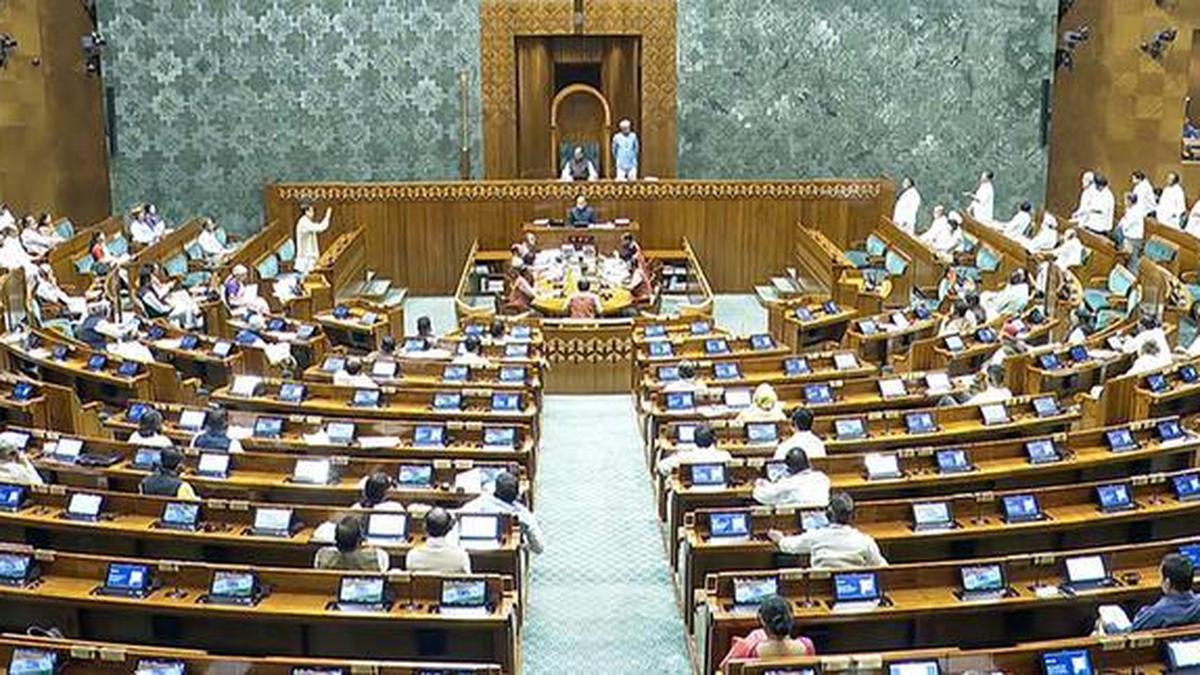
Thu Apr 02 13:44:49 UTC 2026: ### Parliament Passes Key Bills Amidst Controversy and Extended Session
The Story:
On April 2, 2026, the Indian Parliament witnessed a flurry of legislative activity, passing several significant bills, including the Central Armed Police Forces (General Administration) Bill, 2026, the Jan Vishwas (Amendment of Provisions) Bill, and the Andhra Pradesh Reorganisation (Amendment) Bill, 2026. The session, initially scheduled for adjournment, was extended to accommodate amendments to the Women’s Reservation Act, 2023, stirring accusations of electoral manipulation from the Congress party. Debates were heated, with opposition parties raising concerns about the implications of the CAPF Bill, the benefits of the Jan Vishwas Bill, and the process of designating Amaravati as the sole capital of Andhra Pradesh.
Key Points:
- The Lok Sabha passed the Central Armed Police Forces (General Administration) Bill, 2026, which reserves 50% of CAPF posts for deputation at the Inspector General level and a minimum of 67% at the Additional Director General level. All Special Director General and Director General positions will be filled only by deputation.
- The Rajya Sabha passed the Jan Vishwas (Amendment of Provisions) Bill, decriminalizing 717 provisions across 79 Central Acts to facilitate ease of living and doing business.
- Parliament approved the Andhra Pradesh Reorganisation (Amendment) Bill, 2026, recognizing Amaravati as the sole and permanent capital of Andhra Pradesh, though opposed by the YSRCP.
- The Budget Session was extended to address amendments to the Women’s Reservation Act, 2023, aiming to increase the number of Lok Sabha seats to 816 for its implementation.
- AAP appointed Ashok Mittal as Deputy Leader of the party in the Rajya Sabha, replacing Raghav Chadha.
Critical Analysis:
The extension of the parliamentary session to amend the Women’s Reservation Act, immediately before Assembly elections, raises questions about the government’s motives. Congress’s accusations of electoral manipulation suggest a strategic move to gain political advantage by showcasing commitment to women’s representation. The passing of the Amaravati bill after 30 years of stagnation, as claimed by J.P. Nadda, also points to a potential attempt to leverage long-pending issues for political gains.
Key Takeaways:
- The government is pushing forward with significant legislative reforms across various sectors, from internal security to business regulations.
- The opposition is actively questioning the government’s intentions, particularly regarding the timing and potential political motivations behind these legislative actions.
- The focus on the Women’s Reservation Act suggests a strategic emphasis on gender equality as a key policy area.
- The passage of the Amaravati Bill marks a significant development in Andhra Pradesh’s political landscape.
- Internal security and police force administration are being reshaped through the CAPF Bill, potentially impacting the balance between central and state powers.
Impact Analysis:
- The Central Armed Police Forces (General Administration) Bill, 2026 could lead to significant changes in the leadership structure and operational dynamics of CAPFs, potentially impacting national security and the relationship between central and state police forces.
- The Jan Vishwas (Amendment of Provisions) Bill is expected to improve the ease of doing business and living by reducing regulatory burdens and decriminalizing minor offenses, potentially stimulating economic growth and improving citizen satisfaction.
- The recognition of Amaravati as the sole capital of Andhra Pradesh will likely have long-term economic and political consequences for the state, potentially reshaping its development trajectory and political alliances.
- The amendments to the Women’s Reservation Act, 2023, and the
 First Piper