
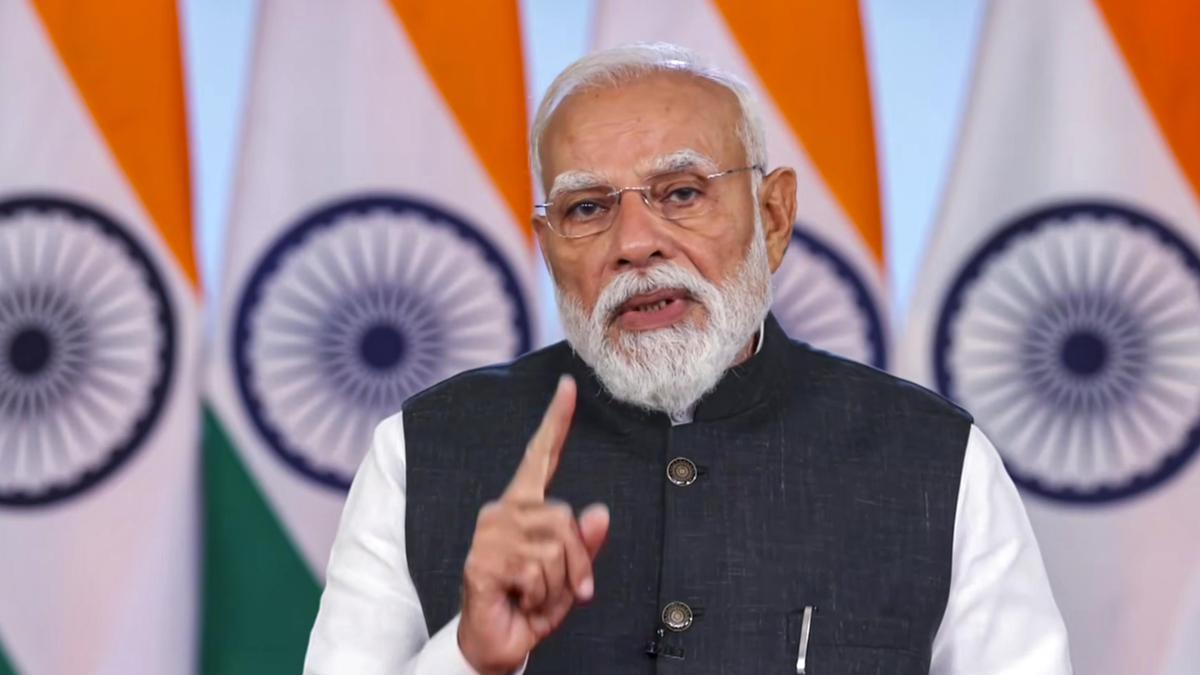
Thu Apr 02 06:39:53 UTC 2026: Headline: PM Modi Emphasizes Civil Service Reform for ‘Viksit Bharat’ Amidst Global Instability
The Story:
On April 2, 2026, Prime Minister Narendra Modi addressed the ‘Karmayogi Sadhana Saptah’ via video message, a week-long capacity-building initiative under Mission Karmayogi. He stressed the importance of continuously updating civil services to achieve the goal of ‘Viksit Bharat’ by 2047. Mr. Modi highlighted the need for improved governance that enhances the ease of living and quality of life for citizens. He also emphasized the importance of understanding and utilizing technology, especially AI, for better decision-making in public service.
Key Points:
- Prime Minister Narendra Modi addressed the ‘Karmayogi Sadhana Saptah’ on April 2, 2026.
- The focus is on reforming civil services to achieve ‘Viksit Bharat’ by 2047.
- The governance principle is “Nagrik Devo Bhavah” (citizens are like gods).
- Emphasis on understanding and using technology, including AI, for public service.
- ‘Sadhana Saptah’ is organized by the Capacity Building Commission (CBC) from April 2 to 8.
Critical Analysis:
The timing of PM Modi’s address is notable, coinciding with significant global instability: a potential US-Iran war rattling markets, a stock market crash with the Sensex dropping 1,300 points, and tech companies like Oracle undergoing layoffs while increasing AI spending. This suggests a strategic effort to reinforce domestic stability and progress amidst external uncertainties. The emphasis on AI and technology adoption within the civil service may be a direct response to the need for India to remain competitive and resilient in a rapidly changing global landscape, particularly in the face of potential economic disruptions caused by geopolitical conflicts.
Key Takeaways:
- The Indian government is prioritizing internal reforms to insulate itself from global shocks.
- Technology and AI are viewed as critical tools for improving governance and achieving national development goals.
- ‘Viksit Bharat’ remains a central guiding vision for government policy and civil service reform.
- The ‘Karmayogi’ mission seeks to instill a sense of duty and citizen-centric approach within public servants.
Impact Analysis:
The long-term impact of these reforms could be significant. By modernizing the civil service and equipping it with technological capabilities, India aims to enhance its governance efficiency and responsiveness. This could lead to improved public service delivery, greater citizen satisfaction, and a more robust and resilient economy capable of weathering global crises. The focus on AI adoption may also position India as a leader in leveraging technology for governance and development in the coming years. This initiative seeks to create a more agile and future-ready civil service that can effectively address the challenges and opportunities of a rapidly evolving world.
 First Piper