
Thu Apr 02 04:13:37 UTC 2026: ### Iranian President Appeals to American People Amidst Heightened Tensions
The Story:
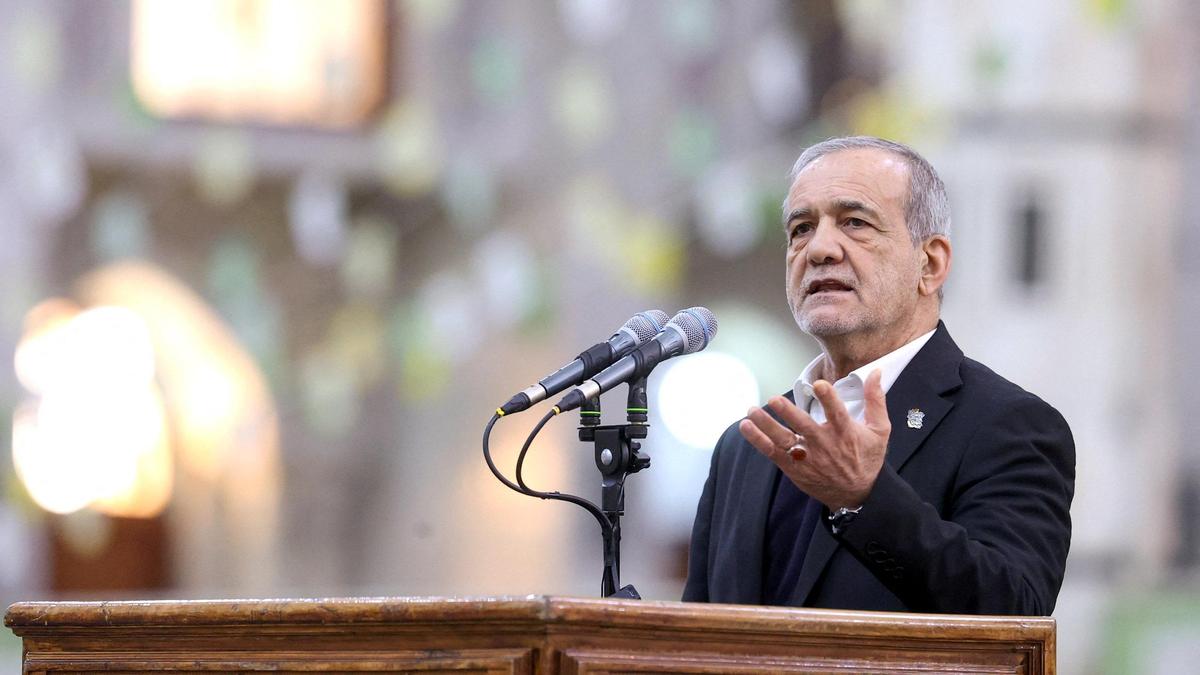
In a letter addressed to the American people on Wednesday, April 1, 2026, Iranian President Masoud Pezeshkian asserted that Iran harbors no animosity towards ordinary Americans. He refuted the portrayal of Iran as a threat, labeling it as a fabrication designed to justify military dominance and control strategic markets. This communication arrives amidst escalating tensions between Iran and Israel, with the U.S. playing a significant role as an ally to Israel.
President Pezeshkian questioned the presence of U.S. military bases in Gulf countries surrounding Iran, arguing that Iran’s defensive measures are a response to this perceived threat, not an initiation of war. He further suggested that the U.S. is acting as a proxy for Israel, which he accuses of manufacturing an Iranian threat to divert attention from its actions towards Palestinians.
Key Points:
- Iranian President Masoud Pezeshkian addressed a letter to the American people.
- The letter claims Iran has no enmity towards ordinary Americans.
- Pezeshkian argues that portraying Iran as a threat is a political fabrication.
- He criticizes the U.S. military presence in the Gulf countries.
- He accuses Israel of manipulating the U.S. to fight Iran on its behalf.
Critical Analysis:
The timing of this letter, amidst escalating tensions between Iran and Israel and following a speech by Trump indicating nearing completion of Iran war objectives, strongly suggests an attempt by Iran to bypass official channels and directly influence American public opinion. This could be aimed at reducing domestic support for military intervention or increased sanctions against Iran. Accusations of Israel manipulating the U.S. are a common tactic to sow discord and question the motives behind U.S. foreign policy in the region.
Key Takeaways:
- Iran is attempting to directly influence American public opinion.
- The letter aims to undermine support for potential U.S. action against Iran.
- Iran is leveraging anti-Israel sentiment to create division.
- The communication reflects a strategic effort to de-escalate tensions through public diplomacy.
- The letter acknowledges the significant influence of Iranian immigrants in the U.S., attempting to build common ground.
Impact Analysis:
The success of this public relations effort will depend on the American public’s existing perceptions of Iran and the U.S.-Israel relationship. If the letter resonates with a significant portion of the population, it could create political pressure on the U.S. government to adopt a more cautious approach in its dealings with Iran. Conversely, if the letter is perceived as propaganda, it could backfire and strengthen support for a more hawkish stance. The long-term impact will likely be seen in future policy debates and public discourse surrounding U.S. foreign policy in the Middle East.
 First Piper