
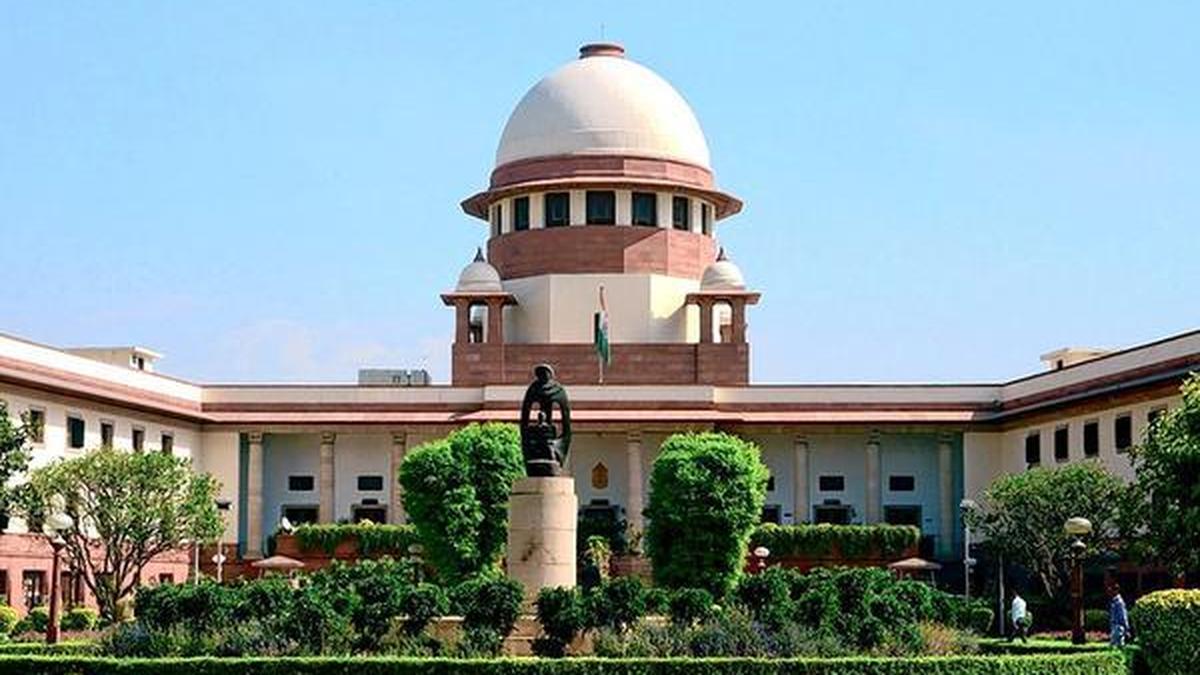
Thu Apr 02 07:19:37 UTC 2026: ### Headline: Supreme Court Takes Suo Motu Cognisance of Hostage Situation Involving Electoral Roll Revision Officers in West Bengal
The Story:
The Supreme Court of India, headed by Chief Justice Surya Kant, has taken suo motu cognisance of the gheraoing and hostage situation involving seven judicial officers in West Bengal’s Malda district on April 1, 2026. These officers were involved in the special intensive revision of electoral rolls (SIR). The Court deemed the incident a “calculated attempt” to derail the electoral process and criticized the State government’s inaction as “highly deplorable.” The Election Commission of India (ECI) described the situation as “jungle raj.” The court has issued show-cause notices to senior police officers and officials in the administration.
Key Points:
- The Supreme Court took suo motu cognisance of the incident on April 2, 2026.
- Seven judicial officers, including three women, were held hostage for over nine hours in Malda district.
- The officers were involved in the special intensive revision of electoral rolls (SIR).
- The Supreme Court issued show-cause notices to senior police officers and officials in the administration.
- The ECI termed the regime in West Bengal a “jungle raj”.
- The Court directed the ECI to requisition central forces to protect judicial officers and government offices involved in the electoral roll revision.
- The incident was reportedly caused by voters whose names were deleted from the voter list.
- The Court is inclined to order a CBI or independent investigation.
Critical Analysis:
The historical context reveals a pattern of events leading up to the Supreme Court’s intervention. The news snippets indicate heightened political activity across the country, including assembly election preparations in Kerala and Tamil Nadu, and security concerns such as the blast outside a BJP office in Punjab. Juxtaposed with the corruption-related news from Delhi and Bengaluru, the hostage situation in West Bengal suggests a breakdown in law and order during a crucial electoral process, potentially fueled by political polarization and administrative negligence. This context amplifies the seriousness of the situation, prompting the Supreme Court to take immediate action to safeguard the integrity of the electoral process.
Key Takeaways:
- The incident highlights the vulnerability of electoral processes to disruption and political interference.
- The Supreme Court’s swift intervention underscores its commitment to upholding the integrity of elections.
- The ECI’s condemnation of the situation as “jungle raj” reflects deep concerns about the state of governance in West Bengal.
- The potential for CBI or independent investigation suggests a lack of trust in the state government’s ability to impartially address the issue.
- The incident emphasizes the need for heightened security measures during electoral roll revisions, particularly in politically sensitive regions.
Impact Analysis:
The Supreme Court’s intervention and potential investigation could have significant long-term implications:
- Electoral Reforms: The incident may lead to stricter guidelines and security protocols for conducting electoral roll revisions, especially in states with a history of political violence or electoral malpractices.
- Accountability: The show-cause notices to senior police officers and officials could result in disciplinary actions or legal proceedings, setting a precedent for holding authorities accountable for lapses in security during electoral processes.
- Central Intervention: The deployment of central forces under the ECI’s direction could signal a greater role for the central government in ensuring fair and peaceful elections in West Bengal, potentially impacting the state’s political dynamics.
- Public Trust: The outcome of the investigation and subsequent actions will significantly impact public trust in the electoral process and the state government’s ability to maintain law and order.
 First Piper