
Thu Apr 02 16:22:50 UTC 2026: # Karnataka Implements AI-Powered Monitoring for Dialysis Centers
The Story:
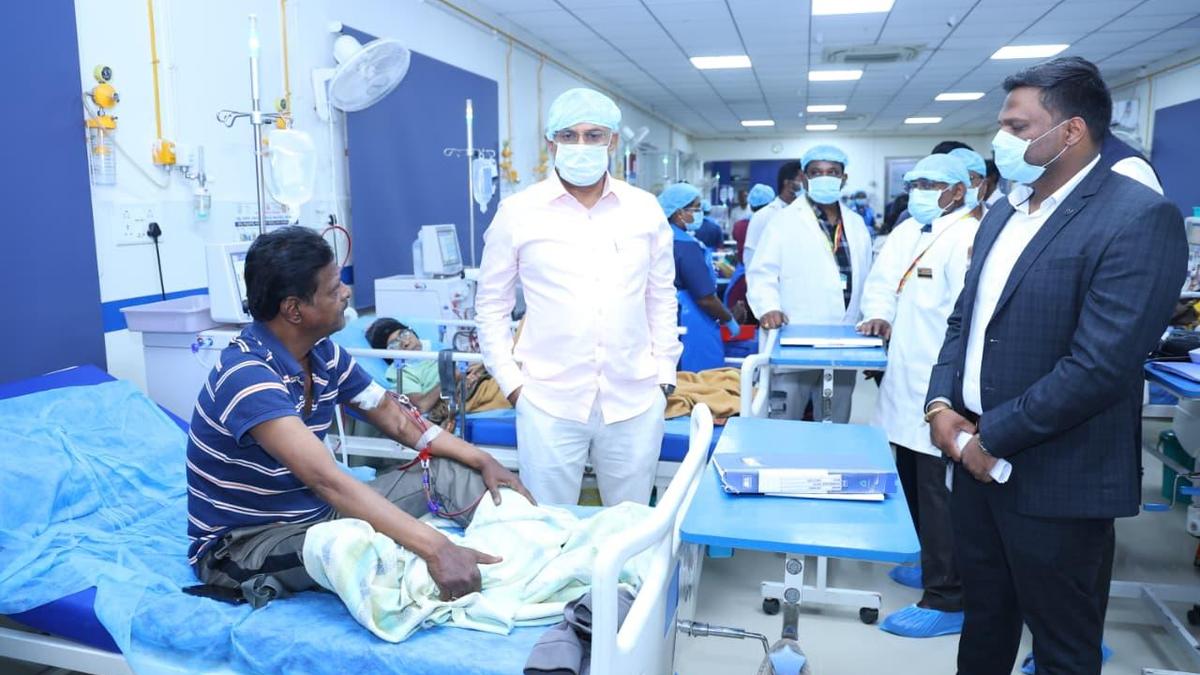
Karnataka has launched an AI-based smart monitoring system across seven dialysis centers operating under the state’s public-private partnership (PPP) model. Health Minister Dinesh Gundu Rao inaugurated the system at K.C. General Hospital in Bengaluru on Thursday, April 2, 2026. The platform, introduced by NephroPlus, aims to enhance clinical oversight, improve the quality of care, and strengthen patient safety by integrating advanced monitoring and surveillance technology.
The system enables real-time tracking of critical dialysis parameters and monitors 28 key indicators, replacing periodic audits with continuous, AI-driven monitoring. Officials claim the platform operates at an accuracy level of 85% to 95%, with further refinements expected.
Key Points:
- The AI-enabled platform was introduced by NephroPlus in seven dialysis centers under Karnataka’s PPP model.
- The system tracks critical dialysis parameters like blood pressure, fluid removal, and electrolyte balance in real-time.
- It monitors 28 key indicators, including adherence to dialysis protocols, patient safety, and operational efficiency.
- The AI monitoring system aims to improve transparency and consistency in care delivery.
- The platform’s accuracy is currently between 85% and 95%, with plans for further improvements.
Key Takeaways:
- Karnataka is leveraging AI to improve healthcare quality and efficiency within its PPP dialysis programs.
- The move towards real-time monitoring signifies a shift from periodic audits to continuous data-driven oversight.
- The initiative demonstrates a commitment to enhancing patient safety and standardizing care in dialysis centers.
- The deployment highlights the increasing role of technology in public health infrastructure.
- The success of this program could lead to wider adoption of AI-powered monitoring in other healthcare sectors.
Impact Analysis:
The implementation of AI-powered monitoring in Karnataka’s dialysis centers has significant long-term implications. First, it sets a precedent for the adoption of similar technologies in other healthcare services, potentially leading to improved patient outcomes and resource allocation. Second, the data collected by the AI system can be used to identify trends and patterns, enabling proactive interventions and personalized treatment plans. Third, the enhanced transparency and accountability fostered by the system can help build public trust in the healthcare system. Finally, the success of this initiative could attract investment and innovation in the healthcare technology sector, further driving advancements in patient care.
 First Piper