
Wed Apr 01 03:09:12 UTC 2026: # Modi Accuses Congress of Exploiting West Asia Conflict for Political Gain
The Story:
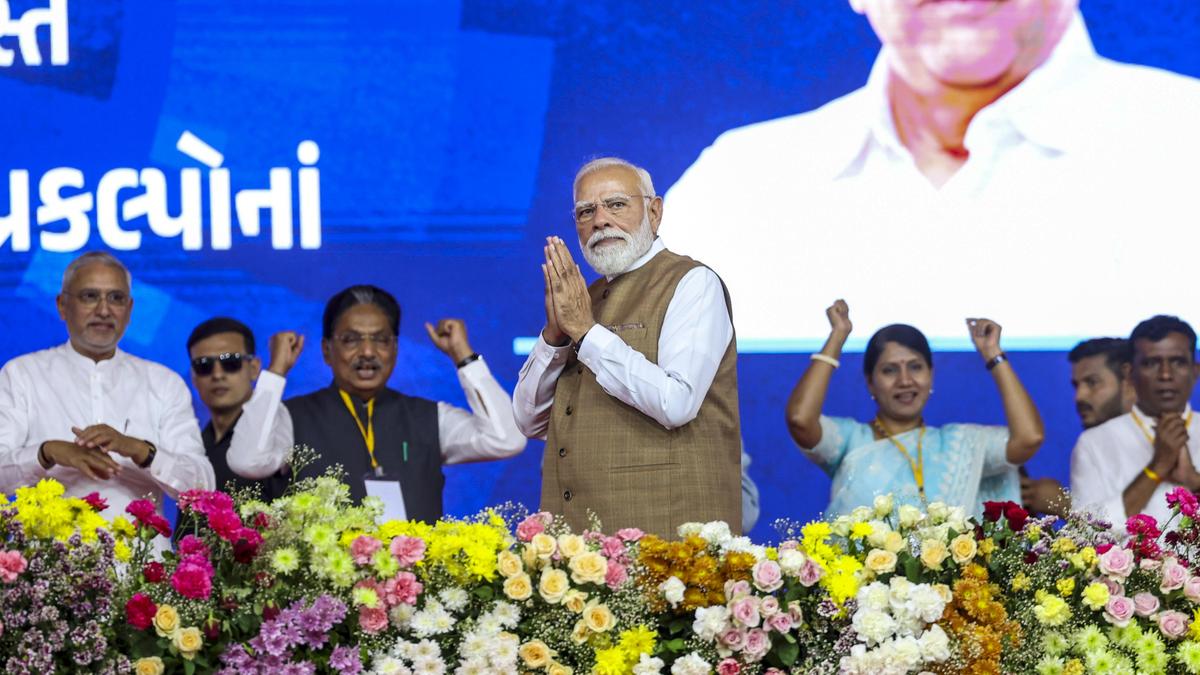
Prime Minister Narendra Modi, speaking at a public meeting in Nani village, Gujarat on March 31, 2026, accused the Congress party of attempting to exploit the ongoing West Asia conflict for political advantage. He likened the Congress to “Rajneeti ke gidh” (vultures of politics), alleging they are spreading rumors and fear to instigate public disorder, particularly regarding fuel supplies. Modi asserted that India has effectively managed the crisis through its strong foreign policy and resilience, while Congress seeks to spread anarchy.
Key Points:
- Prime Minister Modi accused the Congress of “divisive politics” and “spreading fear” amid a global crisis.
- He stated that India has managed the West Asia crisis effectively, particularly regarding energy supplies, despite global challenges.
- Modi highlighted the development of the Deesa airbase, criticizing previous Congress-led governments for delaying its construction, emphasizing its importance for national security.
- He inaugurated and laid foundation stones for development projects worth ₹19,806.9 crore in the region.
- Modi claimed that while fuel prices have surged in other countries, India has protected its citizens from the worst impacts, which Congress finds “intolerable.”
Critical Analysis:
The speech occurs amidst a volatile geopolitical landscape marked by the U.S.-Israel-Iran war and anxieties surrounding global energy supplies. The Prime Minister’s accusations against the Congress party reflect a pattern of political polarization and blame allocation, particularly during times of national or international crisis. The timing of the speech, coupled with the inauguration of development projects, suggests an attempt to showcase the government’s competence and commitment to national security and economic development in the face of external challenges. Netanyahu’s efforts to forge alliances in West Asia and the “Hormuz Hope” rally indicate a period of intense diplomatic activity and market sensitivity, making the Prime Minister’s statements potentially impactful on both domestic and international perceptions.
Key Takeaways:
- The ruling party is actively framing the opposition as opportunistic and unpatriotic during a period of international conflict.
- The government is leveraging development projects and infrastructure initiatives to demonstrate its commitment to national security and regional development.
- Energy security remains a central concern, with the government emphasizing its efforts to mitigate the impact of the West Asia crisis on fuel prices and supplies.
- The Prime Minister is attempting to link past Congress failings with current national security concerns.
- The political rhetoric is heightened due to the ongoing conflict and its potential domestic repercussions.
Impact Analysis:
The Prime Minister’s strong rhetoric and accusations against the Congress party are likely to further exacerbate political divisions in India. The emphasis on national security and economic resilience could resonate with the public, potentially boosting the ruling party’s image. However, the accusations of rumour-mongering and instigating public disorder could also backfire if the public perceives them as an attempt to deflect criticism or suppress dissent. The long-term impact of the West Asia conflict on India’s economy and energy security will likely depend on the government’s ability to manage the crisis effectively and maintain stable fuel prices. The focus on renewable energy projects suggests a strategic shift towards long-term energy independence.
 First Piper