
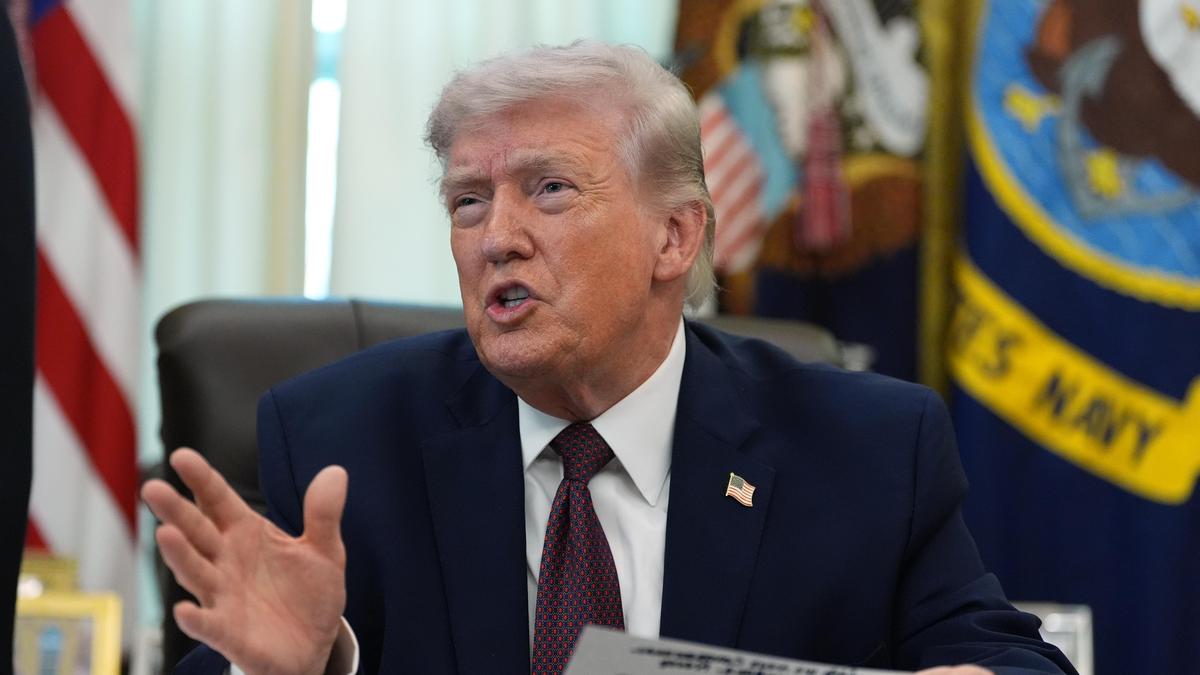
Wed Apr 01 11:34:15 UTC 2026: # Trump Considers NATO Exit After Allies Refuse Iran War Involvement
The Story:
In a move that could reshape global security, U.S. President Donald Trump is considering withdrawing the United States from NATO, citing the alliance’s refusal to join the recent war against Iran. This announcement follows criticism of NATO members, particularly the U.K., France, and Spain, for not supporting the U.S. in reopening the Strait of Hormuz, which has been blocked since the conflict began a month ago. The situation has led to a spike in oil prices, exacerbating tensions between the U.S. and its traditional allies.
Key Points:
- President Trump described NATO as a “paper tiger” and stated he was “beyond reconsideration” regarding pulling out of the alliance.
- The decision stems from NATO allies’ refusal to participate in the Iran war and assist in reopening the Strait of Hormuz.
- The closure of the Strait of Hormuz has disrupted 20% of global oil flow, causing crude oil prices to reach $120 per barrel and gasoline prices in the U.S. to exceed $4 per gallon.
- Trump criticized British Prime Minister Keir Starmer and questioned the capabilities of the British Navy.
- Keir Starmer reaffirmed his commitment to NATO, calling it “the single most effective military alliance the world has ever seen,” and emphasized that Britain would act in its national interest by not getting involved in the Iran war.
- Trump has a history of criticizing NATO, accusing member countries of relying on the U.S. for security while underinvesting in defense.
Critical Analysis:
The historical context highlights a consistent pattern of Trump’s skepticism towards NATO, dating back to his previous threats and criticisms regarding defense spending and even encouraging potential aggression from Russia. This suggests a long-held strategic view that NATO is not serving U.S. interests effectively, particularly when allies do not align with U.S. foreign policy objectives. The refusal of key NATO members to support the Iran war appears to be the catalyst for potentially enacting his long-standing threat of withdrawal.
Key Takeaways:
- The U.S. withdrawal from NATO would significantly weaken the alliance and potentially embolden adversaries.
- The conflict over the Iran war highlights a growing divergence in foreign policy priorities between the U.S. and its European allies.
- Global energy markets are highly vulnerable to geopolitical instability, as demonstrated by the impact of the Strait of Hormuz closure.
- Trump’s actions could lead to a realignment of global power structures and a shift in international security dynamics.
- The future of NATO is uncertain, contingent on the U.S. Presidential address and subsequent political and diplomatic developments.
Impact Analysis:
The potential U.S. exit from NATO has far-reaching implications:
- Geopolitical Instability: A weakened NATO could lead to increased instability in Europe and beyond, potentially creating power vacuums that other nations might seek to fill.
- European Security Autonomy: European nations may be forced to increase their defense spending and develop independent security strategies, potentially leading to a more fragmented security landscape.
- Transatlantic Relations: The withdrawal could severely damage transatlantic relations, undermining decades of cooperation and shared values.
- Global Power Balance: The shift could alter the global balance of power, potentially benefiting countries like **Russia
 First Piper