
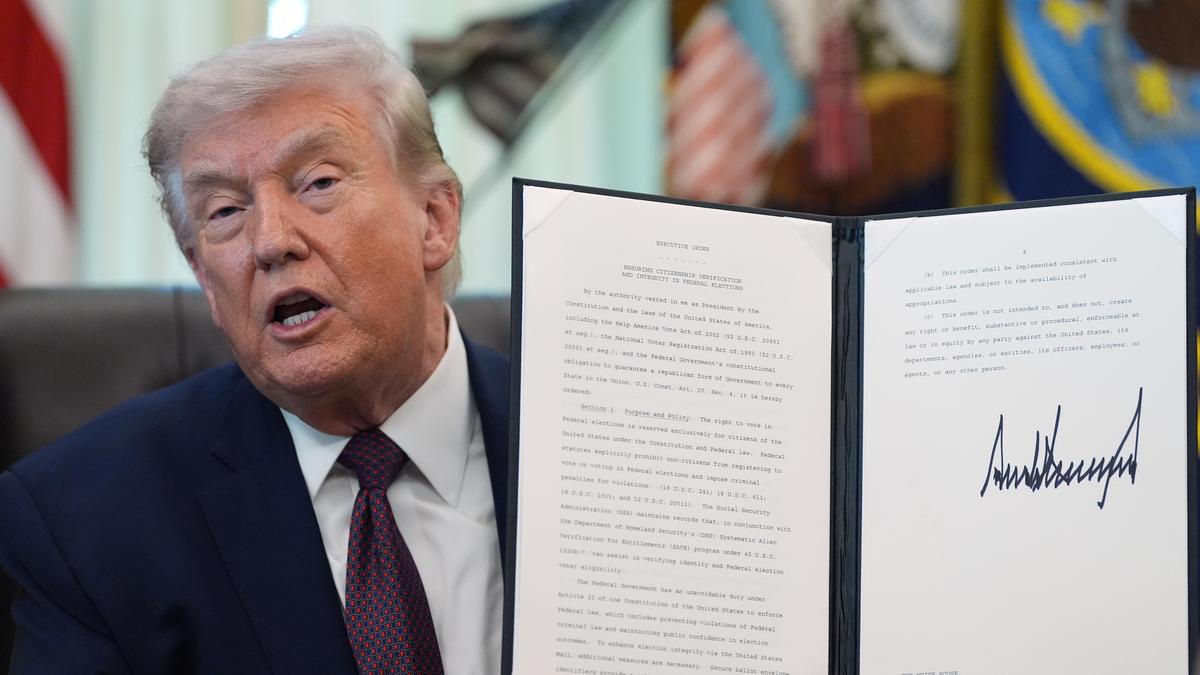
Tue Mar 31 22:18:52 UTC 2026: ### Headline: Trump Issues Executive Order for National Voter List, Faces Imminent Legal Challenges
The Story:
On March 31, 2026, President Donald Trump signed an executive order mandating the creation of a nationwide list of verified eligible voters. This order tasks the Department of Homeland Security, in collaboration with the Social Security Administration, with compiling the list. The order also aims to prevent the U.S. Postal Service from sending absentee ballots to individuals not included on the state-approved voter lists. The move is widely expected to face immediate legal challenges, given the President’s ongoing efforts to impose stricter voting regulations ahead of the midterm elections.
Key Points:
- The executive order requires the Department of Homeland Security and the Social Security Administration to create a national list of eligible voters.
- The order seeks to restrict absentee ballots to only those on state-approved lists.
- Trump is advocating for secure ballot envelopes with unique barcodes for tracking.
- Legal experts anticipate the order will be challenged in court due to constitutional concerns regarding presidential authority over state-run elections.
- Trump has repeatedly claimed widespread voter fraud despite evidence to the contrary, including a 2025 Brookings Institution report indicating a fraud rate of only 0.000043% in mail ballots.
Critical Analysis:
The historical context shows a pattern of executive actions by President Trump being challenged in court and often blocked. His previous attempts to alter election procedures, such as adding proof-of-citizenship requirements and mandating early receipt of mailed ballots, have faced legal hurdles. The timing of this order, following closely on the heels of legal defeats regarding funding for public media, suggests a strategy of pushing the boundaries of executive power, even when facing likely legal setbacks.
Key Takeaways:
- President Trump is continuing his efforts to exert control over election administration despite constitutional limitations.
- The executive order is likely to be challenged in court and potentially blocked, similar to previous attempts to alter election procedures.
- The focus on mail-in voting restrictions reflects a continued narrative of unsubstantiated voter fraud.
- The order highlights the ongoing tension between federal and state authority over election administration.
- This action could further polarize the political landscape and erode trust in the electoral process.
Impact Analysis:
This executive order, regardless of its legal outcome, has the potential to further erode public trust in the electoral process. The ongoing legal battles surrounding election regulations could lead to increased voter confusion and decreased participation, particularly among marginalized communities. The focus on mail-in voting, despite evidence of its security, may lead to further restrictions at the state level, potentially disenfranchising voters who rely on this method. The long-term impact could be a more partisan and contentious electoral environment, with ongoing challenges to voting rights and election integrity.
 First Piper