
Wed Apr 01 04:12:33 UTC 2026: # Trump Administration Reaffirms Strong U.S.-India Ties Amidst Global Uncertainty
The Story:
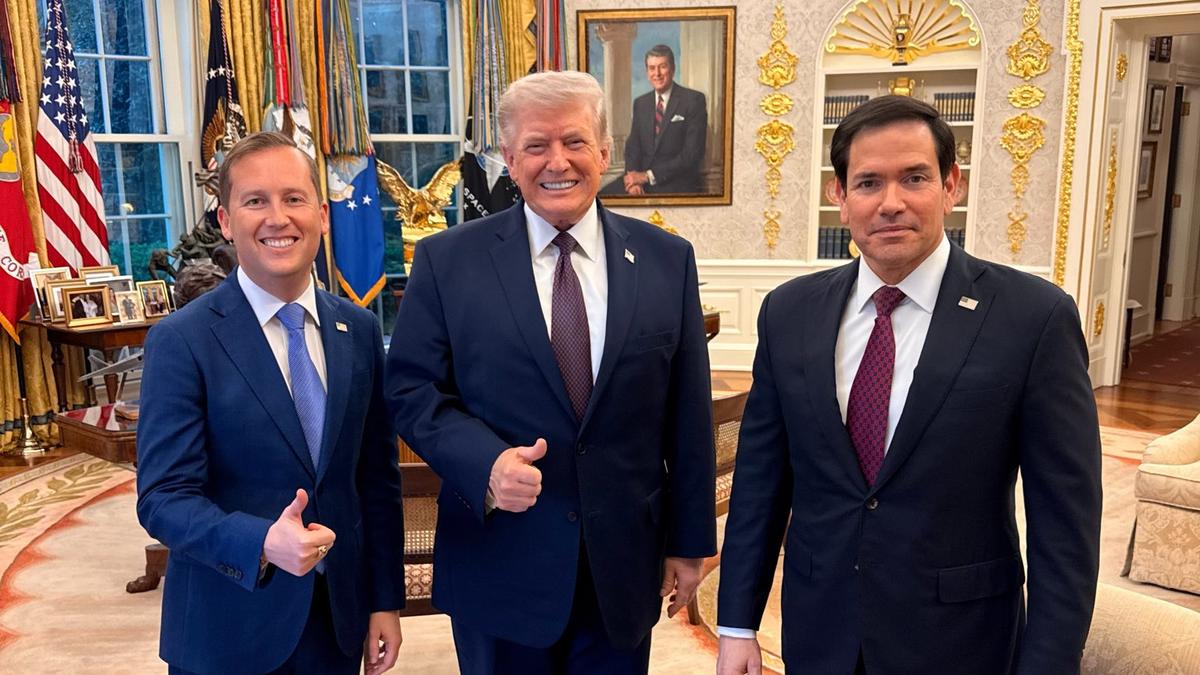
U.S. Ambassador to India, Sergio Gor, affirmed the Donald Trump administration’s commitment to the U.S.-India relationship following a meeting with President Trump and Secretary of State Marco Rubio at the White House on March 31, 2026. Ambassador Gor highlighted President Trump’s deep care for the bilateral relationship in a post on X, accompanied by a photograph from the Oval Office meeting.
Key Points:
- Ambassador Sergio Gor met with President Donald Trump and Secretary of State Marco Rubio on March 31, 2026.
- The meeting took place at the White House.
- Ambassador Gor emphasized President Trump’s strong interest in the U.S.-India relationship.
- Sergio Gor assumed the office of U.S. Ambassador to India in January 2026.
- He also serves as the U.S. Special Envoy for South and Central Asian Affairs.
Critical Analysis:
The timing of this reaffirmation is crucial, considering the other news events of the day. Trump’s consideration of exiting NATO and his stance on Iran signal a potential shift in U.S. foreign policy priorities. Therefore, emphasizing the U.S.-India relationship could be a strategic move to solidify alliances outside of traditional Western partnerships. The Supreme Court reviewing the US Birthright Citizenship case further adds to the sense of domestic turmoil and potential international repositioning.
Key Takeaways:
- The Trump administration is actively signaling the importance of the U.S.-India relationship.
- This affirmation might be a strategic response to potential shifts in other key alliances, such as NATO.
- The U.S. is likely seeking to strengthen ties with India amidst growing global uncertainty and potential isolationist tendencies.
- The appointment of Sergio Gor to multiple key roles (Ambassador and Special Envoy) underscores the importance the U.S. places on the South and Central Asian region.
Impact Analysis:
The continued strengthening of the U.S.-India relationship could have significant long-term implications. Firstly, it may lead to increased cooperation in areas such as trade, defense, and technology. Secondly, it could serve as a counterbalance to China’s growing influence in the Indo-Pacific region. Finally, this alliance might reshape the global geopolitical landscape by fostering a new axis of power outside of traditional Western alliances. The future will depend on the consistency of U.S. commitment and India’s willingness to reciprocate amidst its own strategic considerations.
 First Piper