
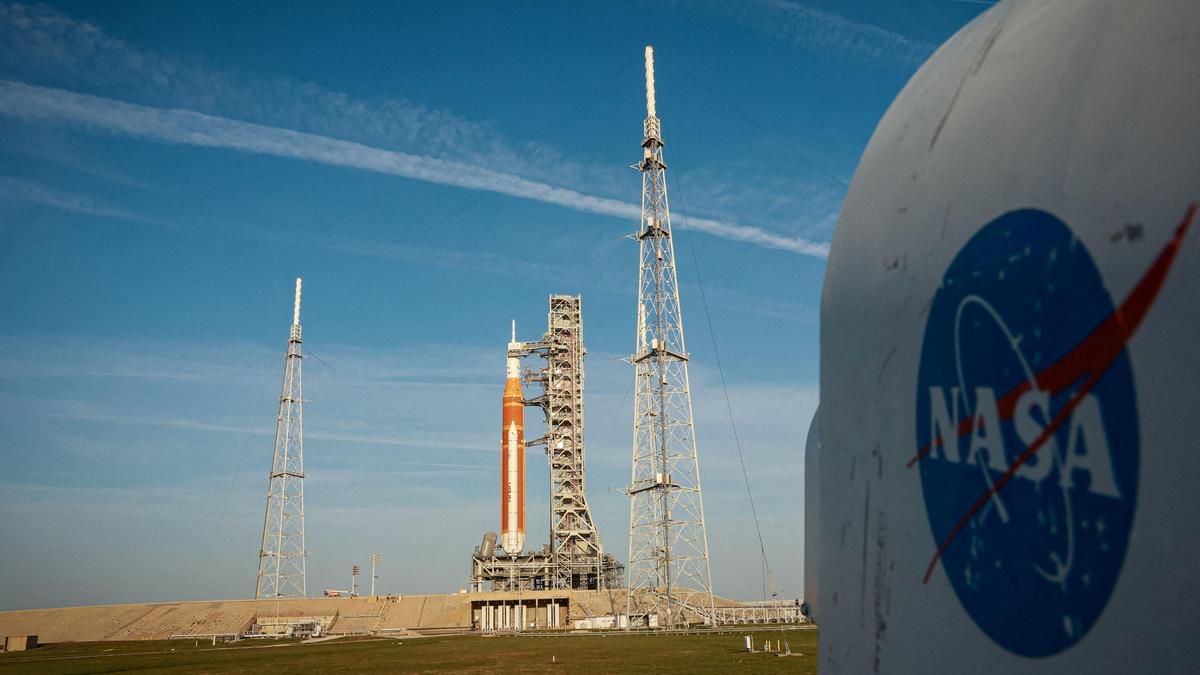
Wed Apr 01 13:39:29 UTC 2026: ### Headline: NASA’s Artemis II Mission Set for Launch, Marking Return to Lunar Exploration
The Story:
NASA’s Artemis II mission is scheduled for launch on April 2, 2026, at 6:24 p.m. EDT. This mission represents a significant milestone, aiming to send humans around the moon for the first time in over half a century. The mission will utilize the Space Launch System (SLS) rocket and the Orion crew capsule to perform a free-return trajectory around the far side of the moon. The primary objective is to test the entire system’s functionality, paving the way for future crewed lunar landings.
The Artemis II mission will not land on the moon itself. Instead, it will orbit around the moon, reaching approximately 7,500 km from its surface, before returning to Earth for a splashdown in the Pacific Ocean within a week. The mission is designed to validate all systems and processes, from ground teams to the rocket and its crew, ensuring readiness for future lunar landing missions.
Key Points:
- The Artemis II mission is scheduled to launch on April 2, 2026, at 6:24 p.m. EDT.
- The mission will use the SLS rocket and Orion crew capsule.
- The mission will not land on the moon but will perform a free-return trajectory around it.
- The primary goal is to test the entire system’s functionality for future lunar landings.
- The Orion capsule will travel approximately 7,500 km from the moon’s surface.
- The core stage of the rocket will contain 196,000 gallons of liquid oxygen and 537,000 gallons of liquid hydrogen.
Key Takeaways:
- Artemis II signifies a major step in the U.S. space program’s renewed focus on lunar exploration.
- The mission serves as a crucial test of the SLS rocket and Orion capsule, validating their performance for future lunar landings.
- The success of Artemis II is essential for maintaining U.S. leadership in the international space race.
- This mission marks the first time in over 50 years that humans are venturing beyond Earth orbit towards the moon.
Impact Analysis:
The Artemis II mission has significant long-term implications for space exploration. Its success will:
- Enable Future Lunar Landings: By validating the SLS and Orion systems, Artemis II paves the way for the Artemis III mission, which is planned to land astronauts on the moon.
- Advance Space Technology: The mission will provide invaluable data and experience, contributing to the development of more advanced space technologies.
- Stimulate Economic Growth: The Artemis program is expected to create jobs and stimulate economic growth in the aerospace industry.
- Inspire Future Generations: Artemis II serves as a powerful symbol of human ambition and technological achievement, inspiring future generations to pursue careers in science, technology, engineering, and mathematics (STEM).
 First Piper